
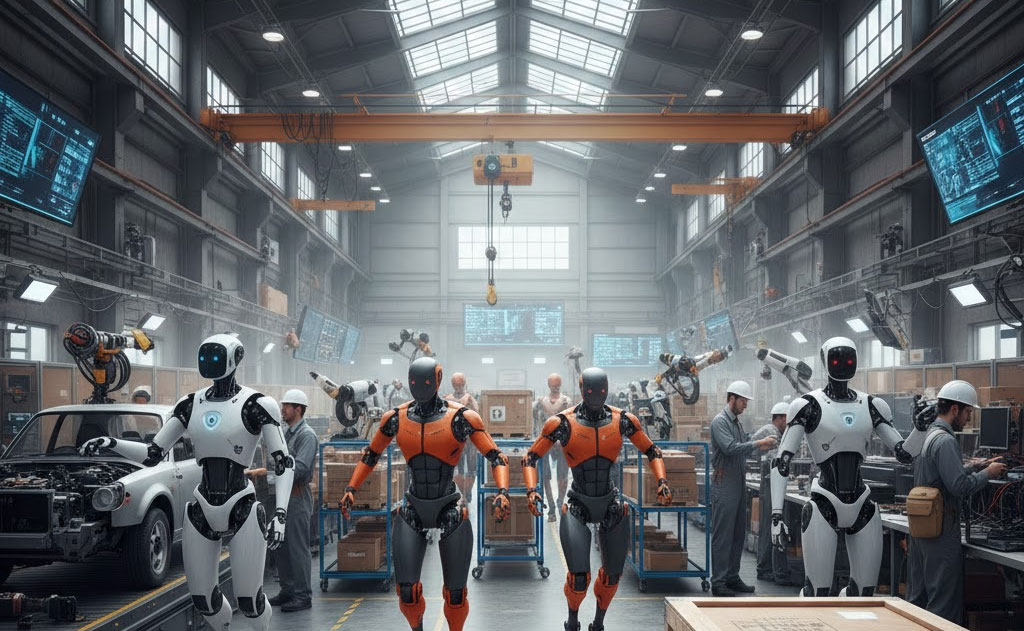
As we approach 2026, humanoid robots 2026 are transitioning from viral demonstrations to practical workforce integration. Viral videos of robots folding laundry, jogging, and manipulating objects have captured global attention, signaling a shift toward real-world deployment. Leading the charge are Tesla’s Optimus, Figure AI’s latest models, and Boston Dynamics’ electric Atlas—each bringing unique strengths to the robotics workforce. While excitement builds around their potential to address labor shortages in manufacturing, logistics, and beyond, critical discussions on job impacts and ethics are essential.
In late 2025, prototypes are already testing in factories, with scaled production and pilots ramping up for 2026. Tesla aims for thousands of Optimus units internally, Figure targets commercial deployments, and Boston Dynamics advances Atlas for industrial tasks. This Tesla Optimus update and competitors’ progress highlight a pivotal year ahead. This in-depth article explores the state of these humanoid robots 2026, their capabilities, workforce implications, ethical considerations, and what to realistically expect.
The Leading Players in Humanoid Robotics
Three companies dominate headlines: Tesla, Figure AI, and Boston Dynamics.
Tesla Optimus: Leveraging automotive manufacturing expertise and AI from Full Self-Driving, Optimus focuses on affordability and scale. The current Gen 2 demonstrates improved gait, dexterity (e.g., handling delicate objects), and tasks like sorting. Gen 3 is slated for early 2026 unveiling, with enhanced actuators and natural movement. Tesla targets low-volume internal use in 2025, scaling to higher production for external sales in 2026, aiming for costs around $20,000-$30,000 per unit.
Figure AI: Backed by massive funding, Figure introduced Figure 03 in late 2025, designed for high-volume manufacturing and general-purpose tasks. Emphasizing safety features like soft textiles and advanced AI (Helix model), it’s geared for both commercial and potential home use. Pilots are underway, with alpha testing expanding.
Boston Dynamics Atlas: The fully electric Atlas excels in dynamic mobility and whole-body coordination. Collaborations with NVIDIA and Toyota Research Institute have integrated Large Behavior Models for autonomous manipulation in unstructured environments. Testing begins in Hyundai facilities, targeting dull, dirty, and dangerous tasks.
These humanoid robots 2026 advancements stem from AI breakthroughs, better actuators, and end-to-end learning, enabling generalization beyond scripted demos.
Capabilities and 2026 Timeline
Humanoid robots 2026 will see accelerated deployment:
- Tesla: Pilot lines active; thousands internally in late 2025, tens of thousands possible in 2026.
- Figure: Manufacturing facility scaling to thousands annually; commercial pilots intensifying.
- Boston Dynamics: Hyundai pilots in 2025-2026, expanding to more customers.
Tasks include repetitive factory work (e.g., part handling, sorting), logistics, and basic assistance. Full autonomy in complex, unstructured settings remains developmental, but progress in balance, dexterity, and perception is rapid.
Integration into the Robotics Workforce
Humanoid robots 2026 promise to augment the robotics workforce by tackling labor shortages in aging populations and hazardous roles. In factories, they could handle repetitive assembly, reducing injury risks and boosting efficiency. Logistics benefits from bipedal navigation in human-designed spaces.
Projections suggest tens of thousands deployed globally by late 2026, primarily in automotive and warehousing. Costs dropping below $100,000 (Tesla aiming lower) make ROI viable for high-volume operations.
Job Impacts: Disruption and Opportunity
The robotics workforce transformation raises valid concerns about displacement. Roles involving repetitive, physical tasks—common in manufacturing and logistics—are most vulnerable. Estimates vary, but millions could be affected long-term without mitigation.
However, humanoids create new jobs: robot maintenance, training, supervision, and AI development. Historical automation shows net job growth through new industries. Upskilling programs and policies can ease transitions, turning disruption into opportunity.
Ethical Considerations
Ethics are central to humanoid robots 2026 adoption:
- Safety: Co-working requires robust fail-safes to prevent accidents.
- Privacy: Data collection for learning must respect consent, especially in potential home settings.
- Bias and Fairness: AI training data should avoid perpetuating inequalities.
- Human Dignity: Robots should augment, not dehumanize, labor; over-reliance risks social isolation.
- Accountability: Clear liability for malfunctions is needed.
Frameworks emphasize responsible deployment, with calls for guidelines on worker involvement and societal impact.
Challenges Ahead
Technical hurdles persist: reliable dexterity in varied environments, energy efficiency, and scaling production. Regulatory approval for shared workspaces and supply chain robustness will influence timelines.
Conclusion: A Transformative 2026 Ahead
Humanoid robots 2026, led by Tesla Optimus updates, Figure innovations, and Boston Dynamics Atlas, are set to enter the robotics workforce meaningfully. Viral capabilities foreshadow practical utility, but balanced integration requires addressing job shifts and ethics proactively. This technology holds immense promise for productivity and quality of life—if guided thoughtfully. At VFutureMedia, we’re tracking these developments to illuminate the path forward in humanoid robotics.
I’m Ethan, and I write about the tech that’s actually going to change how we live — not the stuff that just sounds impressive in a press release. I cover AI, EVs, robotics, and future tech for VFuture Media. I was on the ground at CES 2026 in Las Vegas, walking the show floor so I could give you a real read on what matters and what’s just noise. Follow me on X for daily takes.


Leave a Comment