
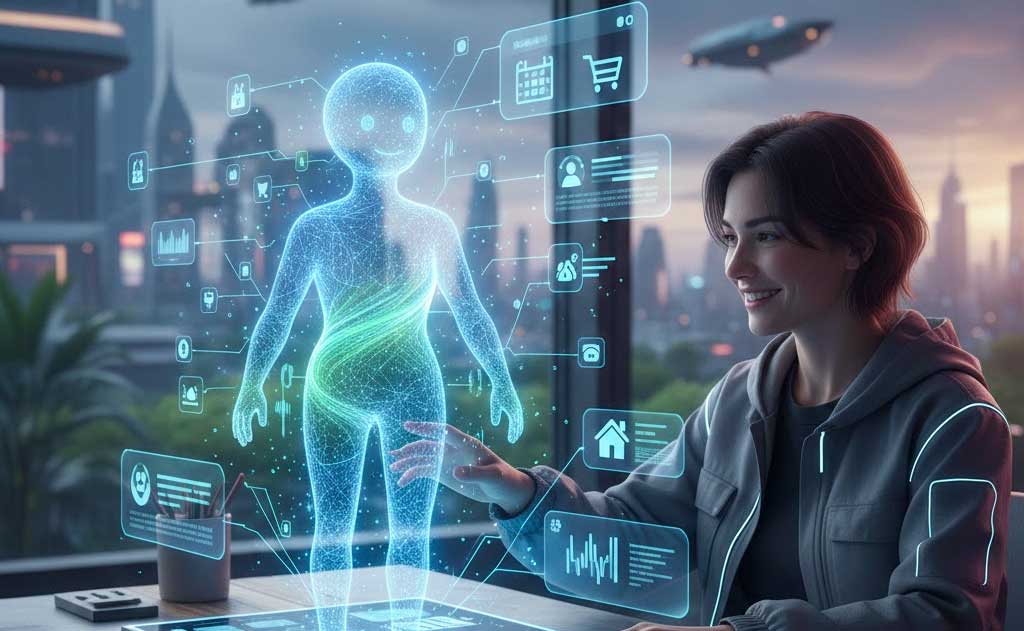
Discover how autonomous AI agents are set to become proactive partners in 2026, transforming productivity, creativity, and daily routines—from work workflows to personal tasks—without replacing human jobs
Imagine waking up in 2026 to an AI teammate that’s already scanned your inbox, prioritized your calendar, drafted responses to urgent emails, and even brainstormed ideas for your big presentation—all while you enjoyed your morning coffee. This isn’t science fiction; it’s the dawn of agentic AI, the next evolution of artificial intelligence where systems don’t just respond to commands but proactively act, plan, and collaborate like true digital colleagues.
After the hype and partial disappointments of 2025, 2026 is poised to be the breakthrough year for agentic AI. Analysts from Gartner, Microsoft, and others predict explosive growth: Up to 40% of enterprise applications will integrate task-specific AI agents by year’s end, jumping from less than 5% today. Microsoft envisions agents as “teammates rather than tools,” while consumer applications—from shopping to personal coaching—are reaching mass adoption.
This shift promises massive productivity gains, but with a human-centric focus: Agents amplify our capabilities, freeing us for creative, strategic work rather than routine drudgery.
What Is Agentic AI? From Passive Tools to Proactive Partners
Agentic AI refers to autonomous systems that can:
- Set and pursue goals independently
- Break complex tasks into steps
- Use tools (browsers, apps, APIs) to execute actions
- Learn from outcomes and adapt
- Collaborate with humans or other agents
Unlike traditional chatbots or copilots that wait for prompts, agentic AI takes initiative. Think of it as hiring a reliable digital intern who anticipates needs, handles multi-step processes, and reports back for approval on big decisions.
Gartner outlines the evolution:
- 2025: AI assistants in most apps (reactive help)
- 2026: Task-specific agents in 40% of enterprise software (autonomous execution)
- Beyond: Multi-agent ecosystems coordinating complex workflows
Microsoft’s outlook aligns: By 2026, agents will proliferate as “digital coworkers,” with features like Agent Mode in Copilot rolling out widely.
This transition boosts productivity without mass job displacement. Gartner notes AI’s job impact remains neutral short-term, emphasizing augmentation: 15% of daily decisions autonomous by 2028, but humans oversee strategy and ethics.
Why 2026 Is the “Year of the Agent”
2025 tested agentic AI in pilots, revealing challenges like reliability gaps and integration hurdles. Many projects stalled (Gartner warned over 40% could cancel by 2027 due to costs/risks), but successes in bounded tasks built momentum.
2026 changes everything:
- Maturing Tech: Improved reasoning (longer chain-of-thought), better tool integration, and multi-agent orchestration.
- Enterprise Push: Gartner forecasts 40% app integration; Microsoft expands Copilot agents across Office, Outlook, Teams.
- Consumer Breakthrough: IEEE surveys show 52% of experts expect mass adoption for personal assistants (shopping, scheduling, coaching).
- Market Growth: Agentic AI sector projected at $8.5B, scaling rapidly.
Real-world drivers:
- AI handles rising complexity amid talent shortages.
- Hybrid work demands seamless collaboration.
- Consumers crave proactive help (e.g., agents reordering groceries or planning trips).
Real-World Examples: Agents in Action Across Life and Work
At Work: Boosting Productivity and Creativity
- Microsoft Copilot Agents: By early 2026, Agent Mode in Word/Excel/PowerPoint creates/refines documents autonomously. Sales agents automate lead qualification; security agents monitor threats.
- Multi-Agent Systems: Gartner highlights collaboration—e.g., one agent researches market trends, another drafts reports, a third schedules reviews.
- Customer Service: Agents resolve 80% of routine issues autonomously by 2029 (Gartner), starting strong in 2026.
- Creative Brainstorming: Agents generate ideas, iterate based on feedback, or collaborate across tools (e.g., pulling data from spreadsheets into presentations).
Case: A marketing team delegates campaign planning—agent analyzes trends, suggests content, coordinates approvals—cutting time 30-50%.
In Everyday Life: Personal Digital Teammates
- Shopping Agents: Visa predicts millions using agents for purchases by 2026 holidays—comparing deals, completing checkouts securely.
- Personal Coaching: Agents track fitness/goals, suggest routines, adjust based on progress.
- Home Management: Reorder essentials, manage calendars, plan meals/travel.
- Agentic Browsers: Tools like advanced Copilot or specialized apps act proactively—summarizing news, booking based on preferences.
IEEE: Mass consumer adoption for assistants handling daily tasks.
How Agentic AI Enhances—Not Replaces—Jobs
Fears of displacement persist, but evidence points to augmentation:
- Gartner: Neutral job impact through 2026; agents handle routine, humans focus on high-value.
- Microsoft: “Amplifying humans”—agents as teammates for bigger challenges.
- Productivity Leap: Deloitte notes successful implementations reimagine operations, creating new roles (agent orchestrators, ethicists).
Tips for thriving:
- Develop “AI literacy”—prompting, overseeing agents.
- Embrace hybrid workflows: Delegate execution, own strategy.
Getting Started: Tips for Embracing Agentic AI in 2026
- Build AI Literacy: Experiment with tools like Microsoft Copilot, Claude, or emerging agent platforms. Learn prompting for multi-step tasks.
- Start Small: Use agents for bounded tasks—email triage, research summaries—before complex workflows.
- Choose Reliable Tools:
- Microsoft Ecosystem: Copilot agents for Office/Teams.
- Open Platforms: Build custom with Copilot Studio or similar.
- Consumer Apps: Agentic browsers, shopping assistants.
- Prioritize Ethics/Security: Set guardrails; understand data usage.
- Stay Informed: Follow Gartner, Microsoft updates; join communities.
Challenges and the Balanced Outlook
Not all rosy: Gartner warns 40%+ projects may cancel by 2027 due to costs, risks, unclear ROI. Issues include hallucinations in chains, integration with legacy systems, ethical concerns (bias, privacy).
Yet optimism prevails: Focused implementations (bounded autonomy, human oversight) deliver value. 2026 emphasizes governance, explainability.
The Future: Why 2026 Marks a Turning Point
Agentic AI shifts us from tool-users to orchestra conductors—directing digital teams for unprecedented efficiency and creativity.
Businesses: Competitive edge through faster innovation. Consumers: Seamless, proactive life management. Society: Amplified human potential.
As Microsoft states: “The future isn’t about replacing humans—it’s about amplifying them.”
2026 isn’t just another AI year—it’s when agents become everyday teammates, reshaping work and life.
Ready to welcome your digital colleague? What task would you delegate first? Share below!
I’m Ethan, and I write about the tech that’s actually going to change how we live — not the stuff that just sounds impressive in a press release. I cover AI, EVs, robotics, and future tech for VFuture Media. I was on the ground at CES 2026 in Las Vegas, walking the show floor so I could give you a real read on what matters and what’s just noise. Follow me on X for daily takes.
If you found this useful, the best thing you can do is share it with someone who’d actually appreciate it. And if you want more like it, we’re here every week.



Leave a Comment