
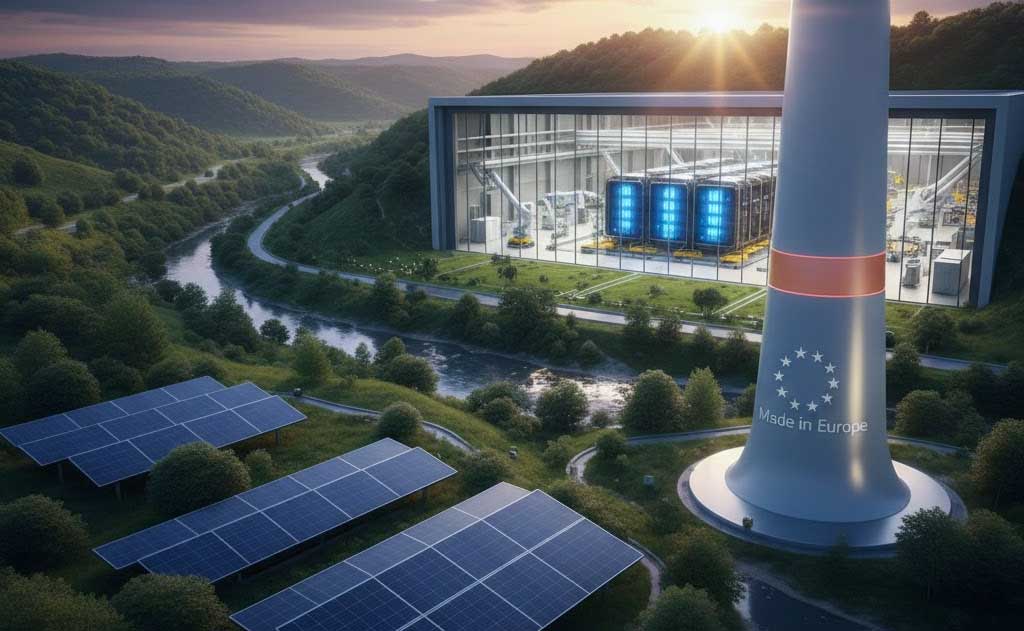
The European Union is taking decisive steps to strengthen its green technology sector through new “Made in Europe” rules for public purchases. This initiative focuses on key areas like batteries, solar panels, electric vehicles (EVs), and related components. The goal is to reduce heavy dependence on imports, particularly from China, while boosting domestic manufacturing, job creation, and strategic autonomy in the clean energy transition.
Announced in early 2026 via a draft European Commission proposal, these rules aim to mandate minimum European-sourced content in government procurement for green tech. This builds on existing frameworks like the Net-Zero Industry Act (NZIA) and addresses vulnerabilities exposed by global supply chain disruptions and geopolitical tensions.
Why the EU is Pushing “Made in Europe” Rules
Europe’s green transition relies heavily on technologies where China holds dominant market positions. China produces over 80% of the world’s solar panels, around 77% of batteries, and a growing share of EV components. This concentration creates risks: supply disruptions, price volatility, cyber threats (e.g., in solar inverters), and potential leverage in international relations.
The EU’s industrial share in global manufacturing has declined from 20.8% in 2000 to 14.3% in 2020, signaling a need for revival. High energy costs, competition from subsidized Chinese exports, and U.S. policies (like tariffs and incentives) further pressure European firms.
Public procurement—worth billions annually—offers a powerful tool. By prioritizing EU-made products in government buys (e.g., for public fleets, renewable projects, and infrastructure), the EU can create stable demand, encourage investment, and scale local production without broad protectionism.
This aligns with the Green Deal Industrial Plan and NZIA, which set non-binding targets for 40% local production of net-zero technologies by 2030.
Details of the Proposed “Made in Europe” Rules
The draft proposal, expected for formal publication soon after January 2026 reports, introduces phased requirements for public procurement:
- Batteries: Within 12 months of the law’s entry into force, battery systems must be assembled in the EU, with the battery management system and at least two other core components sourced locally. After two years, the entire battery system and more components (including cells) must be EU-made.
- Solar and Wind Components: Minimum EU-sourced shares for components in public contracts, aiming to protect wind (where Europe retains strengths) and prevent solar’s past fate of near-total import reliance.
- Electric Vehicles and Related Infrastructure: Preferences for EU-made EVs, power cables, and charging stations in government tenders.
- Broader Low-Carbon Goods: Minimum EU content quotas in public contracts for other industrial items.
These rules emphasize “resilience” (diversifying away from single-country dominance over 50% of supply) and sustainability, complementing NZIA’s criteria in auctions and procurement.
The proposal acts as a “strategic warning signal” to spur investment while remaining WTO-compatible through security and proportionality justifications.
Benefits for Europe’s Economy and Green Transition
These rules promise multiple advantages:
- Reduced Dependency: Diversifying supply chains mitigates risks from over-reliance on China, enhancing energy security amid geopolitical shifts.
- Industrial Revival and Jobs: By creating predictable demand, the EU can attract investments in manufacturing. This could revive sectors like battery production and support thousands of high-quality jobs in assembly, R&D, and supply chains.
- Competitiveness Boost: Local production lowers long-term costs through scale, innovation, and reduced transport/emissions. It also fosters clusters in regions like Germany, France, and Eastern Europe.
- Accelerated Decarbonization: Secure, sustainable tech supports faster rollout of renewables, EVs, and storage—key to EU climate goals like net-zero by 2050.
- Innovation Edge: Requirements encourage advanced, low-carbon designs (e.g., greener batteries), aligning with circular economy principles.
Critics note potential short-term cost increases or trade tensions, but phased implementation and focus on strategic sectors aim to balance this.
Challenges and Criticisms
Member states are divided. France pushes strongly for localization, while Sweden and the Czech Republic worry about higher prices and reduced competitiveness.
Enforcement requires robust verification of origins in complex global chains. WTO compliance is key—rules must be proportionate, non-discriminatory, and justified by security/climate needs.
The EU must avoid blanket protectionism; preferences remain open to allies meeting standards.
How This Fits into Broader EU Strategy
This builds on:
- Net-Zero Industry Act (NZIA): Mandatory sustainability/resilience criteria in procurement and auctions; resilience kicks in for technologies with >50% from one third country.
- Critical Raw Materials Act (CRMA): Targets 10% domestic extraction, 40% processing, 25% recycling by 2030; no more than 65% from one country.
Together, they form a comprehensive approach: secure raw materials, scale manufacturing, and use public demand to drive growth.
The EU also explores FDI screening, joint ventures, and subsidies tied to localization.
Future Outlook for Green Tech in Europe
If adopted, these rules could transform Europe’s green economy. Expect accelerated investments in gigafactories, solar/wind component plants, and EV ecosystems. Combined with incentives and regulatory stability, this positions the EU as a competitive player against China and the U.S.
For businesses: EU-based manufacturers gain advantages in public tenders; investors see clearer signals for localization.
For citizens: More resilient energy systems, economic growth, and faster climate progress.
The EU’s “Made in Europe” push for green tech procurement marks a pivotal shift toward strategic autonomy in the net-zero era. While challenges remain, it signals commitment to balancing openness with security—ensuring Europe’s green transition is built on European strengths.
I’m Ethan, and I write about the tech that’s actually going to change how we live — not the stuff that just sounds impressive in a press release. I cover AI, EVs, robotics, and future tech for VFuture Media. I was on the ground at CES 2026 in Las Vegas, walking the show floor so I could give you a real read on what matters and what’s just noise. Follow me on X for daily takes.

Leave a Comment