
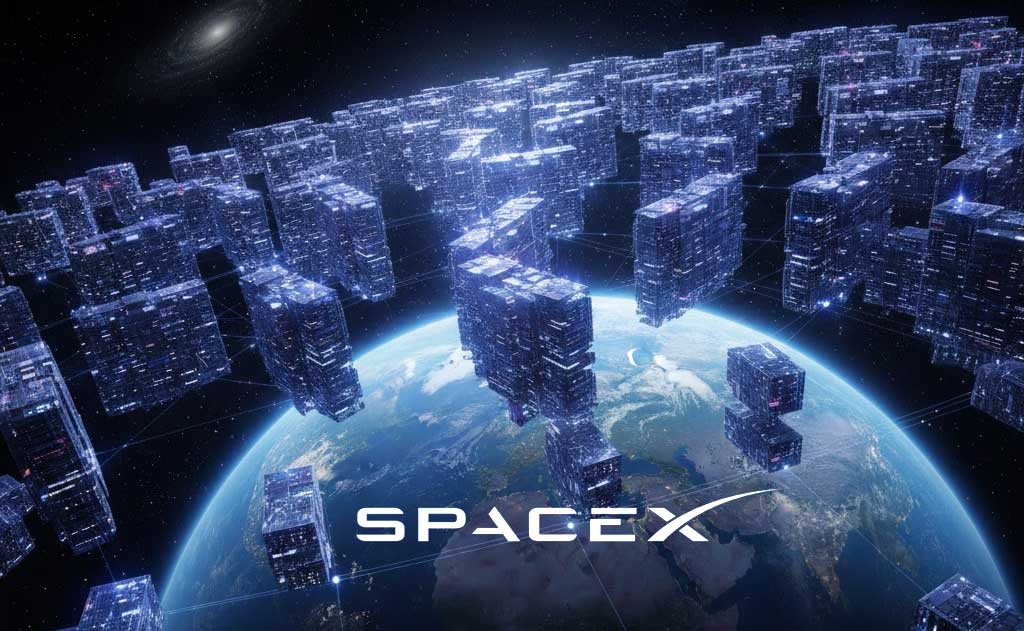
transforming space into the world’s largest AI data center through a massive constellation of satellites. In a recent filing with the Federal Communications Commission (FCC), SpaceX requested approval to launch and operate up to one million satellites optimized for orbital computing. This ambitious project aims to deliver unprecedented computing power for artificial intelligence, machine learning, and edge computing applications, addressing the explosive growth in demand that terrestrial infrastructure struggles to meet.
Why Space-Based AI Data Centers? The Key Advantages
Earth-based data centers face mounting challenges: skyrocketing energy consumption, limited power grids, cooling demands, land constraints, and environmental concerns. SpaceX argues that orbital data centers offer a superior alternative:
- Near-constant solar energy — Satellites in low-Earth orbit can harness uninterrupted sunlight, drastically cutting operational costs and reducing reliance on fossil fuels or strained grids.
- Lower environmental impact — No land use, minimal water for cooling (radiation into space handles heat dissipation naturally), and scalable without terrestrial ecological strain.
- Massive scalability — With Starship enabling rapid, low-cost launches, SpaceX envisions deploying vast compute capacity quickly.
The satellites would orbit between 500 km and 2,000 km in altitude, spread across multiple narrow orbital shells (up to 50 km each) to minimize conflicts with other systems. High-speed laser inter-satellite links (optical communications) would create a mesh network capable of petabit-level data transfer, integrating seamlessly with the existing Starlink constellation for routing processed data to authorized ground stations worldwide.
This isn’t just about compute—it’s framed as a critical step toward humanity’s multi-planetary future, where space-based infrastructure powers advanced AI and supports broader exploration goals.
Elon Musk recently addressed the scale of this constellation on X (formerly Twitter), emphasizing the vastness of space:
“The satellites will actually be so far apart that it will be hard to see from one to another. Space is so vast as to be beyond comprehension.”
This highlights how even a million-satellite network would appear sparse from any vantage point, alleviating concerns about overcrowding in orbit.
How It Ties into Broader Musk Ventures
The proposal aligns with ongoing developments, including reported merger discussions between SpaceX and xAI (Musk’s AI company), which could accelerate integration of orbital compute with models like Grok. It also supports SpaceX’s planned 2026 IPO, potentially valued in the trillions, to fund such capital-intensive projects. Competitors like Google (Project Suncatcher), Blue Origin, and even initiatives in China are exploring similar concepts, but SpaceX‘s launch dominance via reusable rockets and Starlink experience gives it a clear edge.
Challenges and the Road Ahead
While promising, orbital data centers face hurdles: radiation hardening for hardware, latency management for real-time AI, regulatory approvals, and orbital debris mitigation. SpaceX plans multiple satellite designs tailored to different shells and emphasizes deorbiting capabilities for sustainability.
If approved and executed, this could redefine AI infrastructure—making space the lowest-cost, most efficient location for the next era of intelligence.
At VFutureMedia.com, we track transformative tech like this to help you stay ahead. What do you think—will AI truly go orbital, or is this too ambitious? Share your thoughts below!
Ethan Brooks covers electric vehicles and clean mobility for VFuture Media. He tracks EV market trends, charging infrastructure, new model launches, and the increasingly blurry line between software and transportation. From Tesla’s autonomous driving milestones to Europe’s surging BEV sales, Ethan follows the numbers and the narratives behind them. He writes for readers who want the full picture on where the EV industry is actually headed — not just where brands say it is.



Leave a Comment