
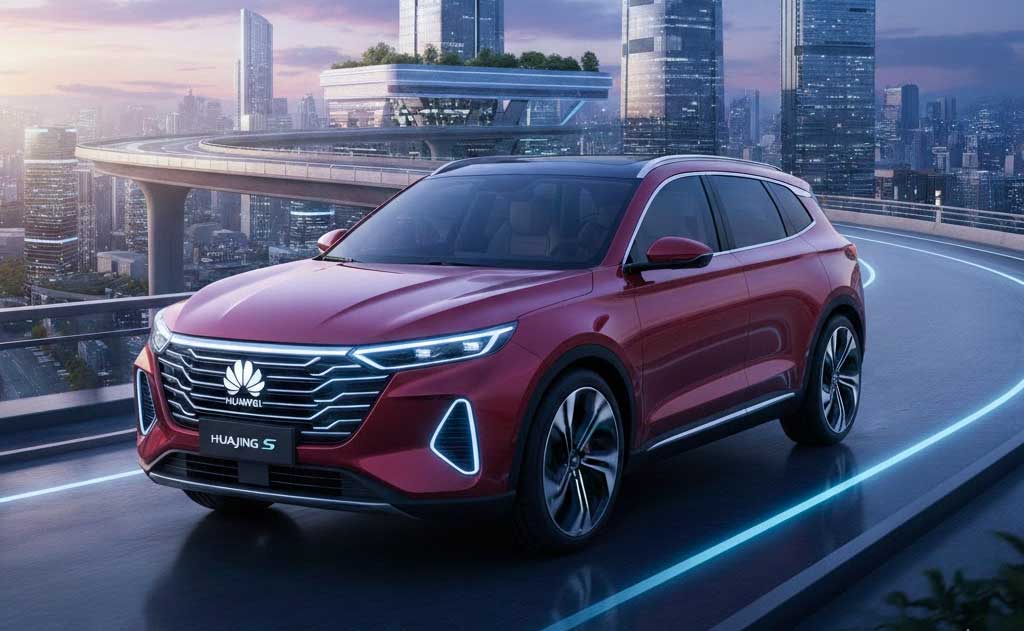
The Chinese automotive landscape is evolving at breakneck speed, and the Baojun Huajing S stands as one of the most exciting developments on the horizon. As a flagship full-size plug-in hybrid electric vehicle (PHEV) SUV from SAIC-GM-Wuling (SGMW), this six-seater combines massive space, advanced Huawei intelligent technologies, and efficient hybrid performance—all targeted at the competitive 150,000–200,000 RMB ($21,000–$28,000) price segment.
Unveiled in late 2025 and with production models rolling out in the first half of 2026, the Huajing S marks the first major fruit of the deepened partnership between SGMW and Huawei. This collaboration focuses on the “Three Intelligences”: intelligent driving, intelligent cockpit, and intelligent manufacturing. For families seeking premium features without premium pricing, the Baojun Huajing S promises to deliver high-end smart capabilities in an accessible package.
In this in-depth guide, we explore every aspect of the Baojun Huajing S—from its imposing design and spacious interior to its hybrid powertrain, Huawei tech suite, safety credentials, market positioning, competitive landscape, ownership experience considerations, and broader implications for future mobility. Whether you’re tracking emerging EV and PHEV trends in China or evaluating large family SUVs for 2026 and beyond, this model deserves close attention.
Brand Background: From Value Champion to Smart Mobility Player
Baojun, operated under the SAIC-GM-Wuling joint venture, has historically built its reputation on delivering practical, budget-conscious vehicles to China’s vast middle and working-class markets. Iconic models like the original Baojun 510 mini-SUV, the KiWi EV, the Yep off-roader, and the Yunduo crossover have shown the brand’s ability to combine affordability with surprising feature content.
However, the Baojun Huajing S represents a clear strategic pivot. Rather than competing purely on price, Baojun is now aiming to capture the rapidly growing “new premium” segment—buyers who want near-luxury levels of technology, space, and refinement but are unwilling or unable to pay the 300,000+ RMB commanded by brands like Li Auto, AITO, or Voyah.
The key enabler of this ambition is Huawei. In September 2025, SGMW signed a comprehensive strategic cooperation agreement with Huawei to integrate the full suite of Huawei’s automotive intelligent solutions. This partnership mirrors Huawei’s successful collaborations with Seres (AITO), Chery (Luxeed), and others, but with a clear focus on bringing flagship-grade intelligence to the mass-market price band.
Platform Foundation: Tianyu L Architecture
The Huajing S rides on SAIC-GM-Wuling’s latest modular platform, known internally as Tianyu L (introduced in 2024). This architecture is designed from the ground up to support multiple electrification types (BEV, PHEV, EREV/extended-range) and vehicle sizes ranging from compact crossovers to full-size SUVs.
Key advantages of the Tianyu L platform include:
- Scalable wheelbase lengths (supporting up to 3200+ mm)
- Flat-floor battery integration for maximized interior space
- Multi-energy system compatibility (including dual-motor AWD layouts)
- Advanced structural rigidity targeting high C-NCAP and C-IASI scores
- Pre-wired architecture for seamless OTA capability and future sensor upgrades
This flexible foundation allows the Huajing S to offer class-leading interior volume while maintaining competitive aerodynamics and weight efficiency.
Exterior Design Language: Modern Authority with Family Appeal
At 5235 mm long, 1999 mm wide, and 1800 mm tall—with a wheelbase stretching to 3105 mm—the Huajing S firmly plants itself in the large six- or seven-seat SUV category.
The front face features a large, trapezoidal grille framed by sharp, Z-shaped LED daytime running lights and main headlights. The Baojun logo is prominently centered, while a bold lower bumper insert creates a wide, planted stance. Chrome accents are used judiciously to elevate perceived quality without appearing dated.
In profile, the vehicle shows smooth, flowing lines, hidden door handles (on higher trims), flush glass, and large-diameter alloy wheels. A subtle character line runs from the front fender to the rear door, adding visual length and dynamism. The roofline tapers gently toward the D-pillar, helping to disguise the vehicle’s considerable height.
The rear design mirrors the front symmetry with a full-width LED taillight bar, integrated spoiler, and vertically oriented reflectors. Overall, the styling strikes a balance between modern elegance and approachable family-friendly presence—avoiding the overly aggressive “coupe-SUV” trend that sacrifices third-row usability.
Interior Space & Practicality: True Six-Seat Family Focus
The Huajing S adopts a strict 2+2+2 seating layout, prioritizing comfort for six adults over occasional seven-seat flexibility.
- First row: Generous headroom, long seat travel, power-adjustable front seats (with memory and ventilation on higher trims)
- Second row: Two independent captain’s chairs with multi-way electric adjustment, heating/ventilation, individual armrests, and large fold-down trays
- Third row: Usable space for adults up to approximately 175 cm tall thanks to the long wheelbase and relatively flat floor; seats fold flat into the cargo floor when not in use
Cabin materials include soft-touch surfaces on the dashboard and door cards, quilted leatherette upholstery, metallic and wood-grain trim accents, and ambient lighting strips. Large side windows and a panoramic sunroof (standard or optional depending on trim) create an airy, spacious feeling.
Cargo capacity remains generous even with all seats upright, and the flat-folding third row creates a nearly flat load floor for weekend trips or IKEA runs.
Huawei HarmonySpace Cockpit & Intelligent Features
The interior technology centerpiece is Huawei’s HarmonySpace 5 intelligent cockpit, one of the most advanced mass-market implementations to date.
Core elements include:
- Ultra-large central touchscreen (15.6–16 inches OLED/QLED depending on trim)
- Fully digital instrument cluster + optional passenger entertainment display
- HarmonyOS NEXT operating system with native app ecosystem, multi-user profiles, and seamless cross-device continuity
- High-precision voice control with natural language understanding
- AR-HUD (projected augmented-reality head-up display) on top trims
- Multi-zone climate control with independent rear vents and air purification
A standout innovation is the Limera in-cabin laser vision system. This Huawei-developed technology uses structured light and ToF sensors to enable:
- Precise gesture control without touching screens
- Real-time child presence detection and monitoring
- Driver fatigue/distracted driving alerts with higher accuracy
- Occupancy-based seatbelt reminders and airbag suppression
Combined with Huawei’s Qiankun ADS 4 Pro intelligent driving suite, the cockpit delivers a cohesive, futuristic experience that feels several tiers above the vehicle’s expected price point.
Powertrain & Efficiency: Wuling Lingxi Hybrid System
The Huajing S employs the latest Wuling Lingxi series plug-in hybrid system, built around a dedicated 1.5-liter turbocharged gasoline engine (model code L2A15) producing 105 kW (141 hp) and 250 Nm.
This engine operates primarily as a high-efficiency generator rather than a direct driver of the wheels in most conditions. Propulsion comes from front and/or rear electric motors (depending on drivetrain configuration).
Battery pack options:
- 31 kWh LFP pack → ~130 km WLTC pure electric range
- 41.9 kWh LFP pack → ~160–175 km WLTC pure electric range
Combined WLTC fuel consumption in charge-sustaining mode is expected to be in the 5.0–5.8 L/100 km range, while total hybrid range exceeds 1000–1200 km with a full 60–70 liter fuel tank and charged battery.
Fast DC charging support (30–80% in ~30 minutes on higher-capacity pack) and vehicle-to-load (V2L) capability further enhance versatility for camping, outdoor activities, or emergency power backup.
Intelligent Driving: Qiankun ADS 4 Pro
Huawei’s Qiankun ADS 4 Pro brings semi-autonomous capabilities that rival or exceed many 300,000+ RMB SUVs:
- Urban and highway NOA (Navigate on Autopilot)
- Automatic lane changes, ramp merging, and traffic light recognition
- Memory parking and remote summon
- End-to-end neural network perception with lidar + camera + radar fusion
- OTA capability for continuous improvement
This level of assistance significantly reduces driver fatigue on long family journeys and improves safety in complex Chinese urban environments.
Safety Engineering & Structural Integrity
Safety remains non-negotiable in this segment. The Huajing S incorporates:
- High-strength steel cage with strategic aluminum usage
- Multiple airbags including far-side and center airbags
- Advanced ADAS sensor suite for proactive collision avoidance
- Shenlian (Magic) battery pack with multi-layer thermal runaway protection
- Targeting five-star ratings in 2024/2025 C-NCAP and C-IASI protocols
Huawei’s vision-based active safety systems further enhance pedestrian, cyclist, and vulnerable road user protection.
Pricing, Trim Structure & Market Positioning
Expected retail pricing sits in the 159,800–199,800 RMB range (pre-subsidy), positioning the Huajing S as one of the most aggressively priced large PHEV SUVs with Huawei intelligent features.
Likely trim hierarchy:
- Base (130–160 km EV range, 2WD)
- Mid (175 km EV range, enhanced cockpit features)
- Flagship (AWD, top-tier ADAS, panoramic sunroof, ventilated seats)
Launch is targeted for Q1–Q2 2026, with pre-sales possibly beginning as early as March 2026.
Competitive Landscape Comparison
Direct competitors include:
- Li Auto L8 / L9 (extended-range, higher price, stronger brand cachet)
- AITO M7 / M9 (Huawei-powered, but more expensive)
- Deepal S07 / G318 (similar price band, but less cabin space)
- Voyah Free / Dream (premium positioning, higher cost)
The Huajing S aims to win by offering comparable or superior intelligent features, better value pricing, and genuine six-seat usability at a significantly lower entry point.
Ownership Experience Considerations
Prospective buyers should note:
- Brand perception: Baojun remains a value-oriented name; Huawei association helps but won’t instantly confer luxury status
- After-sales network: SGMW/Wuling has one of China’s broadest dealer footprints
- Battery & powertrain warranty: Likely 8 years / 160,000 km or better
- OTA frequency: Huawei-backed models typically receive frequent, meaningful updates
For families in Tier-1, Tier-2, and strong Tier-3 cities with good home charging access, the Huajing S offers one of the strongest total-cost-of-ownership propositions in the large PHEV segment.
Broader Implications for 2026 Mobility
The Baojun Huajing S exemplifies several macro trends shaping China’s—and increasingly the global—automotive industry:
- Democratization of intelligent driving and cockpit technology
- Continued dominance of PHEV/EREV architectures in markets with uneven charging infrastructure
- Rise of “tech-first” branding over traditional luxury cues
- Acceleration of Huawei’s influence across multiple automakers
- Focus on genuine family usability in the six- and seven-seat segment
As global manufacturers watch China’s rapid electrification progress, models like the Huajing S serve as a blueprint for delivering advanced, connected, and efficient family transport at accessible price points.
Stay tuned to VFuturMedia.com for the latest updates on the Baojun Huajing S—including official launch details, first drive impressions, real-world efficiency tests, and detailed trim comparisons. What are your thoughts on this Huawei-powered family SUV? Could it redefine expectations in the large PHEV segment? Share your perspective in the comments below.
I’m Ethan, and I write about the tech that’s actually going to change how we live — not the stuff that just sounds impressive in a press release. I cover AI, EVs, robotics, and future tech for VFuture Media. I was on the ground at CES 2026 in Las Vegas, walking the show floor so I could give you a real read on what matters and what’s just noise. Follow me on X for daily takes.


Leave a Comment