
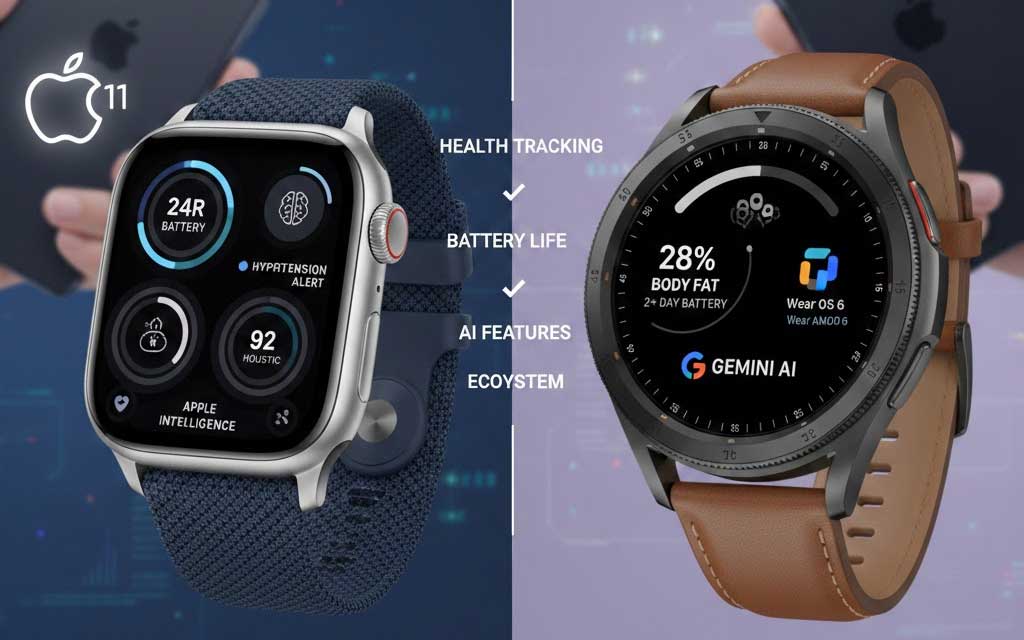
Comparison of top smartwatches dominating U.S. sales in 2026. Apple Watch Series 11 vs Galaxy Watch 8 breakdown, including health tracking, battery life, AI features, and ecosystem advantages.
Smartwatch Wars Intensify in the U.S.
The wearables market continues its rapid growth in America, with smartwatches now a staple for millions tracking health, fitness, notifications, and daily productivity. In 2026, the dominant rivalry remains between Apple’s ecosystem-locked powerhouse and Samsung’s Android-optimized contender, as consumers prioritize seamless integration with their smartphones.
U.S. buyers are snapping up models like the Apple Watch Series 11 (the go-to for iPhone users) and the Samsung Galaxy Watch 8 (and its Classic variant, ideal for Galaxy phone owners). These flagships lead sales charts, with Apple maintaining a strong lead in overall market share (around 23% globally, with even higher dominance in the U.S. due to iPhone prevalence), while Samsung captures significant Android market segments.
Reviews from sources like WIRED, PCMag, CNET, Forbes, and TechRadar consistently rank the Apple Watch Series 11 as the best overall smartwatch for most people—especially iPhone owners—thanks to its polished software, accurate health insights, and ecosystem depth. The Samsung Galaxy Watch 8 earns praise as the top pick for Android (particularly Samsung) users, offering longer battery life, advanced AI coaching, and customizable features.
Key buyer priorities driving 2026 purchases include:
- Health tracking accuracy — From heart rate and sleep to advanced metrics like hypertension alerts and body composition.
- Battery life — A major upgrade area, with many seeking all-day (or multi-day) performance.
- AI fitness insights — Personalized coaching, predictive analytics, and voice assistants like Apple Intelligence or Gemini.
- App ecosystem integration — Seamless syncing with phones, third-party apps, and services.
American consumers are leaning heavily into wellness monitoring, with features like sleep scores, stress tracking, and proactive health notifications influencing decisions amid rising awareness of preventive care.
Apple Watch Series 11: The iPhone Powerhouse Leading U.S. Sales
The Apple Watch Series 11 remains the bestseller among iPhone users, praised for its refined design, reliable performance, and groundbreaking health features introduced or enhanced in watchOS 26.
Standout Features in 2026:
- Health Tracking — Comprehensive suite including ECG, blood oxygen, temperature sensing, sleep score (new holistic analysis factoring duration, respiratory rate, and apnea signs), and FDA-cleared hypertension notifications for high blood pressure alerts.
- Battery Life — Up to 24 hours (a notable jump from prior models), enabling overnight sleep tracking without daily charging anxiety.
- AI & Fitness Insights — Workout Buddy powered by Apple Intelligence offers personalized guidance; advanced sensors deliver precise step counting, heart rate, and activity metrics.
- Design & Display — Thinner, lighter build with a brighter always-on Retina display (2x more scratch-resistant Ion-X glass on aluminum models), wide-angle OLED, and options up to 46mm.
- Ecosystem — Unmatched app selection via the App Store, seamless iPhone integration for notifications, calls, payments, and more.
- Other Perks — 5G cellular options, satellite messaging in emergencies, and durability for swimming/diving.
Reviewers highlight its accuracy in fitness tracking (often edging out competitors in step counts and distance) and the “just works” reliability for everyday use.
Samsung Galaxy Watch 8: Android’s Premium Contender Gaining Ground
For Android users—especially those with Samsung Galaxy phones—the Galaxy Watch 8 (including the Classic with rotating bezel) stands out as a top seller, blending style, endurance, and AI-driven smarts.
Standout Features in 2026:
- Health Tracking — Advanced sensors for body composition (muscle/fat analysis), blood pressure (in supported regions), sleep insights, stress monitoring, and AI-powered energy scores.
- Battery Life — Superior multi-day performance (often 2+ days depending on usage), a clear win over Apple’s typical daily cycle.
- AI Fitness Insights — Gemini assistant integration, personalized running coaching, energy insights, and adaptive workouts via Galaxy AI.
- Design & Display — Squircle (cushioned) design with up to 3000-nit Super AMOLED screens, rotating bezel on Classic for tactile navigation, and customizable straps.
- Ecosystem — Deep integration with Samsung phones (e.g., seamless camera control, quick replies), Wear OS 6 for broad app support, and Google services.
- Other Perks — Fast charging, rugged options, and features like fall detection and emergency SOS.
It’s lauded for glanceable interfaces, Gemini voice assistance, and value, though some note the design shift and proprietary straps as trade-offs.
Head-to-Head Comparison: Apple Watch Series 11 vs Samsung Galaxy Watch 8
- Health Tracking Accuracy — Both excel with advanced sensors. Apple often leads in precision (e.g., step/distance in tests) and ecosystem-tied insights like hypertension alerts; Samsung adds unique tools like body composition and deeper sleep analysis.
- Battery Life — Samsung typically wins with longer runtime and less frequent charging; Apple’s 24-hour upgrade closes the gap significantly.
- AI & Software — Apple’s Workout Buddy and Intelligence feel more integrated for iOS users; Samsung’s Gemini and coaching appeal to Android customization fans.
- Ecosystem & Apps — Apple dominates with vast third-party support and iPhone seamlessness; Samsung shines in Android/Samsung synergy.
- Price & Value — Both start around $300–$400 (with frequent discounts); Samsung often feels more feature-packed for the money in Android circles.
- Who Wins? — It depends on your phone: Apple Watch Series 11 for iPhone owners (best overall balance); Galaxy Watch 8 for Android (better battery, AI depth).
Why These Two Dominate U.S. Purchases in 2026
With over 30% of Americans owning smartwatches, adoption surges thanks to wellness focus and AI enhancements. Apple benefits from iPhone loyalty, while Samsung captures Android growth. Both deliver reliable, life-enhancing features that go beyond basic timekeeping.
FAQs
Q1: Which smartwatch has better health tracking? Both offer advanced sensors with high accuracy; Apple leads in ecosystem integration and features like hypertension notifications and precise step tracking, while Samsung excels in additional metrics like body composition and AI-driven insights.
Q2: Is battery life improving? Yes—significantly. Apple’s Series 11 hits up to 24 hours reliably (enabling full sleep tracking), while Samsung’s Galaxy Watch 8 often delivers 2+ days, making it a standout for minimal charging.
Q3: Which is better for iPhone vs Android users? Apple Watch Series 11 is unmatched for iPhone owners due to seamless integration and app ecosystem. Galaxy Watch 8 is the clear choice for Android (especially Samsung) users, with deeper phone synergies and Wear OS flexibility.
Q4: Are there notable upgrades in 2026 models? Yes—Apple adds sleep score, hypertension alerts, and better durability/battery; Samsung brings Gemini AI, refined designs, and enhanced coaching.
Q5: What about other competitors? Google Pixel Watch 4 and Garmin models appeal to specific niches (e.g., pure fitness), but Apple and Samsung lead mainstream U.S. sales.
The smartwatch market in 2026 rewards ecosystem loyalty—choose based on your phone for the best experience.
Author: U.S. Gadget & Wearable Tech Journalist vfuturemedia
Ethan Brooks covers the tech that’s reshaping how we move, work, and think — for VFuture Media. He was at CES 2026 in Las Vegas when the world got its first real look at humanoid robots, AI-powered vehicles, and Samsung’s tri-fold phone. He writes about AI, EVs, gadgets, and green tech every week. No hype. No filler. X · Facebook
The future doesn’t wait — and neither should your feed. If this got you thinking, there’s plenty more where that came from. Browse our latest at VFutureMedia and stick around.



Leave a Comment