
Author: Ethan Brooks Published on: vfuturemedia Date: March 2026
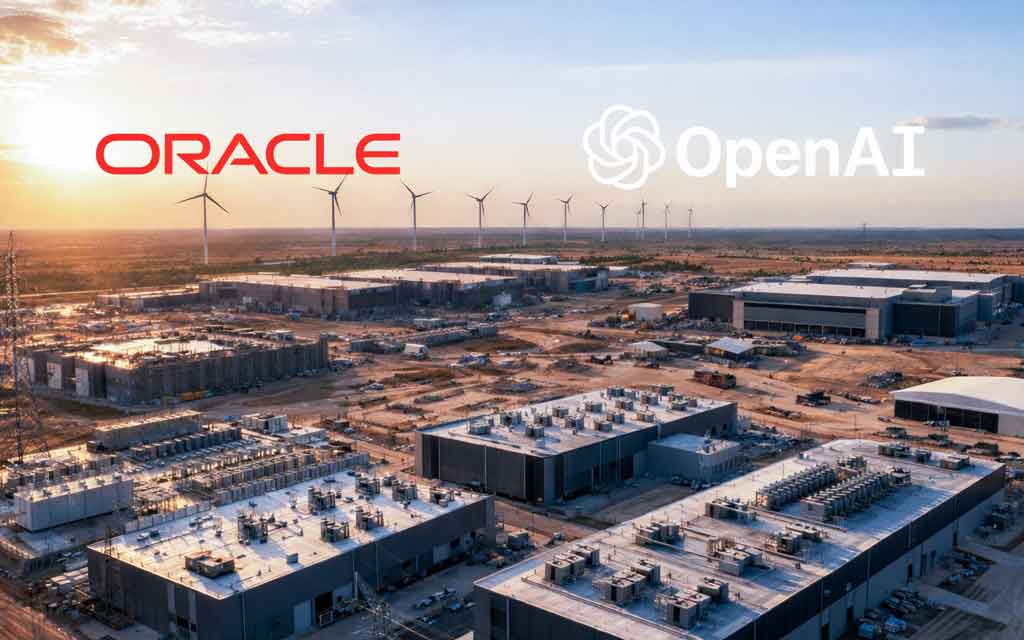
In a surprising development for the AI infrastructure boom, Oracle and OpenAI have abandoned plans to expand their flagship artificial intelligence data center in Abilene, Texas. The decision, reported by Bloomberg News on March 6, 2026, stems from prolonged negotiations over financing challenges and evolving capacity needs from OpenAI. This move highlights the complexities of scaling massive AI projects amid rapid technological shifts and economic pressures.
The scrapped expansion was part of the high-profile Stargate initiative—a multi-billion-dollar effort involving OpenAI, Oracle, SoftBank, and others to build enormous AI computing capacity. Announced with fanfare in early 2025 (including a White House appearance with President Trump), Stargate aims for up to 10 gigawatts and $500 billion in investments. The Abilene site, developed by Crusoe Energy, represents a core element of this vision.
What Happened: The Abandoned Expansion Details
- Original Plans: In mid-2025, Oracle and OpenAI announced intentions to expand the Abilene campus beyond its initial 1.2 gigawatts (GW) capacity—potentially adding around 600-800 megawatts (MW) to reach roughly 2 GW total. This would have doubled the site’s scale on the 1,000-acre property.
- Current Status: Construction continues, with several buildings operational and more (up to 10 total in the initial phase) on track for 2026 completion. However, the companies have opted not to proceed with the large-scale lease for the additional expansion.
- Reasons Cited (per Bloomberg, citing sources familiar):
- Financing Hurdles: Extended talks failed to resolve funding structures for the massive power and infrastructure requirements.
- OpenAI’s Changing Needs: Frequent shifts in demand forecasting and evolving views on the Stargate project’s scope complicated agreements.
- Impact on Broader Partnership: The July 2025 deal for Oracle to develop 4.5 GW of data center capacity for OpenAI across multiple U.S. sites (including Texas, New Mexico, Wisconsin, Michigan, and others) remains on track. The Abilene setback is isolated to this specific expansion.
The collapse opened the door for Meta Platforms to step in. Reports indicate Meta is now considering leasing the planned expansion site from Crusoe, with Nvidia playing a role in facilitating the transition. Nvidia reportedly paid a $150 million deposit to Crusoe and helped court Meta to ensure continued use of its AI semiconductors (preventing a shift to rivals like AMD).
Why This Matters in the AI Data Center Race
The AI boom demands unprecedented power and scale—data centers for training and running large models consume gigawatts of electricity, often rivaling small cities. Texas has emerged as a hotspot due to abundant energy, tax incentives, and business-friendly policies.
- Challenges Exposed:
- Financing massive builds amid high interest rates and volatile energy costs.
- Rapid evolution in AI demands (e.g., model sizes, inference vs. training priorities).
- Grid and permitting delays common in hyperscale projects.
- Stock Market Reaction: Oracle shares dipped (turning negative after early gains) following the Bloomberg report, reflecting investor concerns over partnership stability and growth projections tied to OpenAI.
- Winners and Opportunities:
- Meta could gain quick access to ready infrastructure for its own AI ambitions (Llama models, metaverse, etc.).
- Nvidia maintains ecosystem influence by steering tenants toward its GPUs.
- Crusoe secures a potential new high-profile client without starting from scratch.
This isn’t the end of Stargate or Oracle-OpenAI collaboration—other sites and the core 4.5 GW commitment proceed. It does underscore that even trillion-dollar ambitions face real-world hurdles in execution.
Broader Implications for AI Infrastructure in 2026
As companies race to build AI superclusters, expect more pivots, consolidations, and new entrants. Key trends:
- Power as the Bottleneck: Securing reliable, affordable energy (renewables, nuclear, natural gas) remains critical.
- Partnership Fluidity: Alliances shift based on needs—OpenAI’s demands evolve fast.
- Regional Competition: Texas leads, but states like New Mexico, Michigan, and others vie for projects with incentives.
- Sustainability Focus: Oracle emphasizes closed-loop cooling, onsite transmission, and community commitments to avoid burdening local grids.
At VFutureMedia, we track AI, cloud, and data center developments to provide insights on how these massive builds shape the future of technology and energy.
Stay updated on the latest in AI infrastructure, partnerships, and industry shifts at vfuturemedia.
I’m Ethan, and I write about the tech that’s actually going to change how we live — not the stuff that just sounds impressive in a press release. I cover AI, EVs, robotics, and future tech for VFuture Media. I was on the ground at CES 2026 in Las Vegas, walking the show floor so I could give you a real read on what matters and what’s just noise. Follow me on X for daily takes.
The future doesn’t wait — and neither should your feed. If this got you thinking, there’s plenty more where that came from. Browse our latest at VFutureMedia.com and stick around.




Leave a Comment