

Author: Ethan Brooks Published on: vfuturemedia Date: March 10, 2026
The global electric vehicle (EV) market is experiencing one of its most challenging phases since the 2022–2023 supply crunch. Early 2026 data shows sharp sales declines in major markets, forcing analysts to revise full-year forecasts downward and prompting automakers to recalibrate strategies. Yet beneath the slowdown, innovation continues at a rapid pace: battery breakthroughs are slashing charging times, sub-$30,000 models are entering production pipelines, fleet economics are turning decisively favorable, and Chinese manufacturers are exporting aggressive price-performance packages.
This article breaks down the current headwinds, the key technological and pricing responses, upcoming U.S. launches that could broaden mass-market appeal, and why 2026—despite its transitional nature—still holds long-term promise for EV adoption in the United States, India, and beyond.
U.S. Sales Drop 20–25% Year-Over-Year in Early 2026
January–February 2026 U.S. EV sales fell significantly compared with the same period in 2025, with multiple sources converging on a 20–25% year-over-year decline:
- Cox Automotive / Kelley Blue Book: January EV share dropped to ~7.2% of total light-vehicle sales (down from ~9.1% in Jan 2025)
- S&P Global Mobility: Preliminary February figures show continued softness
- BloombergNEF: First meaningful monthly contraction since Q2 2022
Primary drivers:
- Expiration or reduction of federal and state incentives in several markets
- Higher average transaction prices (~$58,000 for EVs vs. ~$48,000 for ICE) amid elevated interest rates
- Consumer preference shift toward hybrids, which offer electric driving without full range commitment
- Inventory buildup at some brands after aggressive 2025 launches
Analysts now describe 2026 as a “flat” or “pause” year in the U.S., with natural demand (beyond subsidies and early-adopter enthusiasm) still developing. This echoes patterns seen in other mature markets after incentive cliffs.
China’s NEV Slowdown & BYD’s Blade Battery 2.0 Response
China—the world’s largest EV market—also saw softness in Q4 2025 into Q1 2026:
- Retail NEV sales dipped ~20% month-over-month in some periods after years of triple-digit growth
- Inventory pressure led to aggressive price cuts and dealer incentives
BYD’s counter-move came March 4–6, 2026, with the second-generation Blade Battery refresh using LMFP (lithium manganese iron phosphate) chemistry:
- Cell-level energy density increase: ~210–220 Wh/kg (15–20% uplift)
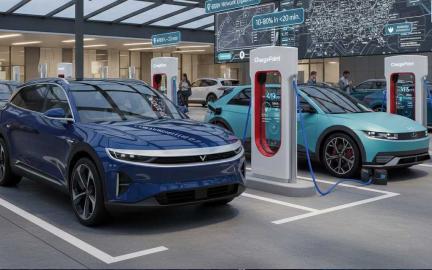
- Ultra-fast charging: 5–10 minute 10–80% times demonstrated on prototypes (1.2 MW+ liquid-cooled piles)
- Retained nail-penetration safety and >3,500-cycle durability
- Pack-level cost reduction: 10–15% lower $/kWh expected
The upgrade debuted on Denza Z9 GT variants (1,036 km CLTC range) and will roll out across BYD’s portfolio. For export markets (Southeast Asia, Latin America, Europe), this means more affordable models with 600+ km range and gasoline-like refueling times—intensifying global price competition.
U.S. Automakers Pivot Toward Hybrids & Affordable Pure EVs
Legacy automakers are responding with a dual-track strategy:
Hybrid acceleration
- Ford, Toyota, Hyundai-Kia, and GM are increasing hybrid allocations
- PHEVs now represent ~35% YoY growth in U.S. electrified sales
- Seen as a pragmatic bridge while charging infrastructure matures
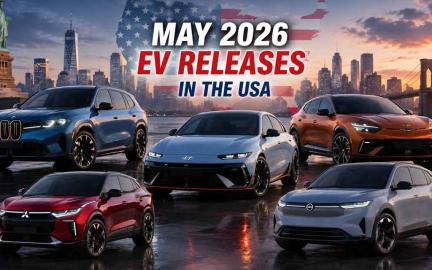
Affordable pure-EV push More than 30 new or refreshed EV models are slated for U.S. showrooms in 2026, with a clear focus on price, range, and practicality:
- Chevrolet Bolt revival (late 2026): Sub-$30,000 MSRP target, ~255 miles EPA range, Tesla NACS charging port
- Rivian R2 (2026 launch): ~$45,000 starting, 300+ miles range, off-road capability, R1T/R1S family DNA
- Hyundai Ioniq 2 / Casper EV derivatives: Subcompact, ~$30,000–$35,000
- Honda next-gen compact EV (Prologue successor): Affordable family hatch
- BMW i3 successor / Neue Klasse entry models: ~$40,000 range
- Slate Auto (stealth): $25,000–$30,000 rugged EV truck/SUV for rural/fleet buyers
These models aim to reach the “next wave” of buyers—households that want electric but balk at $50,000+ price tags.
Fleet Economics Turn Strongly Positive
Commercial operators are increasingly adopting EVs for clear financial reasons:
- Studies (e.g., Geotab, NACFE) show total cost of ownership (TCO) savings of 40–60% for medium-duty vans and urban delivery trucks vs. diesel equivalents
- Electricity rates + maintenance savings + incentives outweigh higher upfront costs
- Major fleets (Amazon, UPS, FedEx, Walmart) are accelerating commitments despite retail slowdown
This segment is providing stable demand while consumer markets recalibrate.
Volkswagen Scout Motors Dealer Lawsuit & Direct-Sales Tension
A high-profile legal dispute emerged in early March 2026: Traditional U.S. dealers filed suit against Volkswagen’s Scout Motors brand (revived Scout SUV/EV line) over its planned direct-to-consumer sales model. The case could test state franchise laws and determine whether EV startups/legacy brands can bypass dealership networks—a model Tesla pioneered but many states restrict.
Outcome will influence distribution strategies for affordable EVs.
Global & India Context
- Europe: Bucked the trend with modest gains (strong CO₂ compliance demand)
- India: Tata, MG (BYD-backed), and Hyundai are ramping affordable options (₹12–20 lakh range); global cost-down trends will accelerate local adoption
- Hyderabad angle: Rising fuel prices + improving charging infrastructure make 2026–2027 a realistic window for middle-class families to consider EVs
Outlook: Transitional 2026, But Momentum Building
March 2026 reflects a market in transition:
- Short-term pain from subsidy cliffs and high financing costs
- Long-term gain from battery breakthroughs, price compression, and proven fleet economics
- Hybrids buying time; affordable pure EVs closing the gap
For everyday American and Indian households, the message is increasingly optimistic: EVs are becoming realistic, practical, and—soon—cheaper to own than gasoline cars.
At VFutureMedia we’ll continue tracking pricing shifts, battery advancements, policy changes, and real-world ownership data to help you make informed decisions in this evolving landscape.
Subscribe to VFutureMedia for weekly EV updates, India-specific model comparisons, charging infrastructure alerts, and in-depth looks at the technologies and economics shaping tomorrow’s mobility—delivered straight to your inbox.
We cover this space every day because we genuinely love it — and so do the people who read us. If you’re one of them, follow us on X and let’s keep the conversation going.

Leave a Comment