
Author: Ethan Brooks Tech & Geopolitics Analyst | Based in USA Published: March 14, 2026 | VFuture Media – www.vfuturemedia.com
The ongoing U.S.-Israel war with Iran, now in its second week as of March 2026, has triggered the largest oil supply disruption in history. With the Strait of Hormuz effectively closed or severely restricted—choking off ~20% of global oil and significant LNG flows—Brent crude has surged past $100 per barrel (peaking near $120 before settling around $90–$97), sending shockwaves through energy markets and global supply chains.
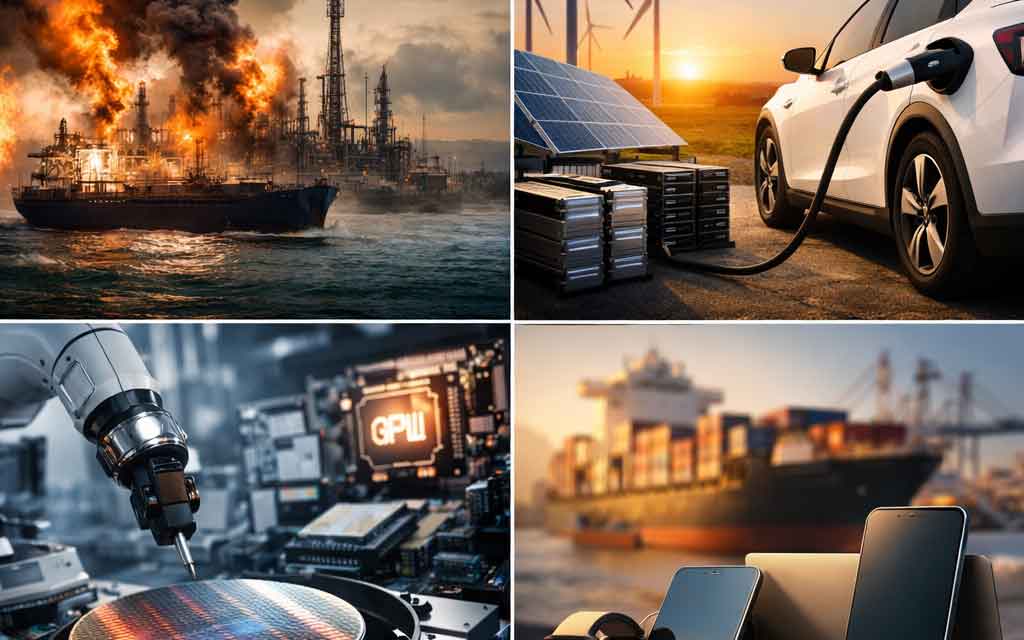
This geopolitical crisis highlights vulnerabilities in fossil fuel dependence while accelerating shifts toward renewable energy, electric vehicles, and resilient tech. Below, we break down the key impacts on EVs, green technology, AI chips/semiconductors, and consumer gadgets.
1. Electric Vehicles (EVs): A Double-Edged Sword – Short-Term Pain, Long-Term Gain
Skyrocketing gasoline and diesel prices (U.S. averages jumping 14%+ in a week to ~$3.60/gallon) make internal combustion engine (ICE) vehicles far costlier to operate. Experts note this could drive consumer interest in EVs, as electricity prices remain relatively insulated from oil shocks (especially in regions with high renewable penetration).
- Positive for EV Adoption: The conflict underscores energy security risks from oil dependence. The International Energy Agency (IEA) highlights how EVs already cut global oil demand by millions of barrels daily; sustained high fuel costs could accelerate this, boosting EV sales and making total cost of ownership more favorable.
- Challenges: Higher energy prices inflate manufacturing costs (e.g., plastics, synthetic rubber from oil-derived feedstocks). Supply chain snarls through disrupted Gulf routes could delay battery/electronics shipments from Asia.
- Outlook: Prolonged disruption may spur governments and consumers toward EVs and hybrids for protection against volatility—reinforcing the push for domestic renewable-powered charging infrastructure.
2. Green Tech & Renewables: Shield Against Oil Shocks
Countries with strong renewable energy mixes (wind, solar, hydro) are better insulated from fossil fuel crises. The war has reignited calls for faster energy transition to achieve sovereignty and reduce exposure to Middle East geopolitics.
- Renewables as a Buffer: Nations accelerating solar/wind deployment face lower inflation risks from oil/gas spikes. The conflict demonstrates why ditching fossil fuels mitigates future shocks—experts argue it strengthens the business case for green tech investments.
- Battery & Materials Strain: While not directly from the region, lithium, cobalt, and rare earth supply chains (often Asia-sourced) face indirect risks via shipping delays and higher energy costs for mining/processing.
- Long-Term Boost: This crisis could catalyze policy shifts toward renewables, EV incentives, and grid upgrades—positioning green tech as a hedge against recurring energy crises.
3. AI Chips & Semiconductors: Supply Risks + Demand Pressure
The semiconductor industry faces a “perfect storm” from the conflict:
- Material Shortages: Key inputs like helium (essential for chip production, sourced partly from Middle East/Qatar) and bromine (from Israel/Jordan) risk disruption in a prolonged war. No easy substitutes exist for helium in fabrication.
- Energy Cost Surge: AI data centers (power-hungry for training models like those from Nvidia) see 3–5x higher electricity needs. Rising global energy prices could dampen AI infrastructure buildouts, hurting demand for memory chips (Samsung, SK Hynix) and GPUs.
- Broader Ripple: Tight supplies already strain smartphones, laptops, autos, and EVs (which rely on advanced chips). Prolonged issues could delay production and raise prices.
Analysts warn extended conflict might force downward revisions in chipmaker guidance, with AI/memory demand pulling back amid higher costs.
4. Consumer Gadgets: Higher Prices & Potential Delays
Gadgets (smartphones, laptops, wearables) embed semiconductors and rely on global shipping. Disruptions compound existing bottlenecks:
- Price Increases: Elevated production/shipping costs from energy surges and route rerouting could hit consumer electronics.
- Supply Delays: Stranded cargo in the Gulf and rerouted logistics threaten timelines for 2026 releases.
- Silver Lining?: Volatility may push innovation in efficient, low-power designs—benefiting AI-integrated gadgets.
Broader Implications & What to Watch
This conflict exposes over-reliance on volatile fossil fuels and concentrated supply chains. While short-term pain hits costs and availability, it strengthens arguments for diversification, onshoring critical tech, and accelerating green tech + AI resilience.
Monitor:
- Strait of Hormuz status and oil price trends
- Official updates from chipmakers (Nvidia, TSMC, Samsung)
- Policy responses promoting EVs/renewables
For strategies on navigating tech/geopolitical risks, AI-driven digital transformation, or sustainable innovation in uncertain times, explore more at VFuture Media.
Keywords: Iran war impact 2026, Strait of Hormuz oil disruption, EV adoption oil prices, green tech energy crisis, AI chips semiconductor shortage, Middle East conflict gadgets supply chain, geopolitical risks EVs AI semiconductors



Leave a Comment