
By Ethan Brooks | March 16, 2026 | vfuturemedia
It’s been a challenging week for the US electric vehicle sector, with fresh reports highlighting cancellations and delays hitting multiple models. The latest wave underscores ongoing demand slowdowns, high development costs, supply chain pressures, intense competition (especially from China), and policy shifts—including the phaseout of federal EV incentives last year and uncertainties under the current administration.
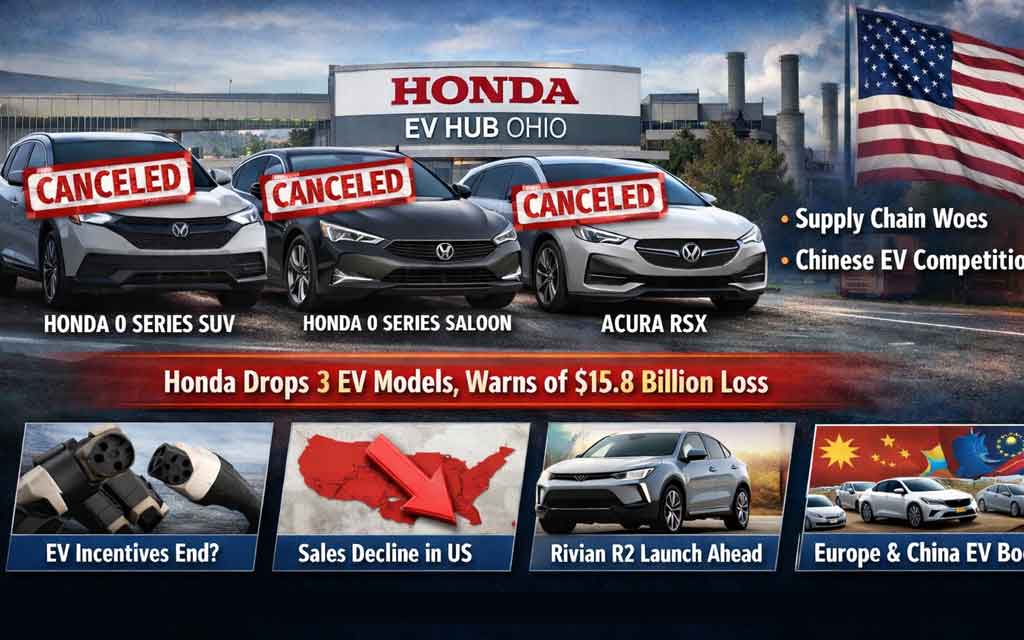
Honda delivered the biggest shock on March 12, 2026, announcing it is canceling three planned EVs for the US market: the Honda 0 Series SUV, Honda 0 Series Saloon (sedan), and the Acura RSX. These were set to be built at Honda’s EV Hub in Ohio on the company’s in-house “Zero” platform, with production originally eyed for later this year. The move is part of a broader reassessment of Honda’s electrification strategy amid “changes in the business environment,” including fading US demand, policy uncertainty, and global competition. Honda warned of significant financial pain, potentially booking losses up to ¥2.5 trillion (around $15.8 billion) for its fiscal year ending March 2026—marking what could be its first annual loss in decades.
This isn’t isolated. Industry trackers from sources like Automotive News, InsideEVs, and Business Insider note a growing list of EV programs canceled or delayed in 2026, with at least six more models affected recently (beyond prior cuts from brands like Ford, GM, Stellantis, Volkswagen, and others). Automakers are pivoting toward hybrids, profitability, and more cautious EV rollouts as consumer adoption faces headwinds like higher upfront costs, charging infrastructure gaps, and economic factors.
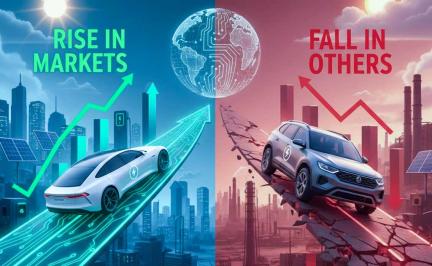
Videos and commentary from creators like Transport Evolved (in their March 14 episode of TEN) and The Electric Viking highlight the contrast: global EV sales are booming in regions like Europe (up significantly) and China, while the US market shows mixed signals. Recent data indicates US EV sales through early 2026 remain up modestly year-over-year in some reports (around 11% in prior quarters per sources like Canary Media), but broader YTD figures for North America show declines (e.g., down 36% in Jan-Feb per Benchmark Mineral Intelligence), with demand bumpy and predictions cautious.
Key factors driving the shakeout:
- Demand slowdown in the US post-incentive changes.
- High costs and supply chain issues.
- Competition from affordable Chinese EVs.
- Policy navigation at the White House, with emphasis on domestic priorities but limited new EV support.
Yet, the story isn’t all gloom. Positives persist that could strengthen survivors:
- Rivian pushing forward with the R2’s Launch Edition at ~$58K, deliveries starting this spring.
- Lucid previewing more affordable platforms and models.
- Ongoing advances in battery tech, cost reductions, and efficiency improvements.
This period of industry consolidation could weed out less viable projects, paving the way for stronger, more consumer-friendly EVs focused on range, affordability, and real-world usability. The US risks lagging globally without accelerated innovation, domestic manufacturing boosts, and clearer policy support—but players like Rivian, Tesla, and others show paths forward.
How can the US speed up its EV transition? More incentives, faster charging infrastructure, battery supply chain investments, or hybrid bridges? Share your views in the comments!
#EVCancellations #EVIndustry #TeslaRivals #GreenTransport
Honestly, we’re still debating this one in the comments. Where do you land? Drop your take below — the best discussions on this site have always come from readers who actually know their stuff.
We started VFuture Media because we wanted tech news written by people who actually follow this industry — not content farms chasing keywords. If that resonates, we’d love to have you as a regular reader. Pull up a chair.
Leave a Comment