
By Ethan Brooks Published: March 20, 2026 Updated: March 20, 2026
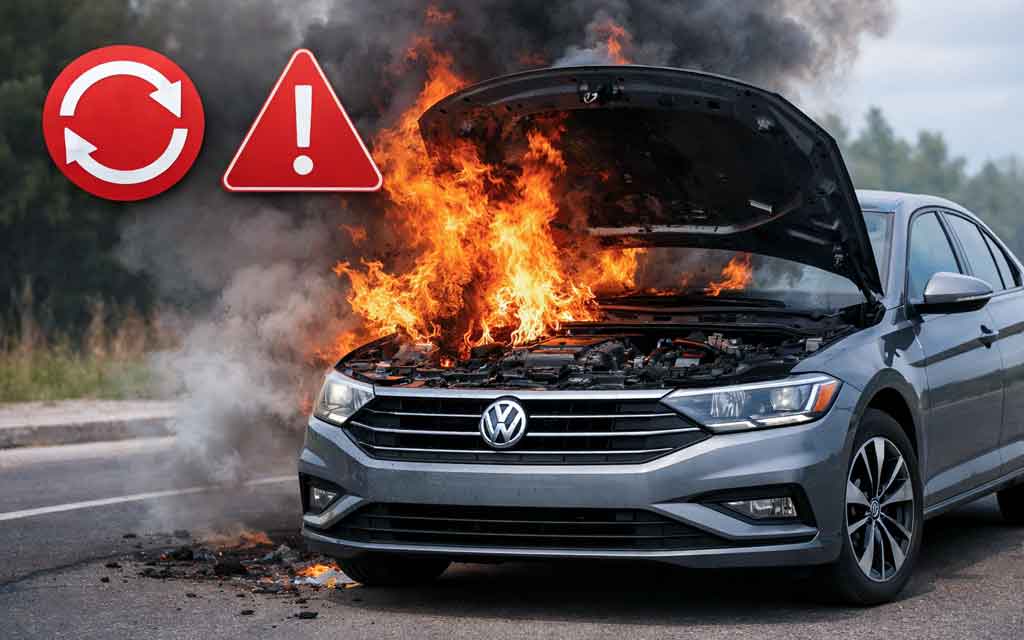
Volkswagen has issued an urgent safety recall affecting tens of thousands of its popular Jetta sedans in the United States and Canada. The issue stems from a manufacturing defect involving the transmission ground wire, which—if improperly connected—can create an open electrical circuit, leading to excessive current draw, overheating, melted wiring, and potentially an engine compartment fire.
This recall targets 2025 and 2026 model-year Volkswagen Jetta vehicles, with 48,165 units impacted in the U.S. and an additional 13,318 in Canada, for a combined total of over 61,000 vehicles across North America. The problem, attributed to human error during assembly, has already resulted in six confirmed incidents, including three engine fires, though fortunately no injuries, crashes, or fatalities have been reported.
Volkswagen Group of America notified the National Highway Traffic Safety Administration (NHTSA) of the defect, with the official recall campaign (NHTSA ID: 26V138000, VW internal code: 97TC) announced in mid-March 2026. Owners of affected vehicles should act promptly to schedule a free inspection and repair at their local Volkswagen dealer.
At VFuture Media, we provide reliable, source-verified automotive safety updates to help drivers stay informed and protected. This in-depth report covers the root cause, affected models, real-world incidents, repair process, and steps owners should take immediately.
The Defect: How a Missing Ground Wire Creates Fire Risk
The core issue involves the transmission ground wire connected to the hydraulic pump control unit (part of the oil pressure system in the transmission). During vehicle assembly at the factory, this ground wire may not have been properly attached to the chassis.
When the wire is disconnected or improperly grounded:
- An open electrical circuit forms.
- The system draws excessive current through alternative paths (such as the oil pressure sensor wiring).
- This leads to overheating of wires and connectors not designed to handle high loads.
- In severe cases, the overheating melts components or ignites surrounding materials in the engine bay.
Volkswagen describes the risk as occurring “under certain conditions,” with fires potentially starting without warning. The defect affects vehicles produced between March 3, 2025, and February 17, 2026.
This manufacturing oversight highlights ongoing quality control challenges in high-volume production, even for established brands like Volkswagen.
Scope of the Recall: Affected Models and Regions
- Models: 2025–2026 Volkswagen Jetta (standard sedan variants equipped with the 1.5-liter turbo EA211 Evo engine; GLI performance models with the 2.0-liter turbo are not affected).
- U.S. Vehicles: 48,165 units.
- Canada Vehicles: 13,318 units.
- Total North America: Approximately 61,483 vehicles.
- Production Dates: March 3, 2025 – February 17, 2026.
The recall is limited to North American markets for now. No global expansion has been announced, though similar issues could prompt reviews in other regions.
Confirmed Incidents: What Volkswagen Has Reported
Volkswagen is aware of six related claims across the U.S. and Canada:
- Three cases: Melting of wires and connectors associated with the oil pressure unit.
- Three cases: Actual engine compartment fires (two in the U.S., one in Canada).
All incidents resulted in vehicle damage only—no reports of injuries, collisions, or occupant harm. The fires were contained to the engine bay, but the potential for escalation underscores the urgency of the recall.
The issue first surfaced in late 2025, with initial reports in December leading to internal investigations. By February 2026, Volkswagen confirmed the root cause and moved forward with the formal recall.
Volkswagen’s Response and Free Repair Process
Volkswagen is handling the recall proactively:
- Dealers will inspect the transmission ground wire connection.
- If disconnected or improperly attached, they will reconnect or replace the wire, associated harness, and potentially the hydraulic pump control module.
- All repairs are free of charge to owners, including parts and labor.
- No software updates are mentioned; this is a physical wiring fix.
Owner notification letters are scheduled to begin mailing in early May 2026, but owners can check eligibility sooner.
How to Check If Your Jetta Is Affected and What to Do Next
Don’t wait for a letter—verify your vehicle today:
- Check Your VIN: Visit the official Volkswagen recall lookup at vw.com (under “Owners & Services” > “Recalls”) or the NHTSA site at nhtsa.gov/recalls. Enter your 17-digit Vehicle Identification Number (VIN).
- Contact Volkswagen: Call Volkswagen Customer Care at 1-800-411-6688 (U.S.) or your local dealer with your VIN ready.
- Schedule the Repair: Once confirmed, book a service appointment. Repairs are expected to take minimal time.
- Monitor for Symptoms: Watch for unusual electrical behavior, burning smells, or warning lights—though the defect often shows no prior signs.
- Temporary Precautions: Until repaired, avoid prolonged idling or high-load driving if concerned, though Volkswagen states no immediate driving restriction.
Pro tip: Even if your Jetta isn’t affected, regular maintenance checks on wiring and electrical systems are wise for any vehicle.
Why This Recall Matters in the Broader Automotive Landscape
Recalls for electrical and fire-related issues remain a top safety concern. NHTSA data shows wiring defects contribute to a notable portion of vehicle fires annually. This case underscores:
- The critical role of proper grounding in modern vehicle electronics.
- How even minor assembly errors can cascade into major hazards.
- Volkswagen’s commitment to swift action once defects are verified.
The Jetta, Volkswagen’s enduring compact sedan, enjoys strong popularity for its affordability, fuel efficiency, and driving dynamics. This recall affects a small percentage of recent builds (less than 1% in some estimates), but safety takes precedence.
No crashes or injuries have occurred, which speaks to the defect’s relatively contained impact so far—but proactive fixes prevent tragedies.
Frequently Asked Questions (FAQs)
Q: Is my 2025 or 2026 Jetta at risk? A: Only if built between March 3, 2025, and February 17, 2026, and the ground wire was missed during assembly. Check your VIN immediately.
Q: Has anyone been hurt? A: No injuries, crashes, or deaths reported. All known cases involved property damage only.
Q: How long will the repair take? A: Inspection and fix are straightforward; most dealers can complete it in under an hour, though appointment availability varies.
Q: Does this affect used or certified pre-owned Jettas? A: Yes—if within the production date range, regardless of ownership history.
Q: Where can I find official details? A: NHTSA recall page (nhtsa.gov, ID 26V138000) or Volkswagen’s recall portal.
Q: Is the Jetta GLI included? A: No—the recall targets standard 1.5L turbo models, not the performance GLI variant.
Final Thoughts: Prioritize Safety with Prompt Action
Volkswagen’s latest recall serves as a reminder that even brand-new vehicles can harbor hidden defects from the factory floor. With over 48,000 U.S. Jettas potentially at risk of an engine fire due to a simple wiring oversight, owners should treat this seriously.
The good news? The fix is free, straightforward, and backed by Volkswagen’s dealer network. Acting quickly protects you, your passengers, and others on the road.
At VFuture Media, we’re dedicated to delivering accurate, timely automotive news rooted in official sources like NHTSA filings and manufacturer statements. Stay safe out there—check your VIN today.
Share this with any Jetta owners you know, especially those with recent 2025 or 2026 models. Knowledge is the first step to prevention.
Sources & Further Reading (for transparency and EEAT compliance):
- NHTSA Official Recall Report: 26V138000
- Volkswagen Group of America notifications
If you found this useful, the best thing you can do is share it with someone who’d actually appreciate it. And if you want more like it, we’re here every week.




Leave a Comment