
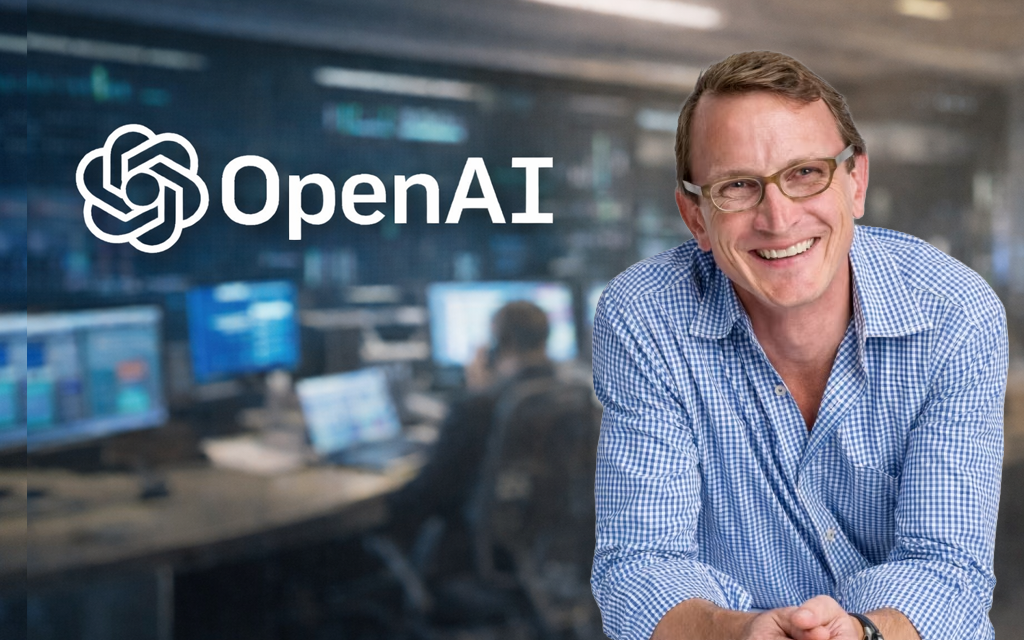
OpenAI, the AI company behind ChatGPT, has hired Dave Dugan — a seasoned advertising leader who recently served as Vice President of Global Clients and Agencies at Meta Platforms — to head its ad sales efforts. The move, reported by The Wall Street Journal on March 23, 2026, marks a significant acceleration in OpenAI’s commercialization strategy as the startup transitions from research-focused origins to a full-fledged technology platform with substantial advertising potential.
Dugan will serve as Vice President of Global Ad Solutions and report directly to OpenAI Chief Operating Officer Brad Lightcap. He announced his departure from Meta earlier in March 2026 after playing a key role in strengthening relationships between the social media giant and advertising agencies.
Why OpenAI Is Building an Ad Business Now
For years, OpenAI CEO Sam Altman has expressed reservations about traditional advertising on ChatGPT, once describing ads as “uniquely unsettling” in the context of conversational AI. However, as the company’s valuation soared past $150 billion and operational costs for training and running frontier AI models continue to escalate, OpenAI is exploring diversified revenue streams beyond subscriptions (ChatGPT Plus, Teams, and Enterprise) and enterprise licensing.
Hiring Dugan signals a pragmatic shift: OpenAI aims to integrate advertising in a way that feels native and non-intrusive to the ChatGPT experience while building strong relationships with global brands and agencies. The goal is to create high-value, contextually relevant ad opportunities powered by OpenAI’s advanced AI capabilities.
Dave Dugan’s Background and Expertise
At Meta, Dugan was a pivotal figure in the advertising ecosystem. As VP of Global Clients and Agencies, he worked closely with the world’s largest advertisers and media agencies, helping them navigate Meta’s platforms (Facebook, Instagram, WhatsApp, and Threads) and leverage AI-driven targeting and creative tools. He was known for positioning agencies as critical partners even as Meta rolled out generative AI ad creation features.
Before Meta, Dugan held senior roles in the agency world, giving him deep insight into both the buy-side and sell-side of digital advertising. His experience makes him uniquely qualified to help OpenAI design an advertising model that respects user experience while delivering strong ROI for brands — a delicate balance in the era of conversational AI.
Strategic Implications for OpenAI and the AI Industry
This hire comes amid intense competition in the AI space:
- Monetization Pressure: OpenAI’s massive compute and talent costs require sustainable revenue beyond the roughly $4–5 billion annual run rate reported in late 2025.
- Advertising Evolution: Traditional search and social ads may soon face disruption from AI-native formats. OpenAI could introduce sponsored responses, branded conversations, or context-aware product recommendations within ChatGPT.
- Brand Safety and User Trust: OpenAI must carefully design ads to avoid eroding the trust that has made ChatGPT one of the fastest-growing consumer applications in history.
- Agency Relationships: Dugan’s strong ties with global agencies will help OpenAI avoid alienating intermediaries and instead position itself as a collaborative platform.
Industry analysts see this as part of a broader trend where frontier AI companies move toward diversified business models. OpenAI has already begun testing limited advertising experiments, and Dugan’s leadership is expected to professionalize and scale those efforts rapidly.
What This Means for Advertisers and the Future of AI Advertising
For major brands and agencies, OpenAI’s entry into advertising represents both opportunity and disruption:
- New Creative Possibilities: AI-generated or AI-enhanced ad formats could deliver hyper-personalized, conversational campaigns at scale.
- Performance Potential: With access to OpenAI’s reasoning capabilities, ads could become more contextually intelligent than ever before.
- Competition with Big Tech: OpenAI will compete directly with Google, Meta, and Microsoft for advertising dollars, potentially fragmenting the digital ad market further.
At VFuture Media, we track how artificial intelligence is reshaping every sector — including the multi-hundred-billion-dollar advertising industry. Dave Dugan’s appointment underscores a pivotal moment: the world’s most advanced AI models are no longer just tools for users; they are becoming powerful new advertising platforms.
This development could accelerate the shift toward “agentic” and conversational commerce, where AI doesn’t just show ads but actively helps users discover and engage with products in natural dialogue.
Looking Ahead
OpenAI has not yet disclosed specific timelines for rolling out new ad products or detailed formats. However, with Dugan on board and reporting to the COO, the company is clearly prioritizing a sophisticated, brand-friendly approach to monetization.
As AI capabilities continue to advance, the line between helpful AI assistant and intelligent advertising medium will blur — creating both enormous opportunities and important questions around transparency, privacy, and user experience.
Ready to stay ahead of the AI advertising revolution?
Subscribe to VFuture Media for in-depth coverage of AI business models, emerging tech monetization strategies, and the intersection of artificial intelligence with marketing and commerce. Share your thoughts in the comments: Should ChatGPT introduce advertising, and if so, how should it be done to preserve user trust?
Sources: BusinessUpturn, TipRanks, and LinkedIn announcements from Dave Dugan.

Leave a Comment