
By VFuture Media Team | Updated: March 25, 2026
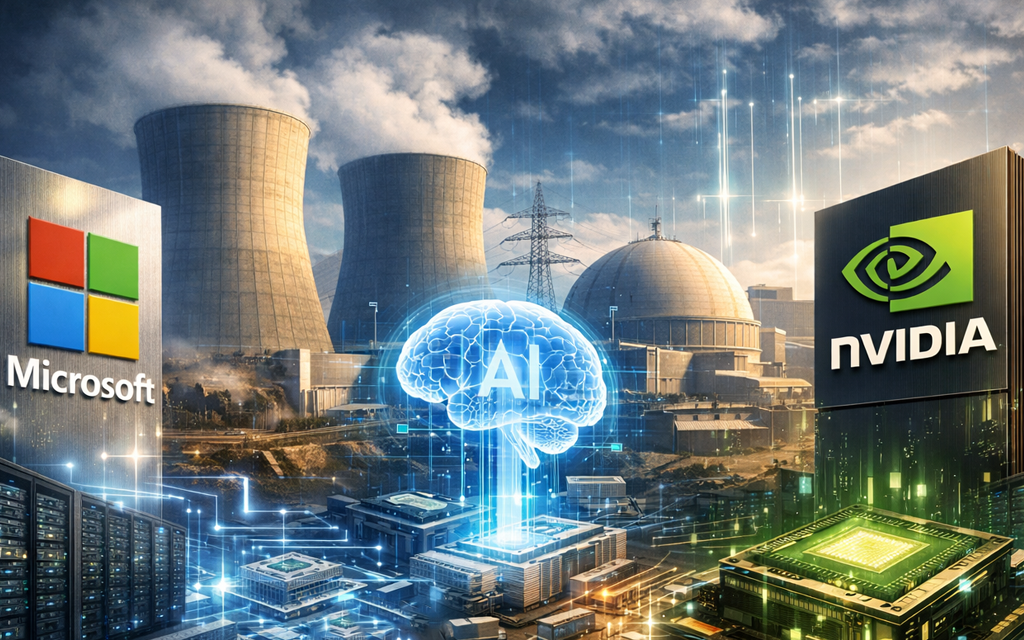
In a major move announced at CERAWeek 2026 in Houston, Microsoft and Nvidia have formed a strategic collaboration on “AI for Nuclear Energy” to break long-standing bottlenecks in nuclear power plant development. The partnership combines cutting-edge AI, digital twins, and simulation tools to streamline permitting, speed up design, and optimize operations — directly addressing the surging electricity demand from AI infrastructure.
As hyperscale data centers consume ever-more power, this Microsoft-Nvidia nuclear AI initiative could slash years off traditional timelines and unlock the carbon-free, always-on energy needed to fuel the next wave of artificial intelligence growth.
At VFuture Media, we track the intersection of AI, energy, and infrastructure. Here’s your complete breakdown of the Microsoft Nvidia nuclear energy partnership, its technology stack, real-world impact, and why it matters for investors, utilities, and the future of AI.
Why Microsoft and Nvidia Are Teaming Up on Nuclear Power
The explosion of generative AI has created unprecedented demand for reliable, 24/7 carbon-free electricity. Microsoft alone is pursuing massive deals to restart reactors like Three Mile Island Unit 1, while Nvidia’s GPUs power the world’s largest AI training clusters.
Key drivers behind the partnership:
- AI power hunger: Data centers are projected to drive massive U.S. electricity demand growth through 2030.
- Nuclear bottlenecks: Permitting can take 5–10+ years and cost hundreds of millions; engineering data is fragmented; safety reviews are manual and slow.
- Tech synergy: Microsoft brings generative AI accelerators and cloud infrastructure; Nvidia contributes Omniverse, physics simulation, and digital twin expertise.
Microsoft Vice Chair and President Brad Smith highlighted the goal: using AI to help the nuclear industry move “from ambition to delivery” faster and safer.
Inside the Microsoft-Nvidia AI for Nuclear Collaboration
Announced March 24, 2026, the initiative delivers an end-to-end AI-powered digital ecosystem for nuclear energy, hosted on Azure.
Core technologies include:
- NVIDIA Omniverse, Earth 2, CUDA-X, AI Enterprise, PhysicsNeMo, Isaac Sim, and Metropolis — for high-fidelity digital twins, physics-based simulations, and virtual modeling of entire plants.
- Microsoft Generative AI for Permitting Solution Accelerator and Microsoft Planetary Computer — to automate regulatory workflows, standardize data, and reduce manual effort.
Early results are impressive: Partner Aalo Atomics reportedly reduced permitting time by 92% using Microsoft’s generative AI tools, potentially saving $80 million per year.
The companies will present joint perspectives with Aalo Atomics in a CERAWeek session titled “A Digital Age for Nuclear.”
What This Means for Nuclear Development and AI Growth
Opportunities unlocked:
- Faster permitting and design iteration through generative AI and virtual simulations.
- Safer, more efficient operations via real-time AI monitoring and predictive maintenance.
- Scalable deployment of advanced reactors (SMRs and next-gen designs) to meet AI-driven demand.
- Cost reductions and risk mitigation that make nuclear more attractive to utilities and investors.
This partnership directly supports Microsoft’s broader nuclear strategy — including power purchase agreements and investments in small modular reactors — while giving Nvidia deeper reach into the energy sector that powers its own GPU ecosystem.
Challenges still ahead:
- Regulatory acceptance of AI-assisted approvals.
- Supply chain and workforce constraints in nuclear construction.
- Public perception and safety concerns.
Investor Implications: AI + Nuclear = Mega-Growth Sector
For investors tracking MSFT, NVDA, and the clean energy transition:
- Direct play on AI energy infrastructure: The collaboration positions both companies at the center of the nuclear revival.
- Broader ecosystem winners: Utilities, SMR developers (like Aalo Atomics), and nuclear tech firms could see accelerated timelines and new contracts.
- Market reaction: News of the partnership emerged alongside ongoing discussions about hyperscaler energy needs, underscoring the strategic importance.
Watch for deeper financial details as projects move from pilot to full deployment.
What Should You Do Next? Actionable Checklist
- Follow official updates — Microsoft’s energy blog and Nvidia’s announcements for tool releases.
- Monitor CERAWeek 2026 sessions — Key insights from the joint presentation.
- Track related stocks and ETFs — Nuclear-focused investments may gain momentum.
- Subscribe to VFuture Media for ongoing analysis of AI energy plays, data center trends, and emerging tech-energy intersections.
FAQ: Microsoft Nvidia Nuclear Partnership 2026
- When was the partnership announced? March 24, 2026, at CERAWeek in Houston.
- What does it focus on? Using AI and digital twins to accelerate nuclear permitting, design, and operations.
- Which technologies are involved? NVIDIA Omniverse, PhysicsNeMo, Isaac Sim + Microsoft Generative AI for Permitting and Planetary Computer.
- Why now? Exploding AI data center power demand requires reliable, carbon-free baseload energy like nuclear.
The Bottom Line: Powering the AI Future with Intelligent Nuclear
The Microsoft-Nvidia AI for nuclear energy partnership represents a pivotal step in solving one of the biggest constraints on AI scaling: abundant, clean, always-available power. By applying the same transformative technologies driving AI breakthroughs to the nuclear industry itself, the two giants are helping usher in a new digital age for atomic energy.
Whether you’re an energy executive, tech investor, or simply interested in how AI will shape our energy future, this collaboration is one to watch closely.
Stay ahead with www.vfuturemedia.com — your source for in-depth coverage of AI infrastructure, energy innovation, and the technologies defining tomorrow.
What do you think — will AI-accelerated nuclear finally break the permitting logjam? Share your thoughts in the comments or on X @VFutureMedia. For more insights, subscribe to our newsletter today.

Leave a Comment