
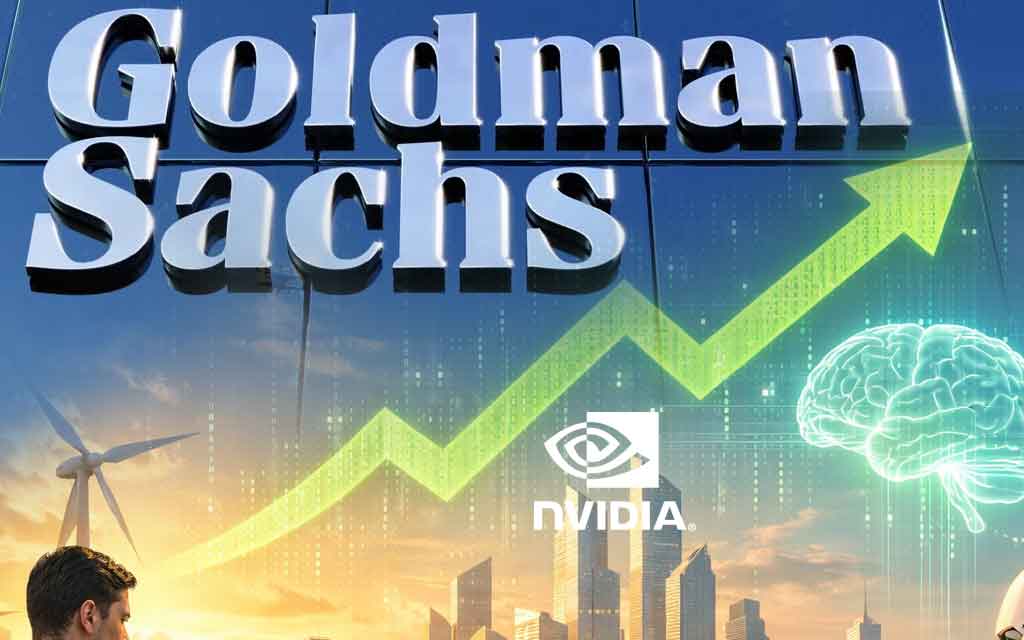
As the AI investment frenzy continues into 2026, a sharp debate is unfolding among economists, investors, and technologists: Is the massive capital poured into artificial intelligence delivering real economic returns, or are we witnessing a classic hype cycle that could lead to painful disruption before any productivity boom materializes? Goldman Sachs has emerged as a prominent skeptic, highlighting that AI contributed “basically zero” to U.S. GDP growth in 2025 despite hundreds of billions in spending.Finance.yahoo
At the same time, NVIDIA’s advancements showcased at GTC 2026—including dramatic hardware efficiencies—suggest the groundwork is being laid for a potential breakout in the coming years.
Goldman Sachs’ Sobering Assessment of AI’s 2025 Contribution
Goldman Sachs Chief Economist Jan Hatzius stated that heavy AI investments by major tech companies had essentially no measurable positive effect on U.S. economic growth last year. Much of the spending flowed to imported hardware—particularly semiconductors from Taiwan and other Asian suppliers—meaning the capital expenditure boosted foreign GDP more than domestic output.Tomshardware
A follow-up analysis of corporate earnings reinforced this view: Goldman found “no meaningful relationship between productivity and AI adoption at the economy-wide level.” While companies frequently discussed AI on earnings calls, broad productivity metrics showed little correlation with adoption rates. However, in targeted use cases (such as specific coding or customer service tasks), management teams reported a median productivity gain of around 30%.Fortune
This echoes Goldman’s earlier 2023 forecast, which projected measurable AI-driven GDP and labor productivity gains starting in 2027, potentially adding 1.5 percentage points annually to U.S. productivity growth over a decade under widespread adoption. For now, the data suggests the infrastructure buildout phase is dominating, with limited diffusion into broader economic output.
Boom or Depression-Like Disruption? The Ongoing Debate
The disconnect between sky-high AI valuations/investments and modest near-term economic impact has intensified discussions about AI’s dual nature:
- Optimistic View (Productivity Boom): Proponents argue that AI is still in the “installation” phase, similar to electricity or the internet. Once agentic systems, longer-context models, and enterprise integration scale, productivity could surge, creating new industries and elevating living standards. Goldman itself estimates generative AI could eventually raise U.S. labor productivity by ~15% when fully adopted.Finance.yahoo
- Pessimistic View (Disruption Risks): Critics warn of a “J-curve” effect—short-term pain from job displacement and suppressed demand before gains appear. Some analysts raise the specter of depression-like scenarios if white-collar automation outpaces re-skilling and new job creation, leading to reduced consumption and a deflationary spiral. Nobel laureate Joseph Stiglitz has cautioned about an AI bubble that could burst, with workers bearing the brunt.Fortune
Recent corporate actions, including targeted layoffs tied to AI efficiency gains, add fuel to concerns about labor market shifts. Yet broader unemployment remains relatively contained, and some sectors report AI augmenting rather than fully replacing human work.
The consensus leaning from Wall Street appears cautious: 2026 may mark the transition year, with meaningful productivity tailwinds expected in H2 2026 and beyond, aligning with Morgan Stanley’s earlier warnings of a significant capability leap that “most of the world isn’t ready for.”
NVIDIA GTC 2026: Hardware Efficiencies as the Game-Changer
Against this macroeconomic backdrop, NVIDIA’s GTC 2026 keynote and announcements reinforced its role as the enabler of cheaper, more scalable AI.
Key highlights included:
- Blackwell platform efficiencies already delivering up to 10x lower cost per token for inference on open-source models compared to prior Hopper systems, with providers like Fireworks AI and Together AI reporting major savings in healthcare, gaming, and customer service.Blogs.nvidia
- The upcoming Vera Rubin platform promises another leap—up to 10x lower inference token costs versus Blackwell, combined with extreme co-design across GPUs, CPUs, networking, and software. This includes 10x improvements in performance per watt for high-context and agentic workloads.
- Integration examples, such as with Groq technology, showing potential 35x higher throughput per megawatt in premium tiers, directly addressing energy and cost bottlenecks that could otherwise limit scaling.
These gains matter because they lower the barrier to widespread deployment. Cheaper inference makes it economically viable for more companies to move beyond pilots into production agentic AI systems, digital twins, and automated workflows—precisely the areas where localized 30%+ productivity lifts have already been observed.
NVIDIA also spotlighted real-world wins, including digital twin deployments yielding 20% throughput increases and significant capex reductions in manufacturing.
What This Means for Businesses and Investors in 2026
The current narrative points to a lagged productivity story: 2025 was dominated by capex and infrastructure (with limited domestic GDP feedback), while 2026–2027 could see diffusion accelerate thanks to falling inference costs and maturing software/tools.
Key implications:
- Infrastructure winners (NVIDIA and ecosystem partners) continue to benefit from the buildout.
- Productivity beneficiaries—sectors with high labor costs in automatable tasks (coding, design, customer operations)—stand to see the earliest ROI.
- Risk management remains critical: Companies must balance AI experimentation with workforce transition strategies to avoid short-term disruption outweighing gains.
While Goldman Sachs data tempers near-term euphoria, the combination of record funding, frontier model progress, and NVIDIA’s efficiency roadmap keeps the long-term bullish case intact. The debate isn’t whether AI will transform the economy—it’s about the timing, distribution of gains, and how society navigates the transition.
For now, the smart money is watching for early signals of broader productivity pickup in corporate results later in 2026. If NVIDIA’s promised cost reductions translate into mass adoption, the “basically zero” chapter of 2025 could quickly give way to a more transformative era.
Stay tuned to vfuturemedia.com for continuing coverage of AI economics, hardware breakthroughs, and the real-world impact on productivity and jobs.
Keywords: Goldman Sachs AI productivity 2025, AI GDP contribution 2026, NVIDIA GTC 2026 efficiencies, AI boom vs disruption, NVIDIA Blackwell Rubin 10x cost reduction, AI labor market impact.
Ethan Brooks is a tech journalist based in the USA, covering AI innovation, economic impacts, and industry partnerships.


Leave a Comment