
By Ethan Brooks U.S.-based EV and tech analyst with over 10 years covering the American automotive and emerging technology markets. Based in the United States.
Las Vegas, NV / April 6, 2026 — The Consumer Electronics Show (CES) 2026, held in January in Las Vegas, once again proved that artificial intelligence is no longer a futuristic buzzword — it is becoming a practical everyday tool for electric vehicle owners across the United States.
While flashy robots and AI-powered home appliances dominated headlines, several AI-driven gadgets and software updates stood out for their direct impact on EV drivers. These innovations address persistent pain points like range anxiety, charging optimization, energy management, and in-cabin convenience, making electric vehicles more accessible and stress-free for American families, commuters, and fleet operators.
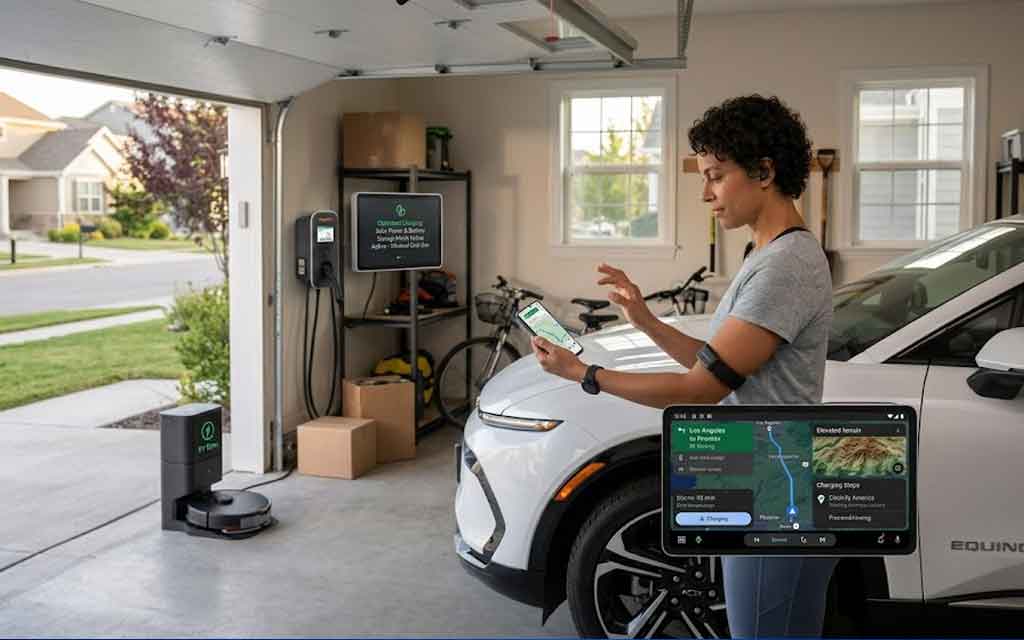
Google’s AI-Powered EV Route Planning Comes to Android Auto
One of the most practical CES-adjacent advancements rolling out in early 2026 is Google’s enhanced EV route planning in Google Maps for Android Auto. The update supports over 350 EV models across at least 15 major brands and uses AI algorithms to deliver accurate battery predictions, optimal routing, and intelligent charging stop recommendations.
Key features include:
- Real-time battery usage estimates based on vehicle weight, battery size, driving style, terrain, and weather.
- Automatic insertion of charging stops with preconditioning suggestions to maximize efficiency.
- Seamless integration with Tesla Superchargers via NACS adapters and other networks.
For U.S. drivers planning road trips from California to Texas or Midwest commutes in variable weather, this tool significantly reduces range anxiety. Google’s AI considers factors like elevation changes and traffic in ways traditional planners often miss, helping owners arrive with more battery remaining.
AI Battery Intelligence Platforms for EVs and Fleets
CES 2026 showcased several AI platforms aimed at making EV batteries smarter and longer-lasting. Companies like Electra Vehicles demonstrated its EVE-Ai™ platform live, which turns traditional battery management systems (BMS) into adaptive, predictive AI-driven systems.
Highlights include:
- Predictive analytics for fleet operators to optimize charging schedules and reduce downtime.
- Edge-based AI controls that learn individual driving patterns to extend battery health and improve performance.
- Applications beyond passenger cars, including battery energy storage systems (BESS) that support vehicle-to-grid (V2G) setups.
Similar innovations, such as LG Energy Solution’s Better.Re AI battery management and TRIZ-AI diagnostic tools, use real-time OBD2 data to predict maintenance needs and optimize charging — potentially saving American EV owners hundreds of dollars in long-term battery costs.
Wearables and Neural Interfaces for Smarter EV Interaction
Wearables took a major leap at CES 2026 with AI integration that benefits EV drivers:
- Garmin’s In-Cabin Neural Band (prototype developed with Meta) — a wristband that reads neural signals for mid-air gesture control of infotainment systems. This allows drivers (when safely parked) or passengers to swipe and select without touching screens — useful during autonomous or Level 2+ driving modes.
- AI-powered smart rings and watches with advanced health tracking and energy monitoring that can sync with vehicle apps to suggest optimal departure times based on battery state and grid demand.
- Over-ear AI headphones (such as Razer’s Project Motoko concept) with built-in cameras and microphones for contextual AI assistance, potentially helping with navigation voice commands or real-time translation during cross-state travel.
These devices move EV interaction from touchscreens toward more intuitive, eyes-on-the-road experiences — especially valuable as robotaxi and advanced driver-assistance systems gain traction in the U.S.
Smart Home and Energy Management Gadgets Supporting EVs
AI also bridged the gap between home and vehicle at CES 2026:
- Smart appliances and energy hubs with AI that learn household patterns and coordinate with EV charging to avoid peak electricity rates or support solar + storage setups.
- Portable power stations and wireless charging solutions enhanced with AI for efficient energy distribution.
- Robot vacuums and home assistants (many with improved AI) that include energy monitoring features, helping users understand how home devices impact overall electricity bills when charging an EV overnight.
For American homeowners with solar panels or considering home battery storage, these gadgets enable true vehicle-to-home (V2H) or vehicle-to-grid optimization.
What This Means for American EV Owners in 2026
The CES 2026 AI gadgets arrive at a critical time. With the federal EV tax credit no longer available and new vehicle sales moderating, tools that improve efficiency, reduce costs, and enhance convenience are more important than ever.
Benefits for U.S. Drivers:
- Lower total cost of ownership through smarter charging and battery longevity.
- Reduced stress on long trips thanks to accurate AI predictions.
- Better integration between home energy systems and EVs, supporting grid stability.
Remaining Challenges:
- Compatibility across different vehicle brands and software ecosystems.
- Privacy concerns with AI collecting driving and location data.
- Availability and pricing — while some features roll out via over-the-air updates, premium wearables and advanced platforms may carry higher costs initially.
Industry experts note that on-device and edge AI (processing locally rather than in the cloud) dominated CES 2026, promising faster responses and better privacy — a welcome trend for EV applications.
Practical Tips for American EV Buyers
If you’re shopping for an EV or upgrading your current setup in 2026:
- Check if your vehicle is among the 350+ models supported by Google’s new Android Auto EV planner.
- Look for over-the-air software updates that add AI battery optimization.
- Consider affordable AI wearables or smart home energy monitors that integrate with your charging routine.
As more affordable EVs from Kia, Chevrolet, and Subaru reach dealerships, pairing them with these intelligent gadgets can make the ownership experience far more rewarding.
Looking Ahead
CES 2026 made it clear: AI is quietly becoming the invisible co-pilot for EV owners. From route planning and battery health to gesture controls and home energy coordination, these smart devices are helping bridge the gap between early-adopter excitement and mainstream practicality in the American market.
U.S. drivers who embrace these tools today will likely enjoy smoother, cheaper, and more sustainable electric mobility tomorrow.
Which CES 2026 AI gadget are you most excited to try with your EV? Share your experiences or questions in the comments below.
Ethan Brooks has covered major tech events including CES alongside U.S. EV market developments for over a decade. This analysis draws from official CES 2026 announcements, Google product updates, Electra Vehicles demonstrations, and coverage from reputable sources including CNET, Wired, Electrive, and InsideEVs for balanced, trustworthy insights.



Leave a Comment