

Gigawatt-Scale Clusters, Hundreds of Thousands of GPUs, and Exaflop Performance Define the Battle for AGI Supremacy
As of April 2026, the race for AI supremacy has shifted from clever algorithms to raw computational power. The AI compute wars are in full swing, with tech giants and AI labs pouring billions into massive superclusters capable of delivering exaflop-scale performance — quintillions of floating-point operations per second. At the heart of this battle stands xAI’s Colossus 2, the world’s first gigawatt-scale AI training supercluster, which is training multiple frontier models simultaneously and reshaping the competitive landscape.
The New Battlefield: Compute as the Ultimate Moat
Training today’s most advanced AI models requires enormous resources. A single frontier model can consume hundreds of thousands of GPU-hours. In 2026, success increasingly depends on who can secure, power, and efficiently utilize the largest coherent clusters of next-generation GPUs (primarily NVIDIA’s Blackwell series).
Key metrics in the compute arms race include:
- Power consumption (measured in megawatts or gigawatts)
- GPU count and type
- Effective exaflops of AI performance
- Speed of deployment and single-site density (which enables faster iteration)
xAI’s Colossus: Leading with Speed and Scale
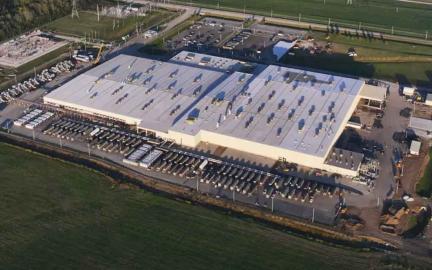
xAI’s Colossus family has set new records for rapid construction and scale. Colossus 1 was built from scratch to 100,000 GPUs in just 122 days and doubled to 200,000 GPUs in another 92 days. Colossus 2 has pushed the boundaries further:
- Power Capacity: Operational at approximately 1 GW (with some reports noting cooling capacity ramping toward sustained levels by mid-2026), targeting 1.5 GW by April 2026 and up to 2 GW total across the Memphis campus.
- GPU Count: Around 555,000 NVIDIA GPUs (heavily featuring GB200 and GB300 Blackwell accelerators), with ambitions to reach 1 million GPUs.
- Investment: Estimated $18+ billion for hardware and infrastructure.
- Performance Potential: Theoretical peaks approaching hundreds of exaflops, enabling parallel training of models including Imagine V2, multiple 1T and 1.5T variants, a 6T model, and a 10T-parameter model.
xAI’s single-site focus in Memphis, Tennessee, gives it an edge in iteration speed — engineers can optimize the entire stack without managing distributed systems. The integration with SpaceX (forming SpaceXAI) brings additional advantages in power infrastructure and rapid deployment.
Elon Musk has stated ambitions for xAI to possess more compute than the rest of the industry combined within five years, backed by aggressive fundraising and hardware purchases.
Major Competitors in the Compute Wars
Microsoft & OpenAI (Project Stargate): The long-planned Stargate supercomputer envisions massive investment (originally $100B+, with broader plans reaching hundreds of billions). In 2026, the partnership operates large distributed clusters across Azure, including a significant campus in Abilene, Texas. Microsoft has taken over additional data center builds, targeting multi-gigawatt capacity over time. However, some ambitious single-site expansions have faced adjustments, with a focus shifting partly toward rented capacity for flexibility.
Meta: Meta is investing heavily, with 2026 capital expenditures projected at $115–135 billion. The company has secured large commitments for Blackwell and future Rubin GPUs and is building multi-gigawatt-scale infrastructure, including the Hyperion cluster. Meta’s approach blends NVIDIA hardware with custom chips for cost efficiency and open-source model training.
Google: Google relies heavily on its proprietary TPU v7 (Ironwood) chips, which offer strong power efficiency and tight integration with its software stack. Google’s global distributed TPU and GPU clusters power Gemini models, emphasizing efficiency over raw GPU count in some workloads.
Anthropic and Others: Anthropic leverages AWS and other cloud providers for hundreds of megawatts of capacity. Oracle, Amazon, and smaller players also operate large clusters (65K–100K+ GPUs), but they generally trail the leaders in single coherent training runs.
NVIDIA’s Role: As the dominant GPU supplier, NVIDIA powers most clusters while advancing its own platforms (Vera Rubin expected later). Hyperscalers’ combined 2026 capex is approaching $700 billion, much of it flowing to NVIDIA and supporting infrastructure.
Comparative Landscape (Early-Mid 2026 Estimates)
- xAI Colossus 2: ~555K GPUs, ~1–2 GW, single-site density leader
- Microsoft/OpenAI: Hundreds of thousands of GPUs across distributed sites, multi-GW ambitions
- Meta: 350K+ GPUs (and growing rapidly), multi-GW plans with custom silicon mix
- Google: Strong in efficient custom TPUs, global scale
xAI currently holds the edge in concentrated, rapidly deployable training power, while hyperscalers like Microsoft and Meta offer broader, more distributed ecosystems.
Why Exaflop Power Matters
Higher compute enables:
- Training larger models (trillions of parameters)
- More efficient experimentation with architectures and data mixtures
- Faster iteration toward multimodal, reasoning, and agentic capabilities
- Potential breakthroughs in scientific discovery, robotics, and real-world applications
However, challenges abound: skyrocketing energy demands, cooling requirements, grid strain, water usage, and talent shortages. Environmental and regulatory hurdles are growing, especially for gas-turbine-supported sites.
What’s Next in the AI Compute Wars?
By late 2026, expect further expansions:
- xAI pushing toward 1 million GPUs and sustained higher gigawatt operation
- NVIDIA’s next platforms (Rubin) entering deployments
- Continued multi-hundred-billion-dollar investments from Big Tech
- Possible shifts toward hybrid cloud + on-prem strategies and efficiency optimizations
Musk’s vision of abundant, truth-seeking AI through massive compute contrasts with more cautious or distributed approaches from others. The winner may not be the one with the most GPUs on paper, but the one that best converts raw exaflops into superior model performance and real-world utility.
VFutureMedia.com will continue tracking this fast-evolving race. The gigawatt era of AI is here, and 2026 is shaping up as a pivotal year where infrastructure scale directly determines who leads toward more capable general intelligence.


Leave a Comment