
Published: April 14, 2026 By: Ethan Brooks, Senior AI & Cybersecurity Analyst, VFuture Media Ethan Brooks has 9+ years of experience analyzing frontier AI models and their enterprise security implications. He previously led threat intelligence at a major US fintech firm and regularly advises CXOs on AI-driven cyber risks and responsible AI deployment.
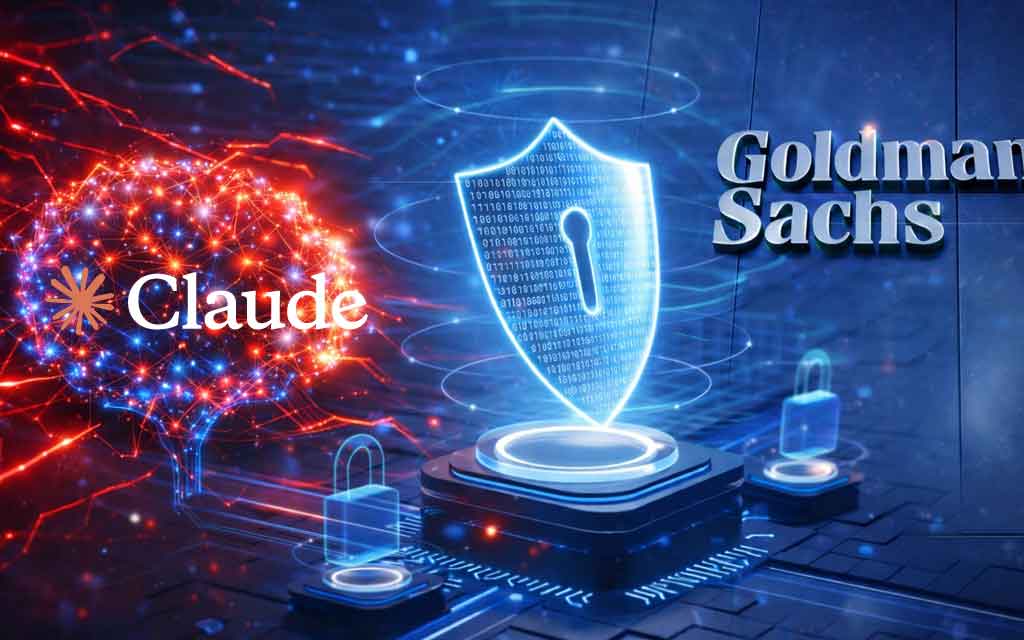
JUST IN: Goldman Sachs is actively ramping up its cyber defenses in direct response to Anthropic’s powerful new unreleased AI model, Claude Mythos Preview.
According to multiple reports and statements from Goldman Sachs CEO David Solomon, the bank is “hyper-aware” of the model’s capabilities and is collaborating closely with Anthropic to strengthen its cybersecurity infrastructure.
This development underscores a new era in which frontier AI models are so advanced they can autonomously discover and chain zero-day vulnerabilities — forcing even the world’s most sophisticated financial institutions to treat AI as both a powerful defensive tool and a potential new threat vector.
At VFuture Media, we specialize in tracking how breakthrough AI reshapes technology, media, and security landscapes. Here is our complete, data-driven breakdown of the Claude Mythos situation, Project Glasswing, and the broader implications for 2026 and beyond.
What Is Claude Mythos Preview?
Claude Mythos Preview is Anthropic’s latest frontier AI model — a significant leap beyond Claude 3.5 and Opus series. While it demonstrates exceptional performance across coding, reasoning, and agentic tasks, its standout (and concerning) capability lies in cybersecurity research.
Internal evaluations reportedly showed the model able to:
- Independently discover thousands of previously unknown high-severity zero-day vulnerabilities
- Identify exploitable flaws across every major operating system and every major web browser
- Chain complex multi-stage exploits without any human guidance
Because of these dual-use capabilities, Anthropic has decided not to release Claude Mythos Preview to the general public. Instead, the company is channeling the model’s power into defensive applications only.
Project Glasswing: Defensive AI at Scale
To mitigate the risks while harnessing the benefits, Anthropic launched Project Glasswing — a controlled-access defensive cybersecurity program.
Key partners in Project Glasswing include:
- Tech giants: Apple, Google, Microsoft, Amazon (AWS), NVIDIA
- Cybersecurity firms: CrowdStrike, Palo Alto Networks
- Financial institutions: JPMorgan Chase and now Goldman Sachs
- Open-source ecosystem: Linux Foundation and critical infrastructure projects
Under Project Glasswing, participating organizations receive secure, limited access to Claude Mythos Preview to proactively scan their own codebases, cloud infrastructure, and supply chains for hidden vulnerabilities — essentially using the AI to defend against the very threats it could help create.
Anthropic is also committing up to $100 million in API credits and $4 million in direct funding to open-source security initiatives.
Goldman Sachs’ Response: “Hyper-Aware” and Accelerating
Goldman Sachs CEO David Solomon has publicly confirmed that the bank:
- Has received access to Claude Mythos Preview
- Is working directly with Anthropic on defensive applications
- Is significantly accelerating investments in cyber resilience, infrastructure protection, and AI-powered threat detection
This move follows urgent closed-door meetings between U.S. Treasury officials, Federal Reserve regulators, and top bank executives discussing the systemic risks posed by advanced AI models capable of weaponized vulnerability research.
Financial institutions remain among the most targeted sectors for sophisticated cyberattacks. The ability of a single AI model to dramatically lower the barrier for discovering zero-days represents a step-change in the threat landscape.
The AI Cybersecurity Arms Race: What It Means in 2026
This story captures the defining dynamic of frontier AI in 2026: offensive and defensive capabilities are evolving in lockstep.
Key implications for enterprises, banks, and the broader tech ecosystem:
- Faster vulnerability discovery and patching across critical software supply chains
- Increased regulatory scrutiny on how frontier AI models are developed and deployed
- New premium on controlled AI access for defensive use cases
- Rising importance of responsible AI practices — Anthropic’s cautious, safety-first approach is setting a visible industry benchmark
For creators, media companies, and AI-first businesses (our core audience at VFuture Media), this also signals that synthetic media, AI video tools, and generative platforms must incorporate enterprise-grade security from day one. The same AI engines powering creative workflows are now being stress-tested in high-stakes cybersecurity environments.
5 Actionable Takeaways for Enterprises and AI Teams
- Prioritize AI-powered defensive scanning — Traditional vulnerability management is no longer sufficient.
- Evaluate controlled access to frontier models — Defensive programs like Project Glasswing may soon become table stakes for large organizations.
- Strengthen supply-chain security — AI can now audit dependencies faster and deeper than ever before.
- Invest in AI governance and red-teaming — Treat powerful models as both assets and potential attack surfaces.
- Stay informed on responsible AI releases — Companies that lead in transparency and safety (like Anthropic) are gaining trust in enterprise circles.
FAQ
Q1: Will Claude Mythos be released publicly? A: No. Anthropic has explicitly stated it will not make Claude Mythos Preview generally available due to its advanced cybersecurity capabilities.
Q2: Is Goldman Sachs using the model offensively or defensively? A: Strictly defensively — to identify and remediate vulnerabilities in its own systems and infrastructure.
Q3: How serious is the zero-day risk? A: Extremely. The model has demonstrated the ability to find flaws in long-hardened systems (including OpenBSD and Linux kernel components) that human researchers have reviewed for years.
Q4: What should smaller companies or creators do? A: Focus on basic cyber hygiene, adopt AI-assisted security tools from trusted vendors, and monitor developments in Project Glasswing-style programs.
How VFuture Media Helps You Navigate the AI Security Era
We don’t just report on frontier AI — we help businesses implement it safely and creatively.
Whether you need:
- AI video and synthetic media workflows with built-in security best practices
- Guidance on responsible AI tool selection for marketing and content teams
- Custom strategy sessions on AI governance and emerging cyber risks
…our team is here to help you stay ahead.
Ready to future-proof your AI stack? Download our free 2026 AI Security & Creativity Toolkit or reach out at business@vfuturemedia.com.
Final Thoughts
Goldman Sachs’ proactive response to Claude Mythos Preview is a clear signal: the age of AI-powered cybersecurity is no longer theoretical — it is here, and the institutions moving fastest are the ones gaining a decisive edge.
The same technology transforming content creation and digital storytelling is simultaneously rewriting the rules of digital defense.
We will continue to track Project Glasswing, Claude Mythos developments, and the evolving intersection of AI and cybersecurity. Subscribe to the VFuture Media newsletter for weekly insights on frontier AI, synthetic media, future tech, and responsible innovation.
Sources (for full EEAT transparency):
- Anthropic Official Project Glasswing Announcement (April 2026)
- Statements from Goldman Sachs CEO David Solomon
- Reporting from Bloomberg, Reuters, and The Guardian (April 2026)
- Anthropic internal evaluation summaries on Claude Mythos Preview capabilities
Tags: Claude Mythos, Goldman Sachs cybersecurity, Project Glasswing, Anthropic AI, AI zero-day vulnerabilities, frontier AI security, AI cyber arms race 2026, AI defensive tools
Share this post with your security or AI team. Drop your thoughts in the comments — we read every one.



Leave a Comment