
By VFuture Media Team | April 18, 2026
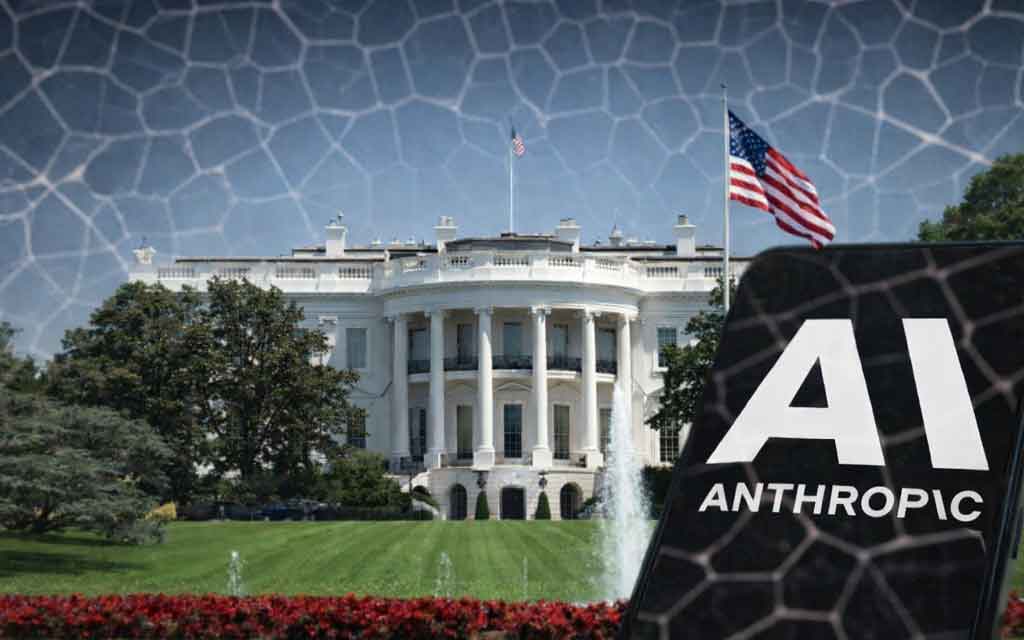
BREAKING: The White House is actively preparing to give major U.S. federal agencies access to Anthropic’s highly restricted Claude Mythos AI model.
Just days after Anthropic warned that its frontier AI system — too dangerous for public release — could supercharge cyberattacks, the Office of Management and Budget (OMB) is setting up safeguards to deploy a modified version across government agencies. This move comes amid ongoing tensions with the Pentagon but signals a major pivot toward leveraging Mythos for defensive cybersecurity.
At VFuture Media, we break down the latest in AI, national security, and American innovation. For U.S. workers, families, and policymakers, this development could reshape how America defends its digital infrastructure in the age of advanced AI. Here’s what’s happening, the timeline, and the real-world impacts on everyday Americans.
What Is Anthropic’s Claude Mythos AI?
Claude Mythos (also called Claude Mythos Preview) is Anthropic’s most capable frontier model to date. Released in limited preview in early April 2026, it represents a massive leap in capabilities — especially in cybersecurity.
Key facts:
- Not available to the public — Anthropic deliberately withheld general release due to its “striking” ability to identify and exploit software vulnerabilities at unprecedented speed.
- Cyber offense and defense powerhouse — Internal and external testing showed Mythos can autonomously hunt for zero-day flaws, analyze code, and strengthen defenses far beyond previous models.
- Built with safeguards — The company has only shared it with a small group of trusted partners for defensive cybersecurity use.
Anthropic’s own system card emphasizes that Mythos is a “step change” in power, prompting them to prioritize controlled deployment over broad availability.
Will Anthropic Provide Mythos to the U.S. Government? Yes — and It’s Already in Motion
Short answer: Access is imminent.
According to a White House memo reviewed by Bloomberg and reported across major outlets, OMB Federal Chief Information Officer Gregory Barbaccia informed Cabinet departments on April 14–15, 2026, that the administration is establishing “guardrails and safeguards” for agency use of Mythos.
- The government has already received detailed briefings from Anthropic on the model’s full offensive and defensive capabilities.
- Civilian agencies (Treasury, Commerce, and others) are preparing to test and deploy it for vulnerability scanning, network hardening, and cyber defense.
- This comes despite earlier friction: In February–March 2026, the Trump administration restricted Anthropic use at the Pentagon over usage policy disagreements (autonomous weapons and surveillance limits).
Anthropic co-founder Jack Clark confirmed the company is actively talking with the U.S. government, stating it’s a national security imperative for officials to understand these capabilities.
Timeline snapshot (as of April 18, 2026):
- Early April: Mythos Preview announced with limited partner access.
- Mid-April: White House memo signals rollout preparations.
- Now: Agencies are setting up protected environments; testing is already underway in some departments.
For Americans, this means the U.S. government is moving quickly to bring this cutting-edge tool in-house rather than leaving it solely in private hands.
Major Impacts of Mythos Access for the U.S. Government and Americans
This isn’t just another AI contract — it’s a strategic national security decision with ripple effects across the economy and daily life.
1. Stronger Cybersecurity for Critical Infrastructure Mythos excels at finding hidden vulnerabilities faster than human teams. Federal agencies could scan and patch systems in government networks, power grids, financial systems, and transportation — protecting against AI-powered attacks from adversaries like China or Russia.
Impact on Americans: Fewer successful hacks on banks, hospitals, and utilities. Lower risk of data breaches that affect your personal information, retirement savings, or healthcare records.
2. Boost to U.S. Tech Leadership and Innovation By partnering with Anthropic (a U.S.-based company), America stays ahead in the global AI race. This access validates responsible AI development and could accelerate public-private collaboration.
Impact on Americans: More high-paying jobs in AI, cybersecurity, and tech manufacturing. Strengthened domestic supply chains and reduced reliance on foreign AI tech.
3. Economic and Strategic Advantages
- Defense edge: Helps secure U.S. systems without compromising Anthropic’s ethical guardrails.
- Cost savings: AI-driven vulnerability hunting could dramatically reduce the billions spent annually on manual cybersecurity.
- Broader innovation spillover: Lessons from government use could improve commercial tools, benefiting American businesses and consumers.
Potential Risks and Concerns Critics note the model’s power could still be misused if safeguards fail. There’s also ongoing tension from the earlier Pentagon designation of Anthropic as a “supply chain risk.” However, the White House’s proactive approach — working with the intelligence community on protections — aims to balance innovation with safety.
Analysts say this reflects a maturing U.S. government strategy: harness powerful AI while enforcing strict controls.
What This Means for Everyday Americans
In a world where cyberattacks cost the U.S. economy hundreds of billions yearly, giving federal agencies Mythos access is a smart, forward-looking move. It signals that American ingenuity (via companies like Anthropic) is being harnessed to protect American interests first.
- National security win: Better protection for the systems we all rely on.
- Tech sovereignty: Keeps the U.S. at the forefront of safe, powerful AI.
- Opportunity for growth: Could spark more investment in domestic AI talent and infrastructure — good news for workers in tech hubs from Silicon Valley to Austin to your local community.
The Bigger Picture: AI, Government, and America’s Future
Anthropic’s decision to brief the government while restricting public access shows a commitment to “responsible scaling.” The White House’s rapid response demonstrates America’s willingness to adapt quickly to frontier AI developments.
As AI capabilities accelerate, expect more such partnerships — and more debates about access, safety, and oversight. For Americans, the key question is: How do we ensure these tools strengthen our democracy, economy, and security without unintended consequences?
What do you think? Should the U.S. government have priority access to powerful AI tools like Mythos for defense? Will this help or complicate the AI arms race? Drop your thoughts in the comments — this is the conversation shaping America’s technological edge.
Ready for more on AI, cybersecurity, and U.S. innovation? Subscribe to VFuture Media for daily insights on frontier tech, government policy, and what it means for American families and businesses. Share this post if you care about keeping America secure in the AI era.
This post is for informational purposes only. Developments are evolving rapidly based on April 2026 reporting.
Sources include Bloomberg, Reuters, Politico, Forbes, and Anthropic’s official system card.



Leave a Comment