
By VFuture Media Team | April 21, 2026 | 11 min read
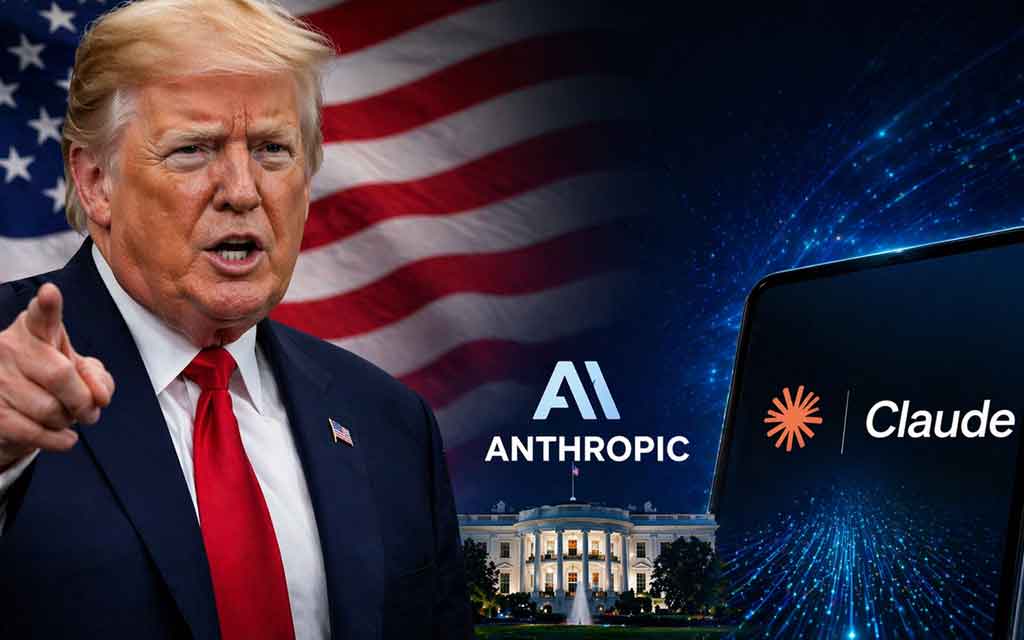
In a surprising turn in the ongoing U.S. government-Anthropic saga, President Donald Trump stated today that “it’s possible we might have a deal” with Anthropic and its flagship Claude AI models. The comment, made while arriving for an event in Arizona, follows a “productive” White House meeting with Anthropic leadership just days after months of public tension, including a February 2026 directive to cease all federal use of the company’s technology.
At VFuture Media, we track the intersection of AI news, frontier AI models, government policy, and national security implications. This latest development could reshape how the U.S. government engages with leading AI companies and influence the future deployment of powerful models like Claude Opus 4.7 and the restricted Claude Mythos Preview. Here’s everything you need to know about the statement, the backstory, today’s meeting, and what it means for the AI industry in 2026.
Trump’s Comment: “It’s Possible We Might Have a Deal”
While speaking to reporters in Phoenix, Arizona on April 21, 2026, President Trump was asked about the recent White House meeting with Anthropic. He responded cautiously but optimistically:
“It’s possible we might have a deal.”
The remark marks a notable shift from earlier harsh rhetoric. In February 2026, Trump had directed all federal agencies to “immediately cease” using Anthropic’s AI technology, calling the company “radical left” and accusing it of trying to “strong-arm” the Department of Defense over safety guardrails for military applications.
Today’s tone suggests de-escalation and possible negotiations to resolve the standoff, which had threatened to sideline one of America’s top AI labs from government contracts.
Background: The February 2026 Clash Over Claude AI
The dispute erupted in late February 2026 during negotiations between Anthropic and the Pentagon over the military’s use of Claude models.
Key points of contention included:
- Anthropic’s insistence on maintaining certain safety guardrails (e.g., restrictions on autonomous weapons systems without human oversight and limits on certain surveillance uses).
- The Pentagon’s demand for broader “all lawful uses” access without additional company-imposed restrictions.
- Anthropic’s refusal to sign a document granting unrestricted military access.
When talks broke down, President Trump posted on Truth Social directing agencies to stop using Anthropic technology, with a six-month phase-out for the Pentagon. Defense Secretary Pete Hegseth designated Anthropic a potential “supply chain risk,” a move with serious implications for contractors.
Hours after Trump’s directive, rival OpenAI announced its own deal with the Pentagon to provide AI capabilities for classified networks — a development widely seen as OpenAI gaining ground while Anthropic faced restrictions.
Anthropic also faced a lawsuit and pushback, arguing the designation was unprecedented for a U.S. company and could harm American AI competitiveness against global rivals like China.
Today’s White House Meeting: A “Productive” Step Forward
The April 2026 White House meeting with Anthropic executives (widely reported to include CEO Dario Amodei or senior leadership) was described as “productive” by sources close to the discussions. It focused on:
- Potential terms for resuming government use of Claude models.
- Balancing national security needs with Anthropic’s constitutional AI principles.
- The role of advanced models like Claude Mythos Preview (the restricted, high-capability model with strong cybersecurity simulation abilities).
- Broader U.S. AI leadership strategy amid competition from OpenAI, Google, and international players.
Trump’s “we might have a deal” comment came shortly after this meeting, indicating progress but not yet a finalized agreement.
What a Potential Deal Could Look Like
If a deal materializes, it might include:
- Tiered access agreements allowing government and military use of Claude with negotiated safeguards.
- Clarification on how Claude Opus 4.7 (released April 16, 2026, with 87.6% SWE-bench score) and future models can support defense, intelligence, and civilian agency workloads.
- Possible integration of defensive cybersecurity tools powered by restricted models like Mythos.
- Commitments to American AI infrastructure and reducing reliance on foreign supply chains.
Such an agreement would be significant for Anthropic, which has raised tens of billions in funding and positioned itself as a safety-first frontier lab. It could also ease investor concerns after the February fallout.
Implications for the AI Industry and Frontier Models
This potential thaw carries wide-reaching effects:
- For Anthropic: Restoring government contracts could boost revenue and validate its safety-focused approach. It would also strengthen its position against OpenAI in enterprise and public-sector deals.
- For Claude AI users: Federal agencies, contractors, and partners might regain access to one of the strongest coding and reasoning models available (Opus 4.7 excels in software engineering and high-resolution vision tasks).
- For the broader AI ecosystem: A resolution could signal that the U.S. government is willing to work with multiple frontier labs rather than picking clear winners. It highlights ongoing debates around AI safety guardrails versus unrestricted national security use.
- National security angle: With models like Claude Mythos demonstrating advanced autonomous cyber capabilities, any deal will likely involve strict controls to prevent misuse while leveraging the technology for defense.
The incident also underscores the high stakes in 2026 AI news — where policy, safety philosophy, and commercial interests frequently collide.
Comparison with OpenAI and Other Players
OpenAI moved quickly in February to secure its Pentagon deal after Anthropic’s restrictions. A Trump-Anthropic agreement could create a more balanced landscape, with multiple American AI companies supporting government needs.
Google’s Gemini models and open-weight alternatives also continue to compete, but Anthropic’s Claude family remains a leader in reliable coding, agentic tasks, and safety-aligned design.
What Happens Next?
Negotiations are ongoing, and no final deal has been confirmed. Key questions remain:
- Will Anthropic relax certain guardrails for military use?
- What specific access levels will be granted to Claude models?
- How will any agreement address the “supply chain risk” designation?
- Could this pave the way for broader public-private AI partnerships under the Trump administration?
Analysts expect more clarity in the coming weeks as talks continue. The outcome could influence everything from AI procurement policies to investment flows into safety-conscious labs.
Why This Matters for AI Enthusiasts, Developers, and Enterprises
For developers and businesses using Claude AI:
- Potential restoration of government-friendly certifications and integrations.
- Greater confidence in long-term stability for enterprise deployments.
- Continued innovation in models like Opus 4.7, which powers advanced coding, design tools, and vision capabilities.
This story also serves as a reminder that in the fast-evolving world of frontier AI models, policy and geopolitics can shift as quickly as technical breakthroughs.
What do you think? Does a potential Trump-Anthropic deal strengthen U.S. AI leadership, or should the government maintain stricter control over safety guardrails? Have you been using Claude Opus 4.7 or other models in your work? Share your views in the comments below.
Stay ahead with the latest in AI models, government AI policy, EV news, and startup developments. Explore more on VFuture Media:
Subscribe to the VFuture Media newsletter for weekly roundups of AI news, model releases, policy updates, and technology insights.
Sources: Official statements, White House reports, AP News, BBC, The New York Times, and real-time updates as of April 21, 2026.




Leave a Comment