
By Ethan Brooks Green Tech & Energy Journalist | April 23, 2026
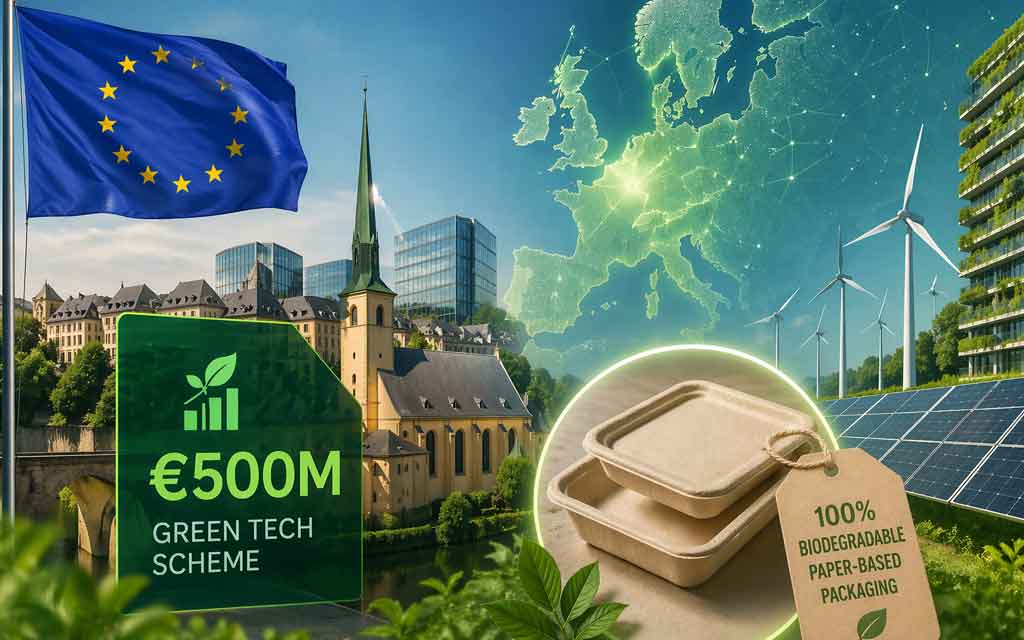
Luxembourg / Brussels, Belgium — Europe is doubling down on homegrown clean technology manufacturing. The European Commission has approved a €500 million Luxembourgish state aid scheme to boost cleantech production capacity, while Swedish innovator PaperShell secured up to €40.3 million from the EU Innovation Fund to build its first full-scale factory. These developments highlight a broader European green tech resurgence aimed at strengthening energy security, creating jobs, and accelerating the net-zero transition.
For European industries, governments, and citizens still feeling the effects of past energy crises, 2026 is shaping up as a year of practical progress in cleantech manufacturing and innovation.
Luxembourg’s €500M Cleantech Manufacturing Boost
In late March 2026, the European Commission greenlit Luxembourg’s ambitious €500 million scheme under the Clean Industrial Deal State Aid Framework (CISAF). This marks the first such approval for a smaller EU member state and targets strategic investments in clean technology production.
Key focus areas include:
- Solar and wind technologies
- Heat pumps
- Battery storage and related components
- Critical raw materials processing for clean tech
The scheme provides direct grants to companies expanding manufacturing capacity in Luxembourg, aiming to reduce reliance on imports (particularly from Asia) and support the EU’s Clean Industrial Deal objectives. It aligns with broader efforts to make Europe more competitive in the global green economy while creating high-skilled jobs in a traditionally financial-services-oriented country.
PaperShell’s €40.3M EU Grant: Revolutionary Bio-Based Materials
In Sweden, PaperShell signed a grant agreement with the EU Innovation Fund for up to €40.3 million to construct a flagship factory in Tibro. The project, valued at €83 million overall, will scale production of a fossil-free composite material that replaces aluminium, plastics, and glass fibre — achieving up to 99.4% lower CO₂ emissions.
The new facility aims for 23,000 tonnes annual capacity by 2030 and will serve as a blueprint for future plants across Europe. Applications span construction, electronics, defence, and transport — sectors critical for Europe’s industrial decarbonisation.
Broader European Cleantech Momentum in 2026
These announcements sit within a resilient funding environment. European climate tech startups raised approximately €8.2 billion in venture and growth equity in 2025, with early signs of recovery in Q1 2026. New funds and public-private initiatives continue to flow into strategic areas such as advanced materials, long-duration storage, and renewable manufacturing.
Additional highlights:
- Multiple EU Innovation Fund projects (totaling billions) advancing net-zero technologies.
- National schemes in Germany, France, and the Nordics complementing EU-level support.
- Strong links to rising AI data centre energy demand, driving investment in firm, clean power solutions.
What This Means for European Energy Security, Jobs & Net-Zero Goals
For businesses and industry: Reduced dependence on imported clean tech components strengthens supply chain resilience. Lower material emissions help companies meet strict EU regulations and corporate sustainability targets.
For workers: New manufacturing facilities in Luxembourg, Sweden, and beyond create jobs in engineering, production, and R&D — often in regions transitioning from traditional industries.
For citizens: Faster deployment of affordable heat pumps, better batteries, and renewable technologies supports energy independence and helps stabilise electricity prices amid volatile global markets.
For the planet: These initiatives directly advance the EU’s 2030 and 2050 climate targets by localising production of essential green technologies.
The Road Ahead: Scaling Green Tech Across Europe
Europe’s green tech boom reflects a strategic shift — from policy ambition to concrete industrial action. With supportive frameworks like CISAF and the Innovation Fund, combined with private capital, the continent is positioning itself as a serious player in the global clean technology value chain.
Challenges remain, including permitting speed, grid upgrades, and competition from heavily subsidised players in the US and China. However, the momentum in early 2026 suggests Europe is building the resilient, sovereign green economy needed for long-term competitiveness and climate leadership.
What do you think? Could schemes like Luxembourg’s €500M fund and PaperShell’s project help Europe lead in cleantech manufacturing? Share your views from Luxembourg, Sweden, Germany, or elsewhere in the comments.
Ethan Brooks is a U.S.-based technology journalist with over 12 years covering European green tech, energy policy, and sustainability. He reports from RE+, Hannover Messe, and major EU cleantech events.
Internal Links for vFutureMedia.com SEO (Europe/Global Focus):
- Europe EV Sales Surge 29% in Q1 2026
- Europe’s AI Playbook 2026 with Mistral & EIF Fund
- Siemens Warning on EU AI Act
- Best New AI Gadgets for European Consumers


Leave a Comment