
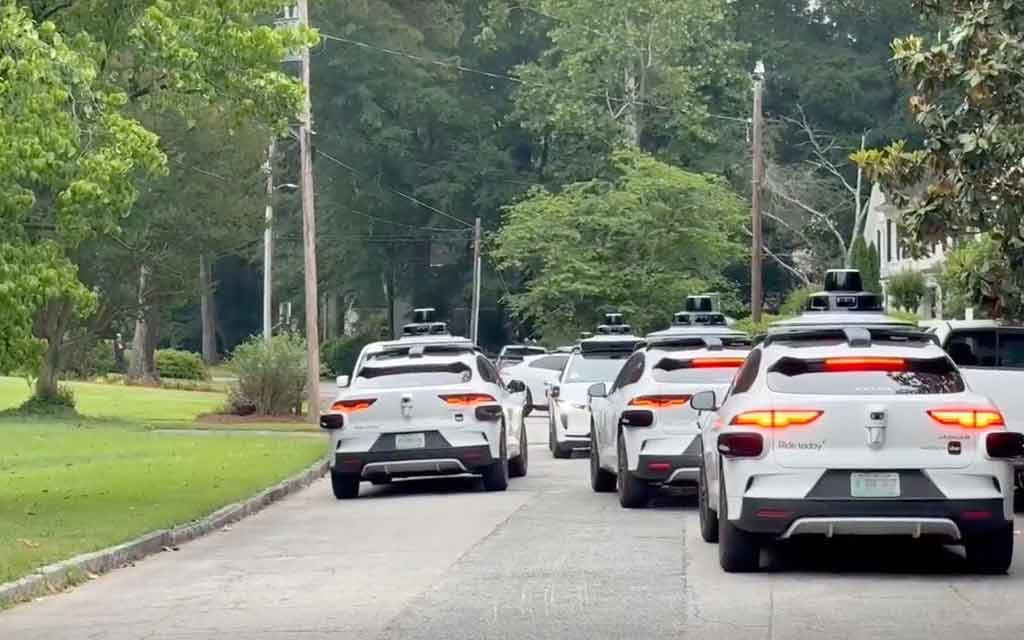
Atlanta, GA – May 16, 2026 – Imagine waking up to the hum of electric motors and the sight of dozens of empty self-driving cars endlessly looping through your quiet residential street like a scene from a sci-fi glitch. That’s exactly what residents of northwest Atlanta’s Battleview Drive and surrounding Buckhead-area neighborhoods experienced in recent weeks, as fleets of Waymo robotaxis turned peaceful cul-de-sacs into an unintended autonomous traffic jam.
Local homeowners reported up to 50 riderless Waymo Jaguar I-Pace vehicles swarming the area, particularly between 6 and 7 a.m., driving in repetitive circles for hours with no passengers on board. Videos shared by frustrated neighbors captured long processions of the distinctive white robotaxis with rooftop sensor arrays methodically navigating the same loops, transforming family-friendly streets into a bizarre holding pattern.
One resident told Atlanta News First, “I think yesterday morning, we had 50 cars that came through between 6 and 7.” Another observer counted 13 Waymo cars passing a single home in under 10 minutes. The issue reportedly escalated over the past two weeks, with the autonomous vehicles using the narrow residential roads as informal staging areas while waiting for ride requests across the city.
Safety Fears for Kids, Pets, and Daily Life
For families in the area, the spectacle quickly crossed from curious to concerning. Parents worried about children waiting for school buses, while pet owners reported near-misses with dogs and cats on morning walks.
“We’re families, we have small kids, we have animals and pets, we’ve got kids getting on the bus in the mornings, and it just doesn’t feel safe to have that traffic,” one neighbor said.
Similar complaints emerged from nearby Fernleaf Circle and Glenridge Woods Townhomes, where the looping behavior created unexpected congestion in an otherwise tranquil suburban setting.
In a bid to reclaim their streets, some residents placed traffic cones, signs, and even a bright neon green inflatable child figure in the roadway. The tactic partially backfired — at one point, up to eight Waymo vehicles reportedly became temporarily stuck while attempting to maneuver around the obstacles.
Waymo Responds: “Routing Glitch” Fixed
Waymo, Alphabet’s self-driving subsidiary operating in partnership with Uber in Atlanta, has acknowledged the complaints and confirmed the issue has been resolved.
In a statement, a company spokesperson said:
“At Waymo, we are committed to being good neighbors. We take community feedback seriously and have already addressed this routing behavior. With over 500,000 weekly trips across the country, our service is proven to significantly reduce traffic injuries and improve road safety. We value our relationship with Atlanta residents and remain focused on providing a seamless, respectful, and safe experience for riders and residents alike.”
The company described the episode as a temporary routing glitch and stated that software adjustments have been implemented to prevent recurrence in the affected areas.
Growing Pains for Self-Driving Tech in America
This Atlanta incident shines a spotlight on the real-world challenges of scaling autonomous ride-hailing services into residential zones. While Waymo touts an impressive overall safety record and continues expanding operations, events like this highlight ongoing debates about geofencing, vehicle behavior in low-demand periods, and integration with existing neighborhoods.
The story comes amid broader scrutiny of the industry, including recent software-related recalls and interactions with emergency vehicles and school buses in other cities.
As driverless technology accelerates across the U.S., Atlanta’s robotaxi swarm serves as a cautionary tale: innovation must be balanced with thoughtful urban planning and strong community engagement. Residents are now calling for stricter protocols to keep empty autonomous vehicles on major arteries unless actively serving rides.
What do you think? Should cities impose tighter rules on where empty robotaxis can operate? Share your thoughts in the comments below.
Stay tuned to VFuturMedia.com for more breaking stories on autonomous vehicles, future mobility, AI innovation, and the tech reshaping our cities.


Leave a Comment