
By Ethan Brooks, Green Tech & Sustainability Analyst at VFutureMedia Published: May 17, 2026
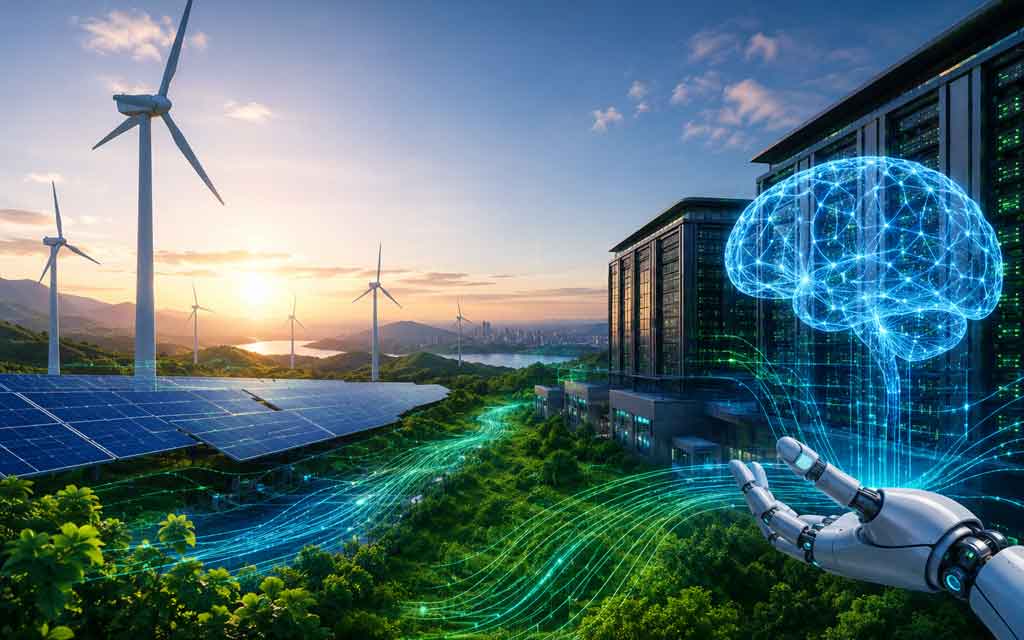
Artificial intelligence is creating one of the biggest energy paradoxes of our time. On one hand, AI data centers are driving explosive electricity demand that could strain grids and temporarily boost fossil fuel use. On the other, AI is becoming one of the most powerful tools to optimize, integrate, and accelerate renewable energy deployment at unprecedented scale. In 2026, this dual dynamic is playing out dramatically, with Big Tech’s massive renewable power purchase agreements (PPAs) and AI-driven grid innovations tipping the scales toward long-term sustainability wins.
The AI Energy Hunger: Data Centers Driving Demand
Global data center electricity consumption is on track to surpass 1,000 TWh in 2026 under high-growth scenarios, with AI workloads as the primary driver. In the US alone, data centers could consume between 325–580 TWh by 2028, representing 6.7–12% of national electricity use.
This surge is forcing utilities and tech giants to confront grid constraints head-on. In regions like PJM (serving parts of the Eastern US), wholesale power costs spiked 76% in early 2026 due to AI-driven demand. Some projects are turning to natural gas as a bridge fuel, raising concerns about short-term emissions.
Yet the picture is more nuanced. Renewables remain the fastest-growing source for data centers, expanding at ~22% annually and expected to cover nearly half of new demand by 2030.
Big Tech’s Massive Renewable Energy Push
Hyperscalers continue to dominate corporate clean energy procurement:
- Microsoft, Google, Amazon, and Meta accounted for a huge share of global PPAs in 2025, signing deals for gigawatts of solar, wind, and emerging technologies like geothermal and small modular reactors (SMRs).
- Microsoft’s landmark 10.5 GW renewable deal with Brookfield and investments in fusion and nuclear restarts (e.g., Three Mile Island).
- Google and Meta adding multi-GW solar + storage projects tied directly to new AI data centers.
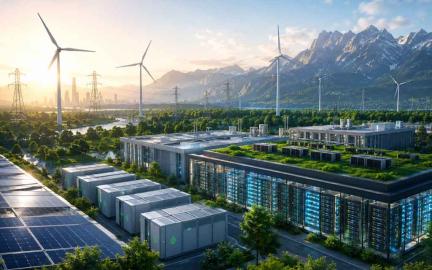
- Ford Energy’s new launch of 20 GWh annual US-made battery storage systems (BESS) targeting data centers and utilities.
These investments are not just offsets — they are bringing new renewable capacity online faster than it might otherwise appear.
How AI is Actively Accelerating the Green Transition
AI is delivering tangible “handprint” benefits that often outweigh its energy footprint:
- Grid Optimization & Renewables Integration — AI excels at short-term forecasting of solar/wind output, predictive maintenance on assets, and real-time grid balancing. Ember estimates AI could save Southeast Asia alone $45–67 billion by 2035 through better renewable integration.
- Demand Flexibility — Data centers can shift non-urgent AI training/inference workloads to times of high renewable availability or low grid stress, reducing peak demand and curtailment.
- Energy Efficiency Gains — Advanced AI models optimize cooling (which can be 40% of data center energy), server allocation, and chip design for lower power use.
- Battery & Storage Management — AI controls BESS systems like Ford Energy’s DC Block for maximum dispatchability, turning intermittent renewables into reliable 24/7 power.
Real-World Wins in 2026:
- Hyperscalers using AI to match workloads with renewable generation in near real-time.
- Utilities deploying AI for better storm recovery, wildfire risk reduction, and transmission optimization.
- AI-enabled microgrids and behind-the-meter storage helping data centers bypass long grid interconnection queues.
Challenges & Balanced Outlook
Short-term tensions exist. Some companies (including Microsoft) are reportedly reassessing aggressive hourly 100% clean energy matching goals due to the pace of AI buildout. Fossil fuel “bridge” plants have been approved in several regions to ensure reliability.
However, long-term forecasts from IEA, BloombergNEF, and others remain optimistic: AI’s economic power is unlocking capital and innovation that will ultimately decarbonize the grid faster.
Key Technologies Driving the Synergy in 2026–2030
Advanced BESS
- Role in Green Transition: Store excess renewable energy for 24/7 availability
- 2026 Examples: Ford Energy DC Block (20 GWh/year)
- Projected Impact: Improved grid stability and faster renewable scaling
AI Forecasting
- Role in Green Transition: Predict energy supply and demand with high accuracy
- 2026 Examples: Ember and AI-powered grid forecasting tools
- Projected Impact: Billions in potential cost savings and improved efficiency
Flexible Data Centers
- Role in Green Transition: Shift workloads to periods with abundant renewable energy
- 2026 Examples: Google and Microsoft workload-shifting systems
- Projected Impact: Reduced renewable energy curtailment
SMRs & Geothermal
- Role in Green Transition: Provide firm, carbon-free baseload power
- 2026 Examples: Microsoft and Amazon clean energy partnerships
- Projected Impact: Reliable clean electricity for AI infrastructure growth
Smart Grids
- Role in Green Transition: Enable real-time grid optimization
- 2026 Examples: AI-based transmission monitoring systems
- Projected Impact: Higher renewable energy penetration and grid efficiency
Investment & Policy Implications
2026 is a pivotal year for green tech investors. Opportunities are strong in:
- Battery storage and grid modernization.
- AI energy management software.
- Next-gen renewables + storage hybrids.
- Corporate PPAs and carbon removal credits.
Policymakers must streamline permitting for renewables and transmission while ensuring data centers contribute to (not just consume from) the clean energy buildout.
Actionable Takeaways for Businesses & Leaders:
- Prioritize flexible, AI-optimized data center designs with on-site storage.
- Sign long-term PPAs tied to new renewable builds.
- Pilot AI tools for internal energy optimization.
- Track total system impact — not just Scope 2 emissions.
At VFutureMedia, we believe the AI-green energy relationship will evolve from tension to profound synergy. By 2030, AI could enable a cleaner, more resilient, and more abundant energy system than we could have achieved without it.
What are your thoughts on AI’s net impact on the energy transition? Share in the comments or explore our related articles on Ford Energy BESS, data center sustainability, and renewable investment trends 2026.
Ethan Brooks is a Green Tech & Sustainability Analyst at VFutureMedia


Leave a Comment