
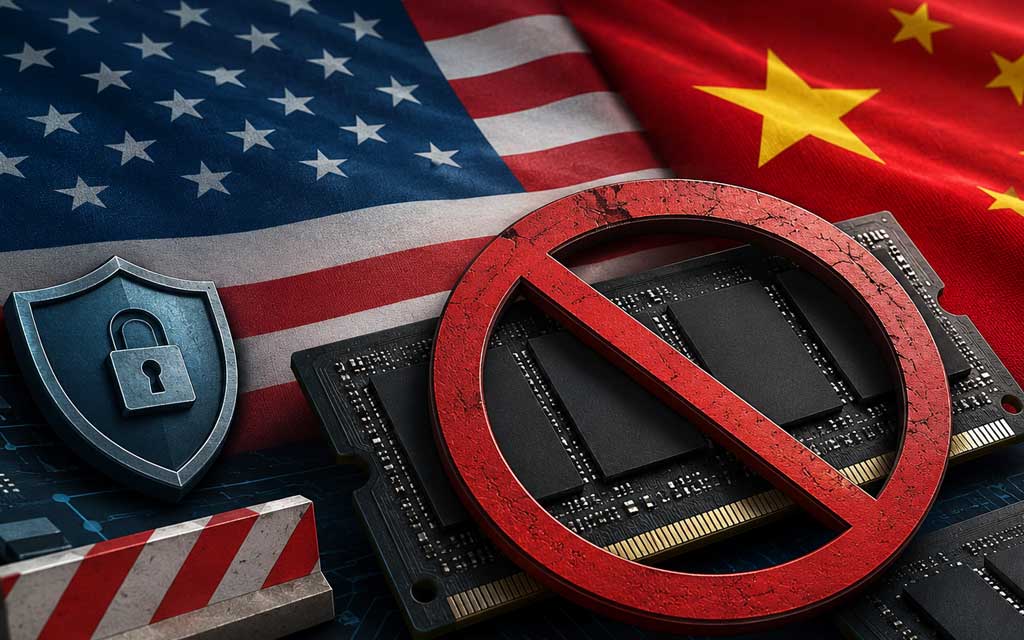
In a significant escalation of U.S.-China technology rivalry, U.S. lawmakers are pressing the Trump administration to impose a ban on Chinese-made memory chips. This move highlights growing national security concerns over supply chain vulnerabilities, intellectual property risks, and Beijing’s dominance in semiconductor manufacturing.
As global tech supply chains face increasing fragmentation, this development carries major implications for electronics manufacturers, data centers, consumer devices, and the broader economy. In this comprehensive analysis, we examine the lawmakers’ push, the strategic context, potential impacts, and what businesses should do next.
Why Lawmakers Are Pushing for a Ban on Chinese Memory Chips
U.S. legislators from both parties cite several key reasons:
- National Security Risks: Chinese memory chips (DRAM and NAND flash) could contain backdoors or vulnerabilities exploitable by state actors.
- Supply Chain Dependence: Over-reliance on foreign suppliers, particularly from China, threatens critical infrastructure, defense systems, and economic resilience.
- Intellectual Property and Subsidies: Concerns about forced technology transfers, state subsidies distorting markets, and unfair competition.
- Strategic Decoupling: Aligning with broader efforts to reduce exposure to adversarial nations in semiconductors, AI hardware, and advanced electronics.
The call comes as the Trump administration weighs new export controls, investment restrictions, and entity list additions targeting Chinese semiconductor firms. Memory chips are foundational to everything from smartphones and servers to electric vehicles and AI accelerators.
Context in the Ongoing U.S.-China Tech War
This latest push fits into a multi-year pattern:
- Previous restrictions on advanced AI chips (e.g., NVIDIA GPUs).
- Expansion of the Entity List affecting companies like SMIC, YMTC, and CXMT.
- CHIPS Act investments aimed at boosting domestic and allied semiconductor production.
- Export controls on manufacturing equipment and materials.
China has responded with its own measures, including rare earth restrictions and localization mandates. The result is a bifurcating global semiconductor industry, with “China+1” diversification strategies becoming standard for multinationals.
Potential Impacts of a Chinese Memory Chip Ban
For U.S. and Allied Companies:
- Short-term supply disruptions and price spikes for DRAM and NAND.
- Accelerated efforts to qualify alternative suppliers from South Korea (Samsung, SK Hynix), Taiwan, Japan, and emerging U.S. facilities.
- Increased costs passed on to consumers in PCs, servers, mobiles, and storage devices.
For the Global Electronics Ecosystem:
- Data center operators and hyperscalers may face delays in AI infrastructure buildouts.
- Automotive and industrial sectors could see component shortages.
- Innovation in memory technologies (e.g., new form factors or higher bandwidth solutions) might accelerate as companies seek differentiation.
Economic and Geopolitical Ripple Effects:
- Higher costs could contribute to inflation in tech products.
- Strengthened alliances with “friendly” semiconductor nations (e.g., via the Chip 4 alliance).
- Potential retaliation from China affecting U.S. firms operating there or reliant on Chinese markets.
Opportunities Amid the Challenges
While disruptive, the push creates openings:
- Domestic Manufacturing Boom: Companies benefiting from CHIPS Act funding stand to gain.
- Diversification Winners: Suppliers in Taiwan, South Korea, Vietnam, India, and Mexico.
- Innovation Acceleration: Investment in next-generation memory (MRAM, ReRAM, 3D stacking) and software optimizations to reduce memory demands.
- National Security Tech: Growth in secure, trusted foundries and supply chains.
Strategic Recommendations for Businesses
- Audit Supply Chains Immediately: Map exposure to Chinese memory suppliers and develop contingency plans with dual-sourcing.
- Engage in Policy Advocacy: Participate in industry associations to shape implementation details that minimize disruption.
- Accelerate Qualification of Alternatives: Test and certify non-Chinese DRAM/NAND solutions ahead of potential bans.
- Invest in Resilience: Explore advanced packaging, memory-efficient architectures, and onshoring/nearshoring strategies.
- Monitor Timelines: Watch for executive orders, Commerce Department rules, or legislative action in the coming weeks and months.
VFuture Media’s Perspective on Tech Geopolitics
At VFuture Media, we help forward-thinking organizations navigate the intersection of technology, regulation, and global strategy. Our expertise includes:
- Geopolitical risk assessment and supply chain optimization.
- Content strategies that position brands as leaders in resilient tech.
- Digital marketing campaigns targeting emerging opportunities in semiconductors and AI hardware.
- Thought leadership on U.S.-China tech decoupling and its business impacts.
Whether you’re a hardware manufacturer, cloud provider, or investor in the semiconductor space, our team provides actionable insights to turn challenges into competitive advantages. Reach out at www.vfuturemedia.com to discuss tailored strategies.
Looking Ahead: The Future of Semiconductor Policy
A full ban on Chinese memory chips would represent one of the most sweeping restrictions yet in the tech sector. Implementation details — scope (consumer vs. enterprise), timelines, and exemptions — will determine the severity of market impacts.
As the Trump administration reviews these recommendations, expect intense lobbying from industry groups balancing security with economic realities. The outcome could accelerate global semiconductor realignment for years to come.
This episode underscores a fundamental shift: National security and technological sovereignty are now central drivers of business strategy in the semiconductor industry and beyond.
What are your thoughts on a potential U.S. ban on Chinese memory chips? How might it affect your industry or investments? Share in the comments below.
Stay informed with the VFuture Media blog for continuing coverage of U.S.-China relations, semiconductor developments, AI hardware, and strategic business implications. Subscribe today for expert analysis and updates.
This article reflects developments as of July 17, 2026. Policy decisions can evolve quickly — monitor official U.S. government announcements for the latest information.




Leave a Comment