
xAI’s Colossus 2 Hits 1 GW Milestone in Memphis, Powering the Next Generation of Grok and Accelerating the Race Toward AGI
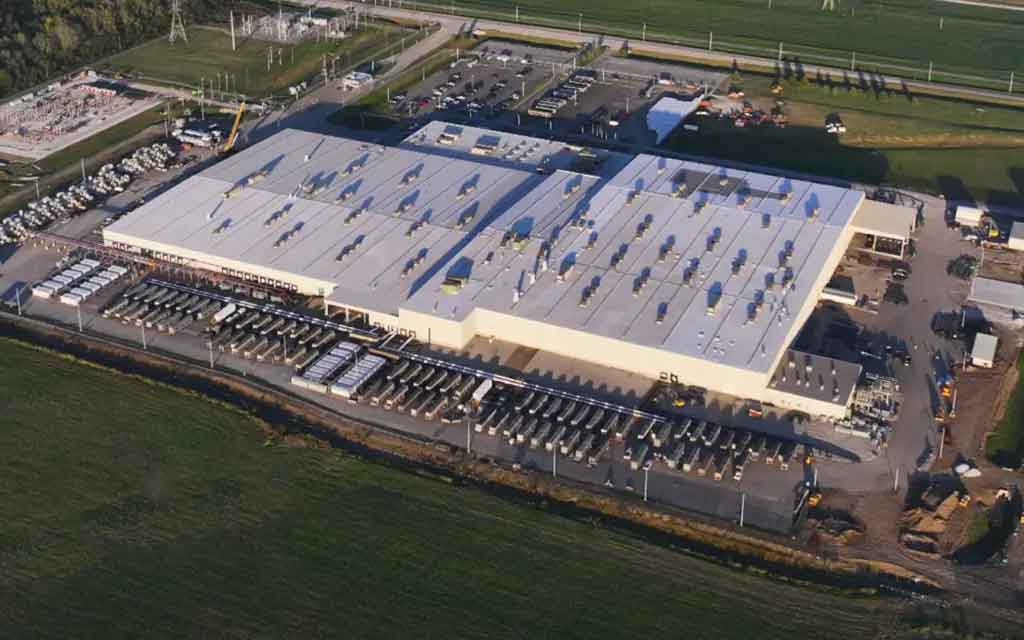
On January 17, 2026, Elon Musk announced a groundbreaking achievement in artificial intelligence infrastructure: xAI’s Colossus 2 supercomputer is now operational as the world’s first gigawatt-scale AI training cluster. This marks a historic leap in compute power, with the facility already consuming electricity equivalent to the peak demand of an entire major city like San Francisco.
Musk’s post on X stated: “The Colossus 2 supercomputer for @Grok is now operational. First Gigawatt training cluster in the world. Upgrades to 1.5GW in April.”
This development positions xAI (now operating under the broader SpaceXAI synergies) far ahead in the global AI arms race, where raw computational scale is becoming the decisive factor for training frontier models.
What Makes Colossus 2 the World’s First Gigawatt AI Supercluster?
A gigawatt (GW) equals 1,000 megawatts — enough power to supply hundreds of thousands of homes or match the peak electricity usage of large urban centers. Colossus 2 has crossed this threshold as a coherent, single-site AI training system, distinguishing it from fragmented or smaller-scale clusters operated by competitors.
Key specifications and scale (as of early 2026):
- Power Capacity: Currently at ~1 GW operational, with upgrades planned to 1.5 GW by April 2026 and a longer-term target approaching 2 GW across the expanding Memphis-area campus (including nearby sites in Southaven, Mississippi).
- GPU Count: Approximately 555,000 NVIDIA GPUs, primarily advanced Blackwell GB200 and GB300 series, with additional H100/H200 units integrated from prior phases.
- Location: Repurposed industrial sites in Memphis, Tennessee — chosen for access to power infrastructure, land availability, and rapid construction potential.
- Investment: Estimates place hardware and infrastructure costs in the range of $18–20 billion, supported by xAI’s major funding rounds.
The supercluster builds directly on Colossus 1, which was constructed from dirt to full operation in a record 122 days and later doubled to 200,000 GPUs in just 92 days. Colossus 2 continues this unmatched execution speed, enabling parallel training of massive models at unprecedented scale.
How Colossus 2 Was Built: Speed and Engineering Excellence
xAI’s approach emphasizes rapid deployment over traditional timelines:
- Colossus 1 set the benchmark with lightning-fast construction.
- Colossus 2 expanded on adjacent and nearby facilities, incorporating high-density GPU racks, advanced liquid and air cooling systems, and on-site power generation (including approvals for dozens of methane gas turbines to supplement grid power).
- Power infrastructure innovations include Tesla Megapacks for energy storage and direct partnerships for high-voltage supply from the Tennessee Valley Authority (TVA), though the project has faced local discussions around emissions and water usage.
This “gigafactory of compute” philosophy allows xAI to iterate faster than rivals still in planning stages for 2027+ deployments.
Primary Purpose: Training Grok and Beyond
Colossus 2 is primarily dedicated to training and refining Grok, xAI’s flagship AI model family. The massive compute enables:
- Simultaneous training of multiple large-scale models (including the recently reported 1T, 1.5T, 6T, and 10T parameter variants, plus Imagine V2).
- Breakthroughs in reasoning, multimodal capabilities (text, image, video), coding, long-context understanding, and agentic AI.
- Support for broader workloads across X (formerly Twitter), potential Tesla integrations, and future SpaceX-related AI applications.
With gigawatt-scale power, xAI can push the boundaries of scaling laws, potentially delivering Grok 5 or Grok 6 with significantly enhanced performance later in 2026.
Why Gigawatt-Scale Compute Matters in the AI Race
- Competitive Edge: While OpenAI, Google DeepMind, Anthropic, and Meta are scaling aggressively, none have publicly activated a single coherent training cluster at 1 GW. xAI’s lead in execution speed could translate into earlier releases of more capable models.
- Scaling Laws in Action: Larger, efficiently trained models tend to deliver better intelligence, creativity, and real-world utility. Colossus 2 provides the raw power needed to test and optimize at frontier levels.
- Energy as the New Bottleneck: AI training is now constrained more by power and infrastructure than by chip availability. xAI’s ability to secure and deploy gigawatt-level resources gives it a structural advantage.
- Broader Implications: Success here could accelerate applications in autonomous systems, scientific discovery, creative tools, and enterprise AI — areas where Grok aims to stand out for being maximally truth-seeking and helpful.
Note: Some independent analyses (e.g., satellite imagery reviews) suggested the site’s cooling and power ramp-up might have been slightly behind the initial January announcement, with full sustained 1 GW possibly stabilizing closer to May 2026. However, xAI and Musk have confirmed operational status and ongoing upgrades.
Challenges and Local Impact
The project has sparked discussions in Memphis and surrounding areas regarding:
- High water consumption for cooling (potentially millions of gallons daily).
- Use of temporary gas turbines for power reliability.
- Grid strain and environmental considerations.
xAI continues to work with local authorities on permits and sustainable operations, including efficiency improvements.
What’s Next for Colossus 2 and xAI?
- Short-term: Ramp to 1.5 GW by April 2026, with further expansion toward 2 GW total capacity and potential growth to over 1 million GPUs across the Colossus family.
- Model Releases: Accelerated development of next-generation Grok models with superior multimodal and reasoning abilities.
- Long-term Vision: Musk has indicated xAI aims to lead in total AI compute, potentially surpassing the combined capacity of other players within years, while exploring synergies with SpaceX for future orbital or space-based compute concepts.
Colossus 2 is more than just a data center — it represents the dawn of the gigawatt era in AI, where infrastructure scale directly determines who leads the charge toward artificial general intelligence.
Stay tuned to VFutureMedia.com for the latest updates on AI supercomputing, frontier model breakthroughs, and the evolving landscape of xAI and SpaceXAI.



Leave a Comment