
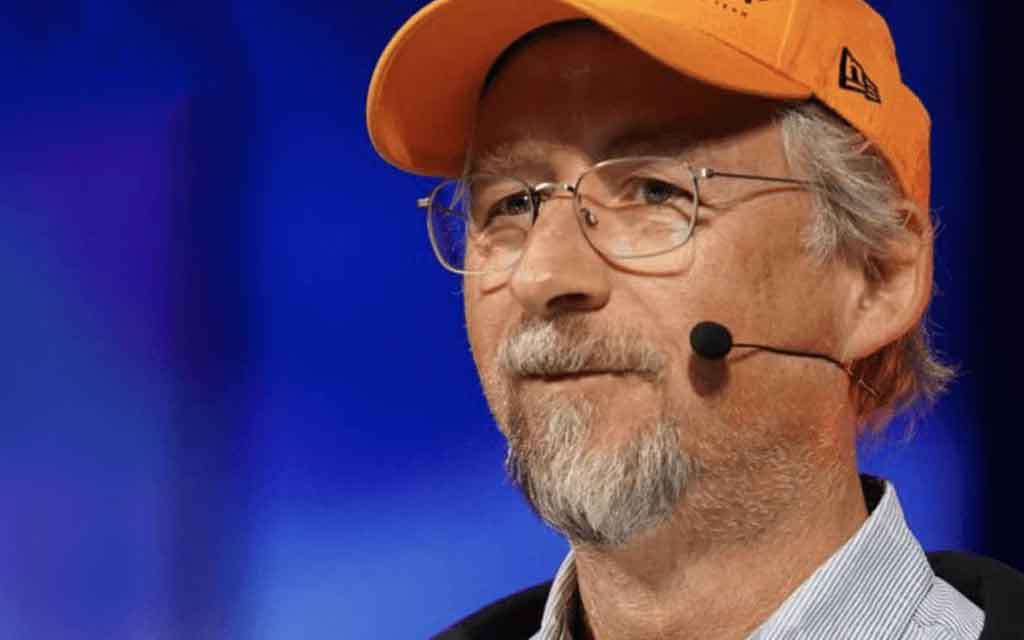
On April 8, 2026, The New York Times published a highly anticipated investigative report titled “My Quest to Solve Bitcoin’s Great Mystery”. Written by Pulitzer Prize-winning journalist John Carreyrou (famous for exposing Theranos), the piece claims that a rigorous, computer-assisted year-long analysis strongly suggests Adam Back — the British cryptographer and CEO of Blockstream — is the most likely person behind the pseudonym Satoshi Nakamoto, the mysterious inventor of Bitcoin.
A companion article, “4 Takeaways From Our Search for Bitcoin’s Creator”, summarizes the key findings that narrowed the suspect pool to Back.
This revelation has sent shockwaves through the cryptocurrency world, reigniting one of the biggest unsolved mysteries in tech history.
Who Is Adam Back?
Adam Back is a 55-year-old British computer scientist with deep roots in the cypherpunk movement. He is best known for inventing Hashcash in 1997 — a proof-of-work system originally designed to fight email spam. Satoshi Nakamoto explicitly referenced Hashcash in the Bitcoin whitepaper as a core inspiration for Bitcoin’s mining mechanism.
Back currently serves as CEO and co-founder of Blockstream, a major company building infrastructure and second-layer solutions for Bitcoin. He has long been respected in the Bitcoin community for his early contributions to electronic cash concepts and his advocacy for privacy, decentralization, and sound money.
The 17-Year Satoshi Nakamoto Mystery
Satoshi Nakamoto published the Bitcoin whitepaper in October 2008 and released the open-source software in January 2009. Satoshi was active on forums and via email until around late 2010 or early 2011, then completely disappeared.
The identity behind Satoshi has remained unknown for over 17 years. The associated Bitcoin wallets are estimated to hold approximately 1.1 million BTC — potentially worth tens of billions of dollars today. Previous claims (including those involving Hal Finney, Nick Szabo, and the discredited Craig Wright) have never produced conclusive proof, such as a signature from Satoshi’s known private keys.
How the NYT Investigation Unfolded
Carreyrou began his probe after watching the 2024 HBO documentary Money Electric. Dissatisfied with existing theories, he spent more than a year digging through thousands of old cypherpunk mailing list archives from the 1990s and early 2000s.
With help from colleague Dylan Freedman, the team used computer-assisted reporting to analyze stylistic and linguistic patterns across a massive dataset (reports mention scrutiny of around 34,000 mailing list users in broader context).
Key filtering methods included:
- British English spellings and quirks (e.g., “optimise,” “cheque”)
- Grammatical habits, such as confusion between “it’s” and “its”
- Specific hyphenation patterns (Satoshi had 325 distinct hyphenation quirks; Back reportedly matched 67 of them — far more than others)
- Word choices and phrasing (e.g., “bug fix” as two words, “halfway” and “downside” as one word)
- Sentence-ending patterns and rare vocabulary overlaps
These techniques, combined with conceptual and ideological analysis, allegedly reduced the pool dramatically until Adam Back emerged as the strongest match.
Main Evidence Cited by the New York Times
The case remains entirely circumstantial — there is no smoking-gun cryptographic proof. Highlights include:
- Technical Foundations — Back’s Hashcash is directly cited in the Bitcoin whitepaper. He also discussed combining Hashcash with Wei Dai’s b-money concept years earlier — ideas that closely mirror Bitcoin’s design.
- Writing Style Matches — Extensive stylometric analysis showed striking similarities in grammar, hyphenation, word usage, and phrasing between Back’s old posts/emails and Satoshi’s known writings.
- Ideological Overlap — Both expressed strong cypherpunk views on privacy, anti-surveillance, libertarian principles, and the need for decentralized electronic cash to counter government and banking control.
- Background Alignment — Back has a PhD in distributed systems, expertise in public-key cryptography, C++ programming (the language used for Bitcoin), and was deeply embedded in the relevant online communities at the right time.
- Behavioral Observations — The article references Back tensing up and going off-record in a 2024 documentary interview, plus Carreyrou’s own in-person confrontation with Back in El Salvador in early 2026, during which Back denied the claims multiple times.
Adam Back’s Response
Adam Back has categorically denied being Satoshi Nakamoto. In posts on X shortly after the NYT article dropped, he stated:
- “I’m not Satoshi…”
- He attributed the similarities to “a combination of coincidence and similar phrases from people with similar experience and interests.”
- He emphasized that he does not know Satoshi’s identity and believes maintaining anonymity has been beneficial for Bitcoin’s neutral, decentralized perception.
Back has made similar denials in previous years whenever speculation arose. He previously shared early emails from Satoshi (who contacted him in 2008 about the Hashcash citation) during legal proceedings, which some see as evidence he could not be Satoshi.
Reactions from the Crypto Community and Media
The announcement has generated massive buzz but widespread skepticism:
- Many call the evidence circumstantial and note that stylometry is not foolproof, especially across decades-old texts.
- Others point out timeline issues and the fact that Back has remained publicly active in Bitcoin development through Blockstream.
- Crypto media outlets (BeInCrypto, Coinness, Phemex News, etc.) describe the report as compelling yet short of definitive proof.
If proven true, it could raise questions about the large dormant BTC holdings, Back’s business interests, and Bitcoin’s “We are all Satoshi” ethos. However, most agree that only a signature from Satoshi’s private keys would constitute real proof.
What This Means for Bitcoin in 2026
The story has reignited global interest in Bitcoin’s origins at a time when the asset is maturing with institutional adoption, ETFs, and growing mainstream use. Whether or not Back is Satoshi, the investigation underscores how Bitcoin was born from cypherpunk ideals of financial sovereignty and privacy.
The mystery likely continues — Satoshi’s anonymity has arguably been one of Bitcoin’s greatest strengths, allowing the technology and community to take center stage.
What do you think? Is Adam Back Satoshi Nakamoto, or is this another chapter in the longest-running whodunit in tech? Drop your thoughts in the comments below.




Leave a Comment