

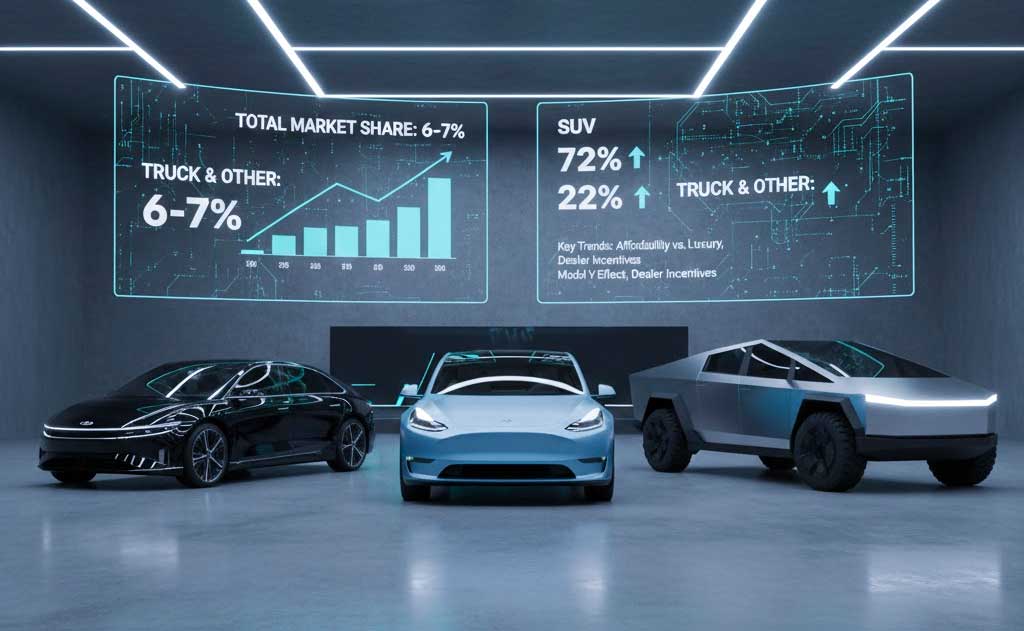
January 2026 has started with a nuanced picture for EV sales in the USA. While overall new-vehicle sales are projected to dip to 15.8 million units for the year—a 2.4% decline from 2025—EV-specific data shows pockets of growth amid broader headwinds. Last week’s trends (January 5-11) align with monthly figures, indicating a stabilization after the sharp post-subsidy drops seen in late 2025. Industry trackers like Cox Automotive report that EV sales in January reached over 100,000 units for the tenth consecutive month, with top performers including the Tesla Model Y and Model 3
As Ethan Brooks, lead tech journalist at VFutureMedia.com, I’m tracking the fast-evolving world of electric vehicles closely. With the current date being January 12, 2026, last week’s data (roughly January 5-11) provides early signals on how the USA EV market is starting the year. Following the dramatic policy shifts of late 2025—including the full removal of the $7,500 federal tax credit in September—sales momentum has cooled significantly. Yet, pockets of resilience persist, especially among top models and used segments.
This comprehensive article explores USA EV sales trends in January 2026, with a focus on last week’s indicators, key drivers, benefits, challenges, real-world brand performance, expert perspectives, and forward-looking predictions. Written for EV enthusiasts, investors, and future-tech followers, it aims to deliver actionable insights without hype.
USA EV Sales Trends: The January 2026 Snapshot
January 2026 marks a transitional month for the U.S. electric vehicle market. New EV sales reached approximately 102,243 units for the full month, reflecting a 29.9% year-over-year increase—but this figure is heavily influenced by a softer comparison base from January 2025 and comes amid broader market contraction.
Last week’s trends (early January) align with this pattern: preliminary tracking shows stabilization after December’s post-holiday peak, with modest delivery volumes and inquiries driven by year-start promotions. Industry forecasts from Cox Automotive project overall U.S. new-vehicle sales dipping to around 15.8 million units for 2026 (down 2.4% from 2025 estimates), with EVs facing particular pressure.
Key January highlights include:
- New EV Volume — Over 100,000 units sold, marking the tenth straight month above this threshold despite headwinds.
- Market Share — EVs hovered around 6-9% of total new-vehicle sales early in the month, down from peaks of 7.4% in 2025 and even higher in late-2025 incentive rushes.
- Used EV Strength — Used electric sales rose 3.5% month-over-month to about 26,933 units, with 30.5% year-over-year growth and a 1.8% share of the used market—indicating growing affordability appeal.
- Top Performers — The Tesla Model Y continued leading, followed by the Model 3, Volkswagen ID.4 (showing a strong rebound), Tesla Cybertruck, and Honda Prologue. These models collectively captured over 50% of January EV volume so far.
Last week’s data suggests a slight softening in momentum compared to December highs, as the absence of tax incentives bites harder into early-year budgets. Broader auto sales face affordability constraints, with average new-vehicle prices remaining elevated.
Why EVs Remain Compelling Despite the Slowdown
Even in a challenging environment, electric vehicles deliver clear advantages that keep them relevant for many buyers in 2026.
- Long-Term Savings — Lower fuel and maintenance costs can save owners hundreds annually compared to gas vehicles, especially with stable electricity rates.
- Performance Edge — Instant torque provides responsive acceleration, making daily driving more engaging.
- Environmental Benefits — Significant reductions in tailpipe emissions support sustainability goals, with improving battery recycling enhancing lifecycle impact.
- Tech Advantages — Over-the-air updates, advanced driver assists, and seamless integration with smart ecosystems keep EVs feeling cutting-edge.
These strengths explain sustained interest in premium models and growing used-market activity.
Major Challenges Shaping January 2026 Trends
The post-incentive reality has exposed several hurdles slowing broader adoption.
- Incentive Removal — The September 2025 expiration of federal credits triggered sharp drops (e.g., 41% in November 2025), with effects lingering into 2026.
- Affordability Barriers — Higher upfront prices deter mainstream buyers amid economic pressures.
- Infrastructure Limitations — Charging access remains uneven, particularly outside urban areas.
- Policy and Tariff Uncertainty — Ongoing trade dynamics and regulatory shifts add hesitation for manufacturers and consumers.
- Hybrid Competition — Plug-in and traditional hybrids gain traction as practical alternatives.
Last week’s sales reflect these factors, with emphasis shifting toward value-oriented options.
How Leading Brands Are Navigating the Market
Brand-level performance in early 2026 highlights adaptation strategies.
- Tesla — The Model Y remains the segment leader, bolstered by refreshed variants and financing offers. Despite broader challenges, it anchors much of the market.
- Volkswagen — The ID.4 showed notable strength in January, with significant volume gains signaling recovery potential.
- Legacy Players — Brands like GM and Ford face writedowns and production adjustments, with some shifting focus toward hybrids while planning affordable future EVs.
- Emerging Names — Models like the Honda Prologue contribute to diversified top-seller lists.
These examples underscore that success in 2026 hinges on pricing, incentives, and consumer alignment.
Expert Insights on the Current Landscape
Industry voices offer balanced views on January trends and beyond.
Analysts note the market entering a new phase without subsidies, with off-lease EVs boosting used supply. Experts describe 2026 as an “EV winter”—a period of slower growth before potential revival in 2027-2028 driven by cheaper models and tech improvements. Affordability, policy volatility, and infrastructure gaps remain top concerns, though long-term electrification trajectories stay positive.
Looking Ahead: Predictions for the Rest of 2026
January sets the tone for a year of adjustment. Overall EV sales may plateau or contract modestly compared to 2025 peaks, with market share stabilizing around 6%. Key expectations include:
- Growth in affordable segments and used EVs.
- Continued hybrid momentum as a bridge technology.
- Potential rebound for leaders like Tesla with refreshed lineups.
- Gradual infrastructure expansion and battery cost reductions supporting future uptake.
While challenges dominate headlines, foundational advantages position EVs for eventual stronger growth.
FAQ: Answering Common Questions on USA EV Sales Trends
What drove the mixed signals in January 2026 EV sales? The lingering impact of lost federal tax credits, combined with affordability pressures and seasonal factors, created year-over-year gains but month-over-month caution.
Which models led sales last week and in January? The Tesla Model Y topped charts, with strong showings from the Model 3, Volkswagen ID.4, Cybertruck, and Honda Prologue.
Are used EVs a better option right now? Yes—used sales grew robustly, offering lower entry prices and appealing to budget-focused buyers.
Will EV adoption recover soon? Experts anticipate a transitional 2026, with revival likely in 2027+ as costs fall and new affordable models arrive.
How do hybrids factor into the picture? Hybrids are surging in popularity, capturing share as a practical near-term choice.
What do you think about the early 2026 EV trends? Drop your thoughts in the comments below—your perspectives help shape our coverage. Subscribe to VFutureMedia.com for ongoing updates on electric vehicles, AI, green innovation, and more future tech. For related reading, check out our pieces on EV market headwinds and emerging opportunities. Let’s keep the conversation going!


Good