

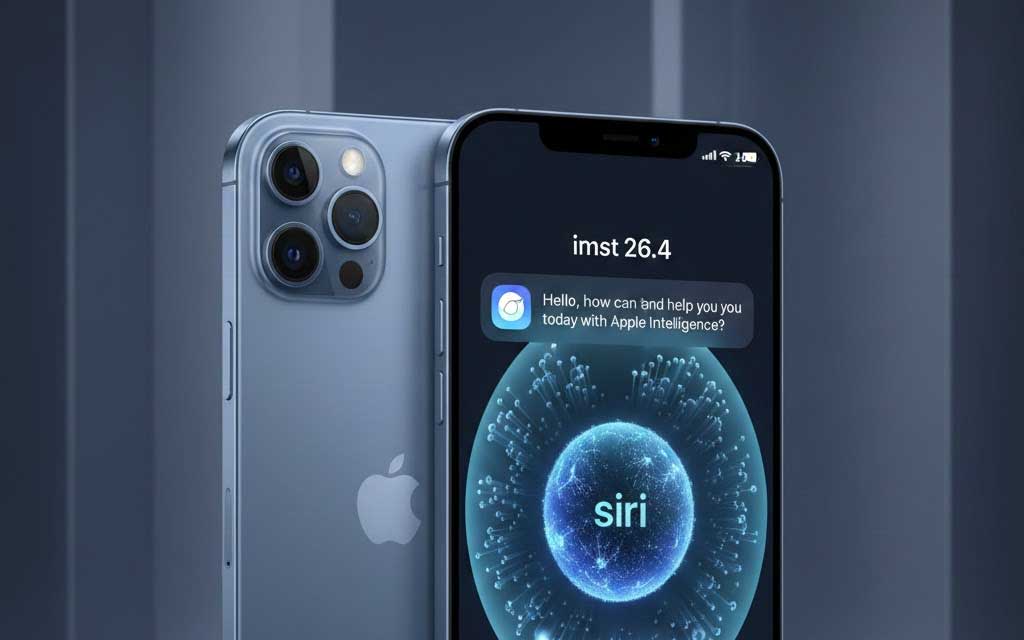
As a senior tech futurist at VFuture Media with more than a decade following Apple’s trajectory—from the shift to custom silicon to the rise of on-device AI—I’m seeing clear signs of strategic acceleration in early 2026. The highly anticipated Apple iPhone 17e 2026, expected to be announced imminently (likely around February 19 via a press release), anchors what promises to be one of Apple’s busiest product windows in recent memory. This isn’t merely an incremental budget-phone refresh; it’s Apple’s deliberate push to make flagship-grade Apple Intelligence accessible at the $599 entry point while rolling out a revamped Siri and hardware updates across iPads and Macs.
Bloomberg’s Mark Gurman, one of the most reliable voices on Apple, confirmed in his February 8 Power On newsletter that the iPhone 17e is due “imminently,” carrying the A19 chip from the main iPhone 17 lineup, full MagSafe support (fixing a key omission from the iPhone 16e), and Apple’s latest in-house cellular modem (C1X) plus the N1 wireless chip for Wi-Fi 7, Bluetooth 6, and Thread connectivity. Pricing remains steady at $599, delivering noticeably more capability for the same cost—a rare and welcome move in today’s market.
iPhone 17e 2026: Bringing Flagship Performance to the Masses
The iPhone 17e builds directly on the strong reception of its predecessor, the iPhone 16e, which launched in February 2025 and earned praise for blending affordability with modern essentials like a 6.1-inch OLED display, a single 48MP rear camera, Apple Intelligence support, and long-term software updates.
Key rumored upgrades for the 2026 model include:
- The powerful A19 chip, delivering faster processing, better efficiency, and full compatibility with the latest Apple Intelligence features.
- MagSafe wireless charging and accessory compatibility, addressing one of the most criticized aspects of the previous e-model.
- Apple’s second-generation C1X 5G modem for improved connectivity speeds and battery life, paired with the N1 chip enabling next-gen Wi-Fi, Bluetooth, and smart-home Thread support.
These internal enhancements position the device as a future-proof option without dramatic exterior changes. It should retain the familiar clean design, likely with a notch (though some reports speculate a possible shift toward Dynamic Island), and focus on reliability and longevity—qualities that matter deeply in emerging markets and enterprise deployments.
Apple appears to be targeting cost-conscious regions such as India, Southeast Asia, and Latin America, where affordable 5G and AI-capable phones drive adoption. Enterprise buyers also stand to benefit from the combination of secure, long-supported hardware and competitive pricing. With weakened competition in the sub-$700 segment from Samsung and Google, the iPhone 17e could capture meaningful share while reinforcing Apple’s ecosystem pull.
Siri Overhaul Arrives with iOS 26.4
Hardware alone doesn’t tell the full story. The real transformation lies in software, particularly the long-awaited Siri upgrade debuting in iOS 26.4. Gurman reports that developer betas for iOS 26.4 are slated for the week of February 23, with a broader rollout likely in March.
This version introduces a more conversational, context-aware Siri powered by advanced on-device models and selective cloud integration. Expect deeper personal context understanding—drawing from your calendar, messages, emails, and on-screen content—along with agentic capabilities that let Siri handle multi-step tasks across apps. Writing tools, image generation, notification prioritization, and Visual Intelligence get meaningful boosts too.
Privacy remains central: Apple continues emphasizing on-device processing and Private Cloud Compute for heavier tasks, differentiating it from more cloud-reliant competitors.
The Broader 2026 Early-Season Blitz: iPads and Macs
The iPhone 17e kicks off a sequenced wave of launches. Reports point to refreshed iPads arriving soon after, including an entry-level model upgraded to the A18 chip (finally enabling full Apple Intelligence on the most affordable tablet) and an iPad Air moving to the M4 processor for pro-level performance in a thin form factor.
Mac updates follow closely, with M5-series MacBook Pro models (14-inch and 16-inch configurations) and potentially a more budget-oriented MacBook using an A-series chip to compete in the affordable laptop space. These devices create tighter ecosystem synergy: habits and data flow seamlessly between iPhone, iPad, and Mac, amplified by shared AI intelligence.
Expert Perspective: Strengthening Apple’s AI Position
Having tracked Apple’s silicon journey since the A-series transition and its cautious AI rollout, I view this early-2026 strategy as exceptionally well-executed. By equipping a $599 phone with the A19 and modern connectivity, Apple removes the artificial barrier between “premium” and “accessible” AI features. This democratizes capabilities like contextual assistance and proactive suggestions while maintaining the privacy moat that users increasingly value.
The approach bolsters competitiveness against Google’s strong on-device AI in Pixel devices and Samsung’s Galaxy AI ecosystem features. Android foldables remain a niche challenge for now—Apple is rumored to explore that category later, possibly in 2027—but the current focus on refinement and accessibility feels smart.
Ecosystem lock-in deepens through personalization: the more devices you own, the smarter and more intuitive the experience becomes via Continuity, Handoff, and AI-driven suggestions. Challenges include flawless Siri execution after previous delays and fierce mid-range pricing battles, but the overall direction positions Apple to lead in ambient, helpful intelligence.
Looking Ahead: AI as an Everyday Layer
These launches mark a pivot toward AI that anticipates needs rather than merely responds. In smart homes, deeper Thread and HomePod integration could enable more natural control. Enterprise workflows gain secure, on-device automation. Personal health tracking via future Apple Watch synergies stands to benefit too.
Apple’s hardware-software-privacy integration gives it a unique edge in making AI feel invisible yet indispensable—augmenting daily life without intrusion.
FAQ: Apple iPhone 17e 2026
When will the iPhone 17e launch? Reports from Bloomberg and others point to an imminent announcement, likely on or around February 19, 2026, via press release, with availability following shortly.
What are the main iPhone 17e features? Standouts include the A19 chip for top-tier performance and full Apple Intelligence, MagSafe charging, the C1X modem, and N1 wireless chip—all at the same $599 starting price as its predecessor.
How does the new Siri in iOS 26.4 improve on previous versions? It becomes far more conversational and capable of handling complex, multi-step requests with strong personal context awareness, while preserving on-device privacy.
Will the iPhone 17e run all Apple Intelligence features? Yes—the A19 chip ensures compatibility with the latest capabilities.
Is the iPhone 17e worth upgrading to from older models? For anyone on an iPhone 13/14 series or switching from mid-range Android, the combination of modern AI, connectivity, and long support makes it compelling.
How does it stack up against budget Android phones? It offers superior build quality, years of updates, ecosystem advantages, and now competitive AI, though some Android rivals provide faster charging or alternative form factors.
What else is coming in Apple’s early 2026 releases? Expect updated entry-level iPad (A18 chip), iPad Air (M4), M5 MacBook Pro models, and possibly a budget MacBook variant.
Vision for the Future
The Apple iPhone 17e 2026 may not redefine smartphones on its own, but as the gateway to an increasingly intelligent, private, and interconnected ecosystem, it represents a pivotal step. Apple is proving it can deliver meaningful innovation without premium pricing, laying groundwork for bolder advances in spatial computing, foldables, and beyond.
I’m optimistic about this trajectory: AI is becoming a natural extension of how we live and work, and Apple’s execution positions it to define that experience.
What are your thoughts on the iPhone 17e—does the $599 price with these upgrades make it a must-consider for you or someone you know? Share in the comments below.
Subscribe to VFuture Media for ongoing coverage of AI, consumer tech, and Apple’s next moves. Explore related reads: our analysis of Apple Intelligence’s productivity impact and the potential for foldables in 2027.


Leave a Comment