

Author: Ethan Brooks Published on: www.vfuturemedia.com Date: March 2026
Picture this: It’s early March 2026, and I’m scrolling through my feed in Hyderabad, sipping chai, when a notification pops up from my Galaxy S26. Without me lifting a finger, it has already summarized my morning meeting, suggested a reply to a client email, and even adjusted my smart home lights based on my mood detected from last night’s sleep data. This isn’t sci-fi anymore—it’s the reality of AI gadgets and wearables in 2026.
From the wild, mind-bending showcases at CES 2026 in January to the more practical, network-level innovations at MWC 2026 in Barcelona last week, the year is shaping up as a breakthrough for wearable AI devices 2026 and AI gadgets 2026. We’re seeing holographic companions that feel almost alive, brain-interface concepts that read your intent, AR glasses turning everyday views into immersive experiences, and agentic AI phones that act on your behalf.
But amid the excitement, real questions linger: Do these tools truly enhance daily life, or do they creep too far into our privacy? Let’s dive into the standout highlights, top picks, pros/cons, and what’s on the horizon.
CES 2026: Where Weird Met Wonderful in AI Wearables
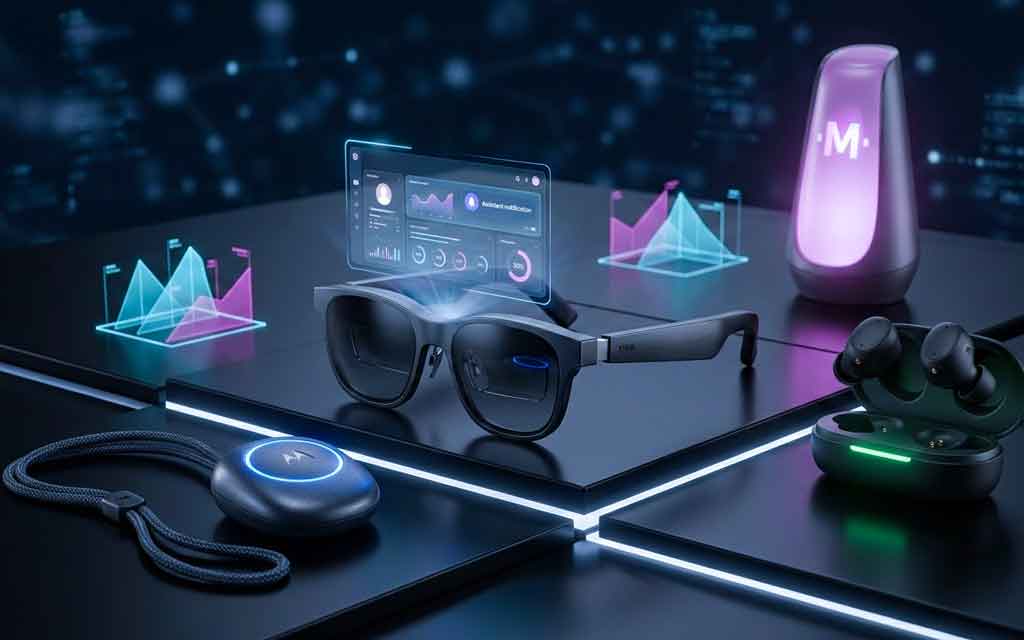
CES 2026 was a feast of futuristic flair. The show floor buzzed with AI everywhere—sometimes quirky, often genuinely cool. Holographic companions projected lifelike avatars right into your workspace (think Razer Project Ava’s anime-style coach Kira or Napster View’s circular holoprojector). Brain-reading headsets and neural earbuds (like Naqi Logix’s gesture-controlled buds) promised hands-free control via subtle blinks or tilts. AR glasses stole the spotlight, with Xreal’s 1S models converting 2D content to 3D spatial experiences on a massive virtual screen.
AI pocket pets and companions were inescapable—Tamagotchi-inspired devices like Sweekar (an egg that hatches and grows with care) or therapeutic robot pets like Jennie. Even plant sensors got the AI treatment with Senso’s gamified probes. These gadgets blend nostalgia with modern AI, turning everyday objects into interactive, emotional companions.
Lenovo and Motorola made waves with cross-device AI. Their Qira super agent unifies experiences across phones, PCs, and wearables. Motorola’s Project Maxwell pendant concept acts as a perceptive companion—always listening, seeing, and summarizing without pulling out your phone. It’s a step toward ambient, screenless AI that fits seamlessly into life.
Privacy concerns? Absolutely. Always-on recording raises red flags about data security and consent. Many devices emphasize on-device processing to keep info local, but transparency remains key.
Top 10 AI Gadgets and Wearables to Watch in March 2026
Here’s my curated list of the most compelling AI gadgets 2026 and wearable AI devices 2026, blending CES standouts, recent launches, and emerging availability:
- Samsung Galaxy S26 Series — The agentic AI pioneer. Proactive features let it orchestrate tasks across apps (e.g., interpreting group chats to order pizza). Bixby, Gemini, and Perplexity agents work together for seamless actions. Pros: Truly hands-off productivity; privacy display on Ultra. Cons: Higher price; heavy reliance on ecosystem. Integrates deeply into daily routines—scheduling, research, content creation.
- Xreal 1S AR Glasses — Affordable spatial computing. 1200p HD, 500-inch virtual screen, 2D-to-3D conversion. Pros: Immersive gaming/movies; lighter than predecessors. Cons: Battery life limitations. Great for work calls or entertainment without a monitor.
- Motorola Project Maxwell Pendant (Proof of Concept) — Ambient AI companion. Context-aware, records/summarizes meetings hands-free. Pros: Discreet, always-on insights. Cons: Still conceptual; privacy risks from constant sensing.
- Lenovo/Motorola Qira Ecosystem — Unified AI super agent. Works across devices for personalized assistance. Pros: Seamless continuity. Cons: Requires multiple Lenovo/Motorola products.
- Ray-Ban Meta Gen 2 (or similar updates) — Everyday AI glasses. Hands-free calls, translations, AI queries. Pros: Stylish, practical. Cons: Camera privacy debates.
- Naqi Neural Earbuds — Gesture-based control. Head tilts/blinks for navigation. Pros: Truly hands-free. Cons: Learning curve.
- Sweekar AI Pocket Pet — Nostalgic companion. Grows/matures with care. Pros: Fun, emotional engagement. Cons: Novelty may fade.
- Phonak Infinio Ultra Sphere Hearing Aids — AI-enhanced audio. Voice isolation in noise. Pros: Life-changing for conversations. Cons: Premium pricing.
- Razer Project Ava Hologram — Desktop AI avatar. Face-to-face collaboration. Pros: Engaging interface. Cons: Stationary setup.
- Various AI Companions (e.g., Luka AI Cube) — Kid-focused pocket devices. Avatars for learning/questions. Pros: Educational. Cons: Screen time concerns.
Check out our in-depth reviews on vfuturemedia.com for hands-on takes, like our Samsung Galaxy S26 deep dive or Xreal AR glasses comparison.
MWC 2026: AI Goes Network-Native
While CES dazzled with consumer gadgets, MWC 2026 focused on infrastructure. AI-native networks emerged as a game-changer—telcos embedding intelligence directly into 5G/6G for smarter connectivity.
Deutsche Telekom’s Magenta AI Call Assistant (world premiere) lives in the network: Say “Hey Magenta” during a call for live translation, summaries, or real-time help—no app needed. Qualcomm’s Snapdragon Wear Elite powers next-gen wearables with edge AI for personalized experiences across watches, pendants, and pins.
Samsung showcased deeper agentic AI in the Galaxy ecosystem, while Huawei pushed AI-centric solutions for carriers. These advancements mean wearables and phones will soon feel even more intuitive, with AI handling background tasks over ultra-reliable networks.
Pros: Frictionless experiences; better privacy via network processing. Cons: Dependency on carrier support; potential for over-reliance on always-connected AI.
The Road Ahead: Integration, Privacy, and Daily Life
These CES 2026 AI trends and MWC announcements point to a future where AI isn’t a tool—it’s a companion woven into life. Agentic features anticipate needs (booking flights from a casual chat), wearables provide ambient insights (summarizing lectures without notes), and networks ensure seamless performance.
Yet privacy looms large. Always-listening devices demand robust on-device AI, clear consent, and data controls. As adoption grows, so does the need for ethical design.
In March 2026, the best gadgets enhance without overwhelming—freeing time for what matters. Whether it’s an AR view transforming your commute or an AI agent handling errands, the era of personal AI is here.
For more on AI gadgets 2026, wearable AI devices 2026, and emerging trends, explore our tech reviews and guides at www.vfuturemedia.com. What’s your favorite so far? Drop a comment—we’re geeking out over this future together.



Leave a Comment