
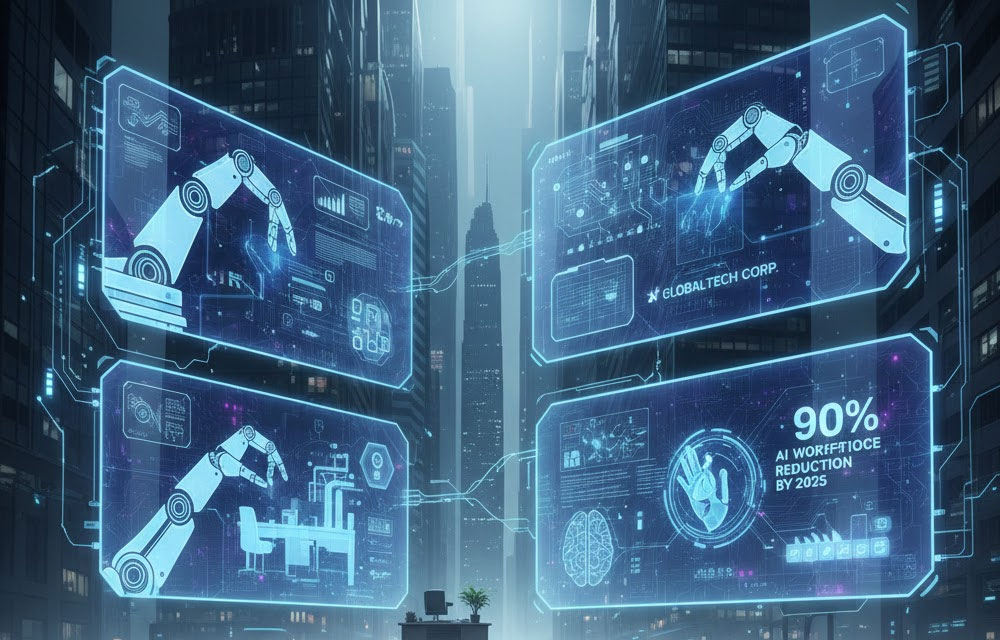
The AI Revolution Hits Home: Understanding the Scale of Workforce Disruption
Artificial intelligence has moved from boardroom buzzword to imminent workforce reality. A comprehensive study released by MIT researchers on November 26, 2025, delivers sobering news for American workers: AI technology currently has the capability to automate tasks representing 11.7% of the U.S. workforce.
This translates to approximately 11.7 million jobs and $1.2 trillion in annual wages now vulnerable to automation—not decades from now, but today.
Key Findings from the MIT Research
The study introduces the Iceberg Index, an innovative labor simulation tool developed in partnership with Oak Ridge National Laboratory. This groundbreaking approach creates digital simulations of 151 million U.S. workers to assess automation feasibility across different occupations and geographic regions.
Critical statistics from the research:
- 11.7% nationwide workforce exposure to current AI automation capabilities
- Geographic disparities: Tech hubs like San Francisco show 15% exposure in professional services, while Midwest manufacturing regions reach 13-14% in logistics and administrative roles
- $1.2 trillion in payroll currently at risk from AI-driven automation
- Sector-specific vulnerabilities: Office support (22%), finance (18%), and healthcare administration (16%) lead displacement risks
Which Jobs Face the Highest AI Automation Risk in 2025?
Understanding vulnerability is the first step toward career protection. The MIT analysis reveals that routine, repetitive tasks across white-collar professions face the most immediate threat.
High-Risk Job Categories
Administrative and Office Support (22% exposure) Data entry specialists, administrative assistants, and clerical workers performing routine document processing face the highest automation risk. AI-powered software can now handle scheduling, basic correspondence, and data organization with minimal human oversight.
Financial Services (18% exposure) Basic financial analysis, compliance checking, and routine accounting tasks are increasingly handled by AI systems. Entry-level financial analysts and bookkeepers should prioritize upskilling immediately.
Healthcare Administration (16% exposure) Medical billing specialists, appointment coordinators, and insurance claims processors face significant displacement risk as AI streamlines administrative healthcare functions.
Entry-Level Programming (12% exposure) Even technology professionals aren’t immune. Basic coding tasks, debugging simple errors, and routine software maintenance are becoming AI-automated, challenging the notion that tech jobs provide automatic security.
Geographic Impact: Zip Code-Level Disruption
The Iceberg Index’s granular analysis reveals that AI disruption varies dramatically by location. Coastal technology centers face higher professional services exposure, while Midwest manufacturing communities confront logistics and administrative automation. Rural areas show lower overall exposure at 8%, but limited reskilling infrastructure amplifies their vulnerability.
The Economic Ripple Effect: From Layoffs to Legislative Action
Recent corporate actions underscore the study’s urgency. Major technology companies have begun significant workforce reductions explicitly tied to AI implementation.
HP announced plans to eliminate 4,000-6,000 positions globally by 2028, citing AI-driven efficiency improvements in product development and cloud engineering. IBM similarly reduced its workforce by thousands in November 2025, refocusing resources toward AI consulting and software development.
These cuts represent more than corporate restructuring—they’re early indicators of the broader transformation MIT researchers documented.
Congressional Response and Policy Proposals
Bipartisan Senate groups have escalated calls for federal intervention, with some lawmakers warning of potential 15-20% unemployment in vulnerable sectors by 2030 without proactive measures. Proposed solutions include:
- Federal reskilling funds targeting high-exposure communities
- Mandatory AI impact assessments for large employers
- Tax incentives for companies investing in employee upskilling
- Creation of a National AI Resilience Fund
Strategic Reskilling: Your Action Plan for Career Resilience
The MIT study emphasizes adaptation over anxiety. While 11.7 million jobs face automation risk, strategic reskilling can transform displacement threats into advancement opportunities.
Immediate Action Steps
1. Assess Your Personal Exposure Evaluate how much of your current role involves routine, repetitive tasks. Jobs scoring above 10% automatable on assessment tools require immediate attention to skill diversification.
2. Invest in AI Literacy Understanding AI capabilities and limitations has become as fundamental as computer literacy was in the 1990s. Online platforms offer affordable certification programs in prompt engineering, AI ethics, and machine learning basics—often under $50 monthly.
3. Target Growth Sectors AI creation roles are expanding 40% year-over-year according to Bureau of Labor Statistics data. Positions like AI model trainers, ethics specialists, and prompt architects command average salaries of $120,000 while facing talent shortages.
4. Develop Hybrid Expertise The most resilient professionals combine domain knowledge with AI tool proficiency. Financial analysts mastering predictive analytics software see 25% wage premiums. Healthcare professionals skilled in AI-assisted diagnostics create irreplaceable value.
5. Leverage Community Resources Community colleges in high-exposure regions are launching subsidized AI bootcamps, often funded by state workforce development initiatives. Many programs offer evening and weekend formats for working professionals.
The Opportunity Side: AI Job Creation and Emerging Roles
Automation doesn’t only eliminate positions—it generates new ones. For every ten jobs automated, researchers estimate four to six new positions emerge in AI oversight, customization, and innovation.
High-Growth AI Career Paths
AI Prompt Engineer Designing effective instructions for AI systems requires human creativity and strategic thinking. These roles blend technical understanding with communication skills.
AI Ethics Specialist As AI deployment expands, organizations need professionals ensuring responsible implementation, bias mitigation, and regulatory compliance.
AI Training Data Curator Machine learning models require carefully selected and labeled training data. This human-intensive work combines subject matter expertise with data management skills.
AI-Human Collaboration Specialist Optimizing workflows that blend AI capabilities with human judgment creates value across industries from healthcare to creative services.
Global Perspectives: Learning from International AI Workforce Policies
The European Union’s AI Act, enforced since August 2025, provides a regulatory framework that U.S. policymakers are studying closely. The EU mandate requires risk assessments for high-impact AI in hiring decisions and establishes worker retraining funds.
Key provisions include transparency requirements where firms must disclose AI deployment in 80% of implementations, and tax-funded upskilling programs for displaced workers. Congressional proposals for similar U.S. safeguards suggest bipartisan recognition that managed transition beats market chaos.
Taking Control: From Anxiety to Action
MIT’s research delivers an uncomfortable truth: AI displacement isn’t a distant threat—it’s an present reality affecting millions of American workers. The 11.7% workforce exposure figure represents current technological capabilities, not future projections.
However, this clarity enables strategic response. Geographic precision through zip-code analysis helps workers and policymakers target interventions effectively. Sector-specific data guides career pivots toward resilient specializations. And the 40% growth in AI creation roles proves that adaptation creates opportunity.
Your Next Steps
This Week:
- Evaluate which tasks in your current role could be AI-automated
- Research one online AI literacy course relevant to your industry
- Join a professional community focused on AI integration in your field
This Month:
- Complete an AI fundamentals certification
- Identify three hybrid skills combining your expertise with AI tools
- Connect with colleagues successfully navigating AI-driven changes
This Quarter:
- Apply AI tools to at least one aspect of your current work
- Develop a portfolio project demonstrating AI collaboration skills
- Research emerging roles in your industry created by AI adoption
The VFutureMedia Commitment: Navigating Workforce Transformation Together
At VFutureMedia.com, we’re dedicated to providing actionable intelligence on technology’s impact on careers and industries. The AI workforce transformation represents the defining economic shift of our era, comparable to industrialization or the internet revolution.
Our ongoing coverage will track policy developments, analyze industry-specific impacts, profile successful career transitions, and provide practical reskilling resources. The future of work is being written now—and informed professionals will shape it rather than be shaped by it.
Subscribe to our newsletter for weekly AI career insights, reskilling opportunities, and industry analysis. Follow us on social media for real-time updates on workforce technology trends.
The choice between reskilling and obsolescence isn’t rhetorical—it’s the defining career decision of 2025. Which path will you choose?
Frequently Asked Questions
Which jobs are most at risk from AI automation? Administrative support (22%), financial services (18%), and healthcare administration (16%) face the highest current risk. Entry-level positions with routine, repetitive tasks across industries are most vulnerable.
How can I tell if my job is at risk? Assess what percentage of your daily tasks involve routine data processing, simple decision-making based on clear rules, or repetitive administrative work. Jobs with over 50% routine tasks face elevated risk.
What skills should I learn to stay relevant? AI literacy, prompt engineering, data analysis, and hybrid skills combining your domain expertise with AI tools offer the strongest protection. Focus on tasks requiring creativity, complex judgment, and human interaction.
Are technology jobs safe from AI automation? Entry-level programming and basic IT support face 12% automation risk. However, advanced technical roles requiring architecture, system design, and AI oversight remain in high demand.
How long do I have to reskill? AI deployment is accelerating rapidly. Major companies are already implementing workforce reductions tied to AI adoption. Beginning reskilling efforts immediately provides the best career protection.
Ethan Brooks covers the tech that’s reshaping how we move, work, and think — for VFuture Media. He was at CES 2026 in Las Vegas when the world got its first real look at humanoid robots, AI-powered vehicles, and Samsung’s tri-fold phone. He writes about AI, EVs, gadgets, and green tech every week. No hype. No filler. X · Facebook
We started VFuture Media because we wanted tech news written by people who actually follow this industry — not content farms chasing keywords. If that resonates, we’d love to have you as a regular reader. Pull up a chair.


Leave a Comment