
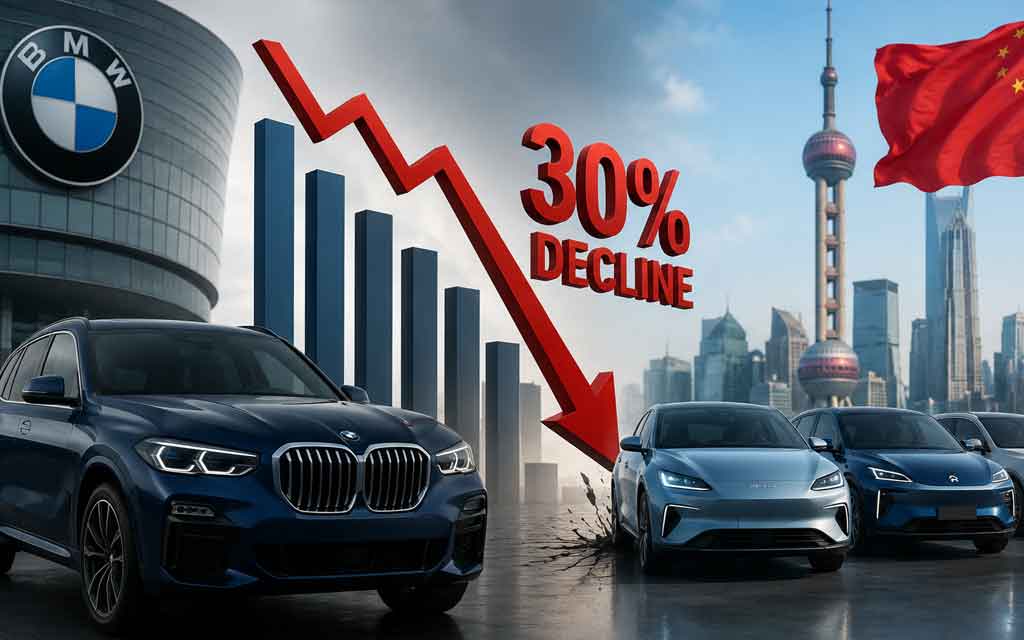
BMW has reported a significant 30% drop in sales in China, one of its most important markets. The decline highlights growing challenges for German luxury automakers in the world’s largest auto market amid intensifying competition and shifting consumer preferences.
The Numbers Behind the Drop
According to recent reports, BMW’s sales in China fell sharply compared to the same period last year. This marks one of the steepest declines for the brand in the region in recent memory and continues a challenging trend for European luxury carmakers.
Key factors contributing to the drop include:
- Intense Local Competition — Chinese brands like BYD, Nio, and Li Auto are rapidly gaining market share with competitive electric and luxury vehicles.
- Economic Headwinds — Slower economic growth and reduced consumer confidence in China have affected demand for high-end vehicles.
- EV Transition Challenges — BMW is still ramping up its electric vehicle offerings while Chinese competitors have moved faster in the EV space.
- Pricing Pressure — Aggressive discounting and incentives from local manufacturers have made it harder for premium imports to maintain pricing power.
BMW’s Position in China
China has long been BMW’s largest single market. The company has invested heavily in local production through its joint ventures and has a strong brand reputation. However, the luxury segment in China is becoming increasingly competitive as domestic brands move upmarket.
BMW has been expanding its electric lineup with models like the iX and i7, but the transition to EVs has been slower than some competitors. The company is now accelerating its electrification strategy in response to changing market dynamics.
Broader Impact on German Automakers
BMW is not alone in facing challenges in China. Other German manufacturers like Mercedes-Benz and Audi have also reported softer performance in the region. This trend reflects deeper shifts in the Chinese auto market:
- Rise of domestic premium brands
- Strong government support for electric vehicles
- Changing consumer preferences toward technology and sustainability
- Increased price sensitivity among buyers
What BMW Is Doing to Respond
In response to the sales decline, BMW is reportedly:
- Accelerating new model launches
- Expanding its electric vehicle offerings
- Increasing localization of production
- Exploring new pricing and incentive strategies
- Investing in digital and connected car features
The company remains committed to the Chinese market but acknowledges the need to adapt quickly to evolving consumer demands.
Outlook for the Luxury Auto Sector in China
The 30% sales drop for BMW serves as a wake-up call for traditional luxury automakers. The Chinese market is no longer a guaranteed growth engine — it has become one of the most competitive and demanding markets in the world.
Success in China will likely require:
- Faster innovation in electric and intelligent vehicles
- Stronger localization strategies
- Competitive pricing
- Enhanced customer experience and after-sales service
For investors and industry watchers, BMW’s performance in China will be a key indicator of how traditional luxury brands adapt to the new realities of the world’s largest auto market.
Final Thoughts
The significant sales decline for BMW in China highlights the challenges facing legacy automakers in a rapidly evolving market. While the brand remains strong globally, the pressure in China is real and likely to intensify as domestic competitors continue to improve.
How BMW and other German manufacturers respond in the coming months will be crucial in determining their long-term success in one of the most important markets in the world.
The luxury auto industry in China is undergoing a fundamental transformation — and only the most adaptable brands will thrive.


Leave a Comment