
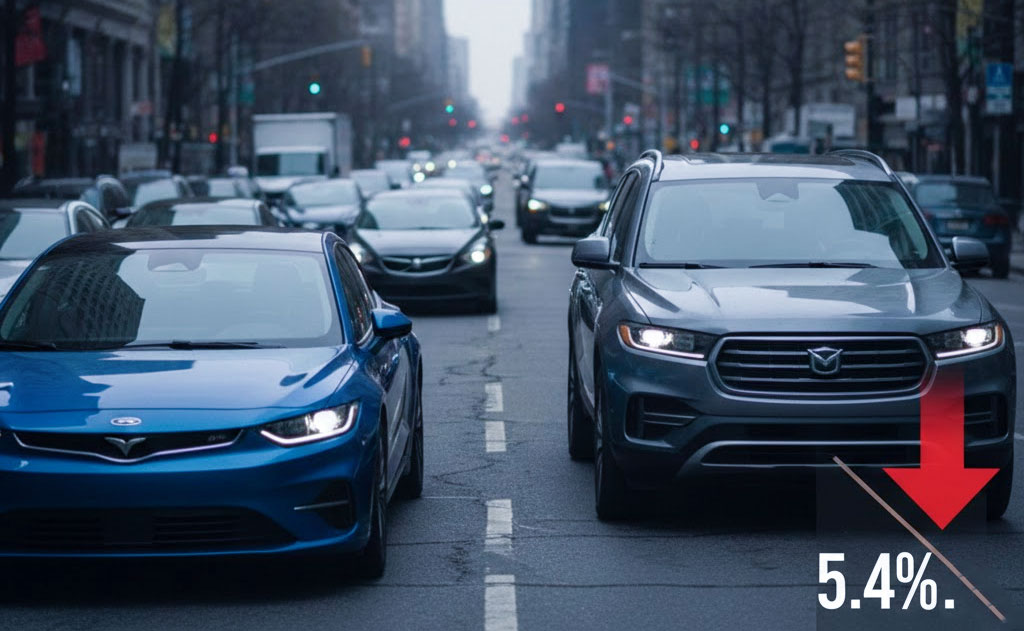
EV Sales Crash 2025: US Electric Vehicle Market Share Hits Multi-Year Low at 5.4% in November – Is the Boom Over?
As December 2025 unfolds, shocking new data reveals a dramatic collapse in US electric vehicle (EV) sales. According to the latest Cox Automotive EV Market Monitor, EVs captured only 5.4% of new car sales in November – the lowest share since April 2022 and a sharp drop from 5.8% in October and over 11% earlier in the year. This plunge comes amid the expiration of federal $7,500 tax credits, sparking fears that the EV revolution is stalling just as it seemed unstoppable.
But is this the end of the EV era in America, or a temporary setback? Dive into the numbers, the reasons behind the crash, and what it means for the future of electric cars.
The Stark Numbers: A Post-Incentive Bloodbath
November’s EV sales totaled an estimated 70,255 units – a staggering 41.2% decline year-over-year and 5.2% down from October. Key highlights from Cox Automotive and Kelley Blue Book:
- Market share: 5.4% (down from peaks of 11-12% in Q3 2025).
- Tesla led with ~39,800 units but still saw declines, boosting its share to 56.7% as competitors suffered more.
- Other top sellers: Rivian (4,500), Ford (4,188), Chevrolet (3,112), Hyundai (2,853).
- Inventory surge: Days’ supply hit 149 days – the highest since early 2024.
- Despite the monthly crash, year-to-date EV sales are still 2.1% above 2024 levels, thanks to a Q3 rush before incentives ended.
Analysts like S&P Global Mobility warn of continued weakness into 2026, with BEV share potentially lingering in the low single digits without new support.
Why the Sudden Collapse? The Tax Credit Cliff and Beyond
The primary culprit? The abrupt end of the federal EV tax credit on September 30, 2025, triggered a massive “pull-ahead” buying spree in Q3 – record sales followed by a predictable hangover.
- Policy Shock: Buyers rushed purchases to snag the $7,500 incentive, inflating earlier numbers and depleting November demand.
- Affordability Woes: Average new EV transaction prices hovered around $58,638, with incentives rebounding but not enough to offset the lost credit.
- Inventory Buildup: Dealers are flooded with unsold EVs, leading to deeper discounts but signaling weak organic demand.
- Broader Market Slowdown: Overall new-vehicle sales fell 5.5% YoY, with SAAR at 15.6 million units.
Ford CEO Jim Farley had warned of this, predicting EV sales could drop sharply post-incentive. Reality hit harder than expected.
Hybrids Surge as the Winner in the Chaos
While pure EVs cratered, hybrids are booming:
- Hyundai reported record hybrid sales, up 42% YoY.
- Toyota and Kia saw strong electrified gains despite EV slumps.
- Consumers are shifting to hybrids as a “bridge” – cheaper to buy, no range anxiety, and better fuel efficiency without full commitment to charging.
This trend underscores a key truth: Americans want greener options, but not at the expense of convenience or cost.
Global Contrast: EVs Thrive Elsewhere
The US slump stands in sharp contrast to the rest of the world:
- Global Sales: Nearly 2 million EVs sold in November alone, pushing year-to-date to 18.5 million (+21% YoY).
- Europe: +36% growth in November, driven by new incentives in Italy, France, and the UK.
- China: Dominates with 11.6 million YTD, maintaining ~50%+ share.
- Emerging markets like Southeast Asia and South America see explosive growth from affordable Chinese imports.
The US risks falling behind as policy shifts prioritize traditional vehicles.
What’s Next for EVs in 2026 and Beyond?
Short-term pain seems likely:
- Analysts forecast flat or declining US EV sales in early 2026.
- Automakers like Ford, GM, and Stellantis are scaling back ambitious targets and boosting hybrids/ICE production.
- Potential for deeper discounts as inventory piles up.
Long-term optimism remains:
- New affordable models incoming (e.g., Chevy Equinox EV, Volvo EX30).
- Charging infrastructure expanding rapidly.
- If policies stabilize or new incentives emerge, rebound possible.
- Globally, EVs are projected to hit 24-25% share in 2025.
As one expert put it: This isn’t the death of EVs – it’s a market recalibrating to reality without massive subsidies.
The Bottom Line: Opportunity in the Dip?
For buyers, November’s crash means unprecedented deals on EVs – higher incentives, lower prices, and plenty of stock. For investors and enthusiasts, it’s a wake-up call: True mass adoption needs more than tax credits; it requires compelling products at competitive prices.
The EV story isn’t over – it’s just entering a tougher, more realistic chapter.
I’m Ethan, and I write about the tech that’s actually going to change how we live — not the stuff that just sounds impressive in a press release. I cover AI, EVs, robotics, and future tech for VFuture Media. I was on the ground at CES 2026 in Las Vegas, walking the show floor so I could give you a real read on what matters and what’s just noise. Follow me on X for daily takes.
Stay ahead on the latest EV sales trends, market crashes, and future mobility news at vfuturemedia.




Leave a Comment