
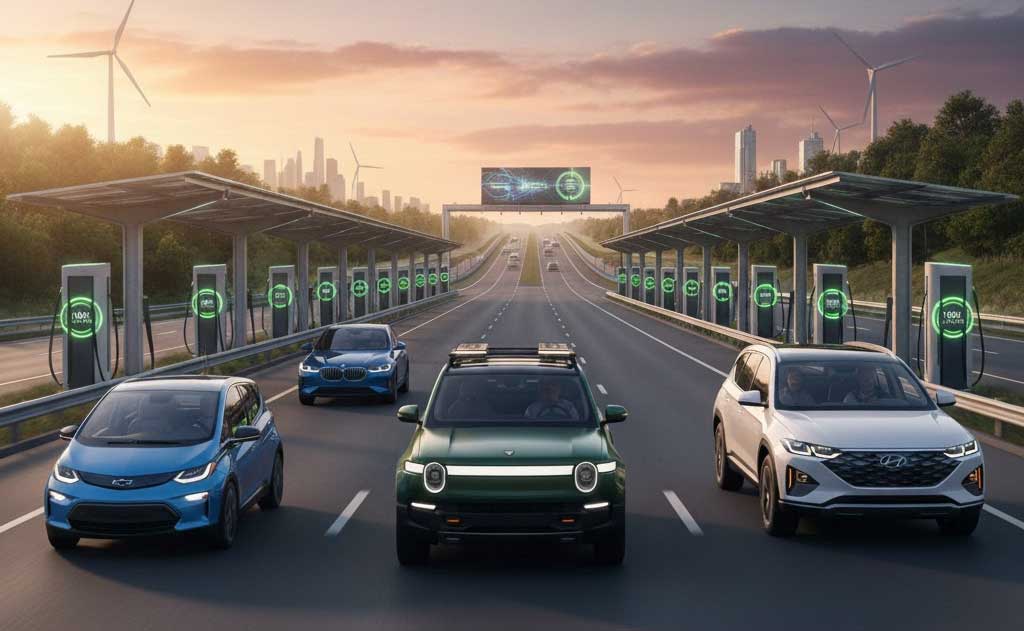
Over 20 exciting new EVs hit the market in 2026, bringing longer ranges, lower prices, and a flood of affordable used options—making electric driving accessible, practical, and mainstream for everyone
Picture this: It’s 2026, and you’re cruising down the highway in a sleek electric SUV that costs less than many gas cars today, with a range pushing 300+ miles, ultra-fast charging, and a booming used market full of bargains. No more range anxiety, sky-high prices, or waiting for infrastructure—EVs have arrived as the smart, everyday choice.
After years of promise, 2026 marks the tipping point. Renewables dominate the grid, charging stations blanket highways, and over 20 new models launch with real affordability (many under $40,000, some dipping below $30,000). A surge in used EVs from lease returns floods the market with low-mileage options at steep discounts. Policies stabilize incentives, and total ownership costs—fuel, maintenance, taxes—make EVs cheaper to own than gas vehicles for most drivers.
This isn’t hype—it’s happening. Here’s why 2026 is the year EVs go fully mainstream, plus the hottest models everyone’s talking about.
Why 2026 Is the Breakthrough Year for EVs
2025 tested the waters with delays and adjustments, but 2026 delivers:
- Affordability Explosion: New models start under $30,000 (Chevy Bolt returns at ~$29,000; Nissan Leaf ~$30,000). Used EVs from 2023-2025 leases hit lots in droves—hundreds of thousands available, often 40-50% off original price.
- Longer Ranges Standard: Most new EVs offer 300+ miles; many top 400. Battery tech improvements + efficient designs make this the norm.
- Charging Everywhere: Networks expand rapidly—ultra-fast hubs every 50-60 miles on major routes. Home charging cheaper and easier with bidirectional options (your EV powers your house in outages).
- Lower Total Costs: Electricity ~1/3 the price of gas; minimal maintenance; incentives in many states. Studies show EVs save $1,000-2,000/year on average.
- Mainstream Appeal: Family SUVs, pickups, affordable compacts—something for everyone. No more “early adopter” premium.
Global sales push EVs to 20-25% market share; in the US, expect double-digit growth as barriers vanish.
The Most Anticipated EV Models of 2026
Over 20 launches span budgets and styles. Here are the standouts:
Affordable Game-Changers (Under $40,000)
- Chevrolet Bolt Return: ~$29,000 start. Compact crossover with 250-300 mile range. America’s cheapest new EV—perfect entry point.
- Nissan Leaf (Next-Gen): ~$30,000. Redesigned as small SUV; up to 300+ miles. Modern looks, fast charging—revives the pioneer affordably.
- Rivian R3: Under $40,000 estimated. Compact adventure crossover; fun design, capable off-road.
Mid-Size Hits ($40,000-$60,000)
- Rivian R2: ~$45,000. Midsize SUV rivaling Model Y; 300+ miles, adventure-ready. Rivian’s mass-market breakthrough.
- BMW iX3 / Neue Klasse Models: Efficient, premium compact SUV; 400+ mile potential.
- Mercedes CLA EV: Sleek sedan/crossover; advanced tech, fast charging.
Family and Luxury Standouts
- Hyundai Ioniq 9: Three-row SUV; 300+ miles, spacious, feature-packed. Ultimate family hauler.
- Kia EV9 Updates / New Variants: Proven three-row winner gets refinements.
- Lucid Gravity / SUV: Ultra-luxury with massive range.
- Honda 0 Series / Acura RSX: New platform; stylish, efficient family options.
Other buzzworthy: Scout Terra/Traveler (rugged revival), Ferrari’s first EV (supercar thrill), Polestar updates.
| Model | Starting Price (Est.) | Range (Miles) | Key Highlights |
|---|---|---|---|
| Chevy Bolt | ~$29,000 | 250-300 | Cheapest new EV, compact crossover |
| Nissan Leaf | ~$30,000 | 300+ | Redesigned SUV style |
| Rivian R2 | ~$45,000 | 300+ | Adventure-focused midsize |
| Hyundai Ioniq 9 | $60,000+ | 300+ | Three-row family luxury |
| BMW iX3 | $50,000+ | 400+ | Premium efficiency |
Market Shifts Making EVs Mainstream
- Charging Revolution: Ultra-fast stations proliferate; NACS standard opens Tesla Superchargers to all. Home bidirectional charging gains traction.
- Used EV Flood: 200,000+ lease returns create bargains—low-mileage Model 3/Ys under $25,000 common.
- Policy Stability: Incentives continue in many areas; focus shifts to infrastructure billions.
- Emissions Impact: EVs cut transport pollution dramatically—key as renewables power grids.
Buyer Guide: Switching to an EV in 2026
Ready to go electric? Here’s how:
- Calculate Savings: Use tools comparing gas vs. electric costs—most save thousands over 5 years.
- Home Charging Setup: Level 2 charger (~$500-1,000 installed) fills overnight. Bidirectional models add backup power.
- Test Drive Essentials: Focus on range, ride, tech. Many dealers offer overnight loans.
- Incentives Check: Federal/state rebates, utility discounts.
- Used vs. New: Used for max savings; new for warranty/tech.
The Bigger Picture: EVs Reshaping Mobility and the Planet
2026 EVs aren’t just cars—they’re cleaner, quieter, smarter transport. Widespread adoption slashes emissions (transport’s biggest source), boosts energy independence, and drives innovation.
From affordable daily drivers to family adventurers, 2026 offers an EV for nearly everyone. The future is electric—and it’s finally here.
Which 2026 EV excites you most? Rivian R2 adventure? Hyundai Ioniq 9 space? Chevy Bolt value? Share below!
I’m Ethan, and I write about the tech that’s actually going to change how we live — not the stuff that just sounds impressive in a press release. I cover AI, EVs, robotics, and future tech for VFuture Media. I was on the ground at CES 2026 in Las Vegas, walking the show floor so I could give you a real read on what matters and what’s just noise. Follow me on X for daily takes.
We started VFuture Media because we wanted tech news written by people who actually follow this industry — not content farms chasing keywords. If that resonates, we’d love to have you as a regular reader. Pull up a chair.
Published on vfuturemedia

Leave a Comment