
By Ethan Brooks
As a tech journalist covering AI and electric vehicles at VFutureMedia.com, I’ve witnessed Tesla’s bold shifts firsthand. Picture this: Tesla vehicles morphing into autonomous cash cows while traditional EV sales hit bumps. With Q4 2025 deliveries at 418,227—down 16% year-over-year and marking the second straight annual decline—Tesla lost its global EV throne to BYD. Yet, 2026 spotlights Tesla’s AI pivot, betting big on Full Self-Driving (FSD) v14 enhancements, unsupervised Robotaxi trials in Austin, Cybercab ramps, and Optimus humanoid strides. Amid record energy storage deployments, how could synergies with Grok and xAI—tied by Elon Musk’s vision—catapult Tesla to AI/robotics supremacy? Let’s unpack the roadmap.
Tesla’s EV Sales Challenges in 2025
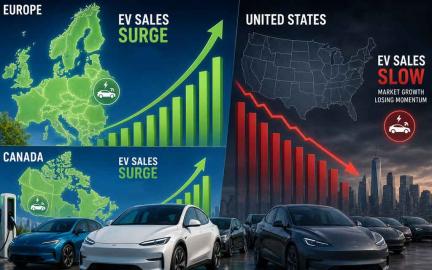
Tesla’s core auto business faced headwinds last year. Q4 deliveries totaled 418,227 vehicles, missing analyst expectations of around 423,000 and dropping from 495,570 in Q4 2024. Full-year 2025 saw 1,636,129 deliveries—a 9% decline—despite producing 1,654,667 units.
Key Factors Behind the Dip:
- Intensified Competition: BYD surged to 2.26 million BEV sales, overtaking Tesla amid aggressive pricing in China and emerging markets.
- Aging Lineup: Model 3/Y dominated with 1,585,279 deliveries, but “other models” like Cybertruck and Semi lagged at 50,850.
- Economic Pressures: High interest rates and subsidy shifts curbed demand, with U.S. sales down 22% in Q4 per estimates.
This slowdown underscores Tesla’s strategic pivot: EVs as a foundation for AI-driven revenue streams like autonomy and robotics.
FSD Autonomy: v14 Sets New Benchmarks in 2026
Tesla’s Full Self-Driving (FSD) software is the linchpin of its AI strategy. Version 14, hailed as “mind-blowing” by Musk, represents a quantum leap in supervised autonomy.
v14 Improvements Highlighted:
- Smoother Urban Navigation: Enhanced handling of emergency vehicles, unprotected lefts, roundabouts, and gestures—MotorTrend crowned it the best driver-assist system of 2026 for its “staggering capability.”
- End-to-End Neural Nets: v14 leverages higher-resolution vision for fewer disengagements, with v14.2 adding point-to-point parking and speed profiles.
- Unsupervised Milestones: Tesla’s fleet hit 7 billion miles by late 2025, aiming for 10 billion by mid-2026—critical for safe, hands-off driving.
Real-world example: Employee ferrying in Austin uses FSD without safety monitors, previewing Robotaxi viability. This tech not only boosts vehicle value but positions Tesla for software subscriptions generating high-margin recurring revenue.
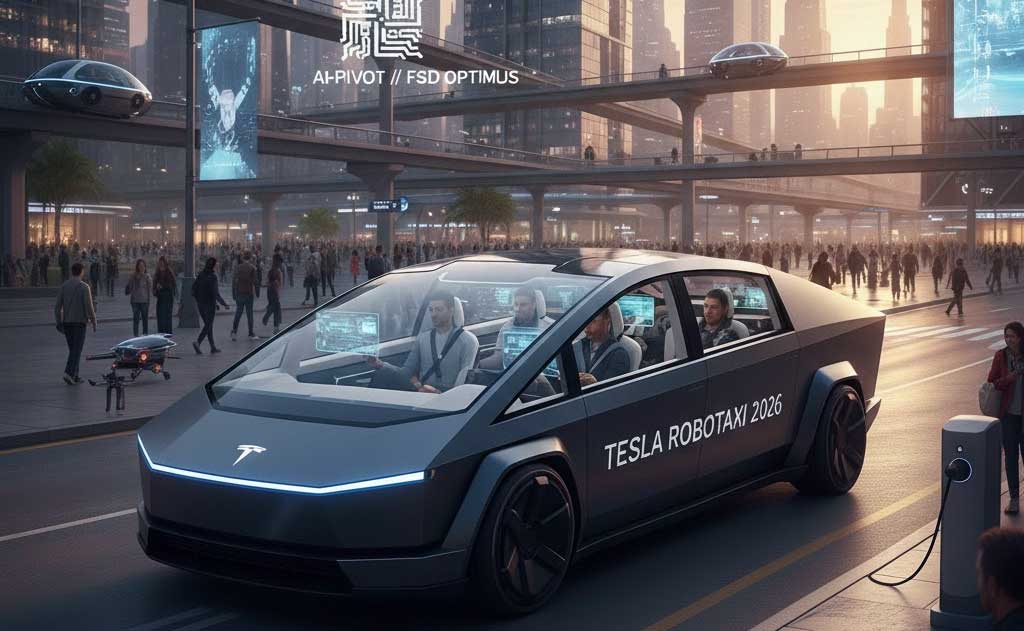
Tesla Robotaxi 2026 Updates: Cybercab Production Ramps Up
The Cybercab—Tesla’s purpose-built Robotaxi—steals the 2026 spotlight. Unveiled as a sleek, two-seater without pedals or wheel, it’s designed for unsupervised fleets.
Roadmap Milestones:
- Production Timeline: Testing lines active now; volume production kicks off April 2026 using “unboxed” assembly for efficiency.
- Deployment Plans: Initial unsupervised rides in Austin and California expand to more cities, with potential for 95,000 units annually pending regulatory nods (up from 2,500 limit).
- Tech Integration: Running on FSD v14 (initially AI4 hardware), Cybercab targets sub-$30,000 pricing, slashing ride costs to $0.20/mile.
Challenges include regulatory hurdles—NHTSA approvals for no-controls vehicles—but success could unlock trillion-dollar Robotaxi networks, turning idle EVs into revenue machines.
Optimus Humanoid Progress: Scaling to Millions in 2026
Tesla’s Optimus robot evolves from prototype to powerhouse, with Gen 3 set for reveal in February-March 2026.
Key Advancements:
- Capabilities: 22 degrees of freedom in hands, 12 km/h speed, and autonomous tasking via FSD-derived AI—ideal for factories, homes, and beyond.
- Production Goals: Limited internal use in 2026; external sales by late year at $20,000-$30,000. Fremont line targets 1 million units/year, Austin scaling to 10 million.
- Applications: From warehouse labor to Mars missions (planned 2026 launch), Optimus addresses labor shortages and “boring” tasks.
Musk calls it Tesla’s “biggest product,” forecasting trillions in value by automating scarcity.
Grok/xAI Synergies: Accelerating Tesla’s AI Shift
Elon Musk’s shared vision bridges Tesla and xAI, with Grok AI as the catalyst.
How Synergies Drive Dominance:
- Grok Integration: Already in Tesla vehicles for voice commands; slated as Optimus’ “brain” for natural language processing and reasoning.
- AGI Ambitions: xAI eyes artificial general intelligence by 2026, fueling Tesla’s autonomy via Grok 4.2/5 models—outpacing rivals in real-world AI.
- Resource Sharing: xAI’s $20B funding (NVIDIA-backed) complements Tesla’s Dojo supercomputers, enhancing training for FSD and Optimus.
No merger planned, but shareholder-voted investments could deepen ties, creating a unified AI ecosystem.
Energy Storage Records: A Bright Spot Amid Pivot
While EVs stumbled, Tesla’s energy business soared—deploying a record 14.2 GWh in Q4 2025 (up 29% YoY) and 46.7 GWh full-year (up 113%).
Growth Drivers:
- Megapack Dominance: Utility-scale batteries power grids, with new factories in California, Shanghai, and Houston (opening late 2026) targeting 50 GWh capacity.
- Megablock Innovation: Prefab solutions cut costs/install times, supporting renewables amid AI data center demands.
- Synergies with AI: Energy storage stabilizes power for Tesla’s compute farms and Robotaxi charging.
This segment’s high margins (potentially >50% revenue by 2027) buffers the AI transition.
Challenges in Tesla’s 2026 Roadmap
The pivot isn’t risk-free.
- Regulatory Barriers: Unsupervised FSD and Cybercab need approvals; delays could stall deployments.
- Execution Risks: Past timeline slips (e.g., Optimus delays) and hardware shifts (AI5 in 2027) pose hurdles.
- Competition: Waymo, Baidu in Robotaxi; Figure, Boston Dynamics in humanoids—plus EV rivals eroding market share.
- Economic Factors: Recession fears could dampen AI investments.
Yet, Musk’s track record suggests these are surmountable.
Future Predictions: AI Dominance by 2030?
By late 2026, expect Cybercab fleets in 5+ cities, Optimus pilots in factories, and Grok-enhanced FSD hitting 10 billion miles. Long-term: Robotaxi/Optimus revenues eclipsing EVs, with Tesla’s market cap soaring to $3-5 trillion. xAI synergies could yield AGI breakthroughs, redefining mobility and labor.
In my view, this pivot transforms Tesla from carmaker to AI titan—accelerating Musk’s vision of abundant futures.
FAQ: Tesla Robotaxi 2026 Updates and AI Pivot
What are the key Tesla FSD autonomy upgrades in v14? v14 brings smoother handling of complex scenarios like emergency vehicles and unprotected turns, with end-to-end nets reducing disengagements.
When does Cybercab production start in 2026? Volume production begins April 2026, with initial unsupervised testing in Austin expanding citywide.
How will xAI/Grok synergies boost Tesla’s robotics? Grok integrates as Optimus’ brain for commands and reasoning, leveraging xAI’s AGI push to enhance FSD and autonomy.
What were Tesla’s energy storage records in 2025? Q4 hit 14.2 GWh (record), full-year 46.7 GWh—up 113% YoY, driven by Megapack demand.
Why the Tesla AI pivot amid EV sales decline? With deliveries down to 418K in Q4 2025, Tesla shifts to high-margin AI like Robotaxi and Optimus for sustainable growth.
What excites you most about Tesla’s 2026 AI roadmap—FSD, Cybercab, or Optimus? Share in the comments, subscribe for cutting-edge tech insights, or check our related posts on EV trends. Let’s geek out on the future!
The future doesn’t wait — and neither should your feed. If this got you thinking, there’s plenty more where that came from. Browse our latest at VFutureMedia and stick around.
I’m Ethan, and I write about the tech that’s actually going to change how we live — not the stuff that just sounds impressive in a press release. I cover AI, EVs, robotics, and future tech for VFuture Media. I was on the ground at CES 2026 in Las Vegas, walking the show floor so I could give you a real read on what matters and what’s just noise. Follow me on X for daily takes.



Leave a Comment