
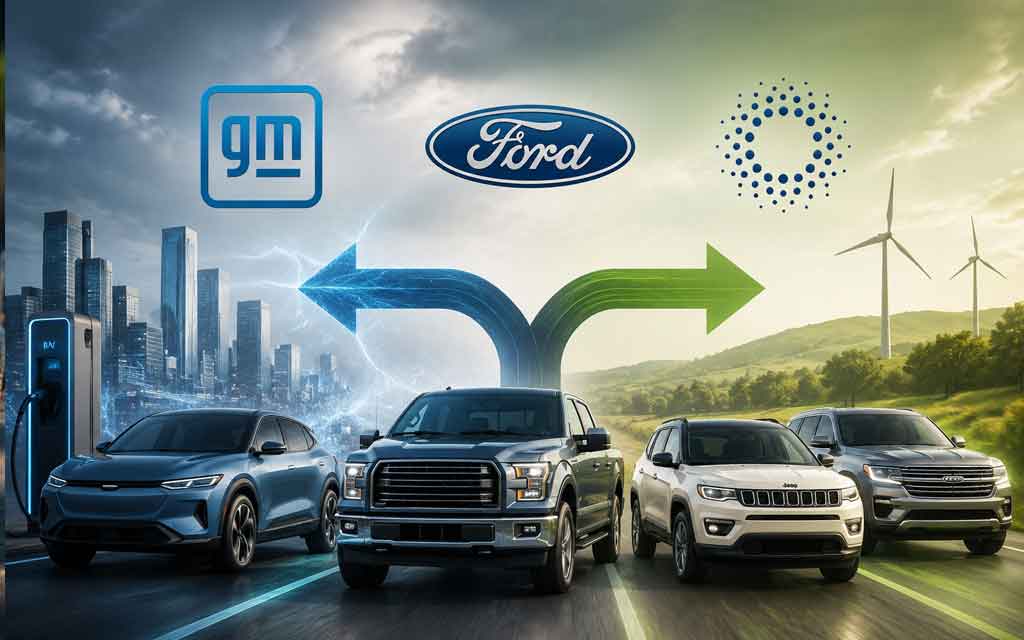
In 2026, major automakers including GM, Ford, and Stellantis are reducing pure EV targets and accelerating hybrid production. Here’s why the industry is shifting strategy and what it means for American buyers and green technology.
The electric vehicle revolution is entering a more pragmatic phase in 2026. After years of aggressive targets and massive investments in battery electric vehicles (BEVs), several legacy automakers are significantly scaling back their pure EV ambitions and redirecting resources toward hybrids and extended-range vehicles.
General Motors, Ford, and Stellantis are among the most visible examples of this strategic pivot. They are cutting production plans, taking large financial writedowns on EV-related assets, and prioritizing powertrains that are currently more profitable and better aligned with American buyer preferences.
This shift does not mean these companies are abandoning electrification. Instead, they are adopting a more flexible, multi-powertrain approach that includes strong hybrids, plug-in hybrids, and extended-range EVs (EREVs) alongside more measured pure EV programs.
The Scale of the Strategic Reset
Industry analysts and company disclosures point to a clear change in direction:
- Ford slashed its global battery electric vehicle production target for 2026 by roughly one-third and delayed or canceled several planned EV models, including an all-electric F-150 variant. The company is instead expanding its highly profitable hybrid lineup.
- General Motors has delayed major electric truck production expansion plans into at least mid-2026 and has reintroduced plug-in hybrid options it had previously discontinued in North America.
- Stellantis canceled the fully electric version of the Ram 1500 REV and replaced it with an extended-range electric vehicle (EREV) that uses a gasoline generator. The company is also bringing EREV technology to the Jeep Grand Wagoneer.
These moves come after reports of significant financial charges across the industry. Some estimates suggest automakers have collectively taken more than $60 billion in writedowns and losses related to EV investments as demand has proven softer than early projections.
Why the Pivot Is Happening Now
Several converging factors explain the industry-wide recalibration:
- End of Federal EV Tax Credits The $7,500 federal clean vehicle tax credit expired for most vehicles at the end of September 2025. Without this incentive, many buyers have become more price-sensitive, and demand for pure EVs has softened in certain segments.
- Buyer Preferences and Real-World Use Cases A large portion of American consumers — especially truck and SUV buyers — continue to prioritize long range, towing capability, and the ability to refuel quickly on road trips. Hybrids and EREVs address these concerns more effectively in the current infrastructure environment.
- Profitability Reality Many pure EV programs have struggled to reach profitability due to high battery costs, expensive new manufacturing investments, and pricing pressure. Hybrids, by contrast, often deliver strong margins because they leverage existing engine technology while still offering meaningful efficiency gains.
- Inventory and Dealer Pressure Some automakers built significant EV inventory in anticipation of faster adoption. When sales slowed, dealers faced excess stock, leading to discounts and reduced production.
- More Realistic Long-Term Outlook Companies are recognizing that the transition to full electrification will take longer than the most optimistic forecasts suggested. A multi-powertrain strategy allows them to reduce emissions faster in the near term while continuing to develop pure EV technology.
Company-by-Company Breakdown
Ford Motor Company Ford was one of the earliest and most vocal supporters of an aggressive EV transition. After investing heavily in new EV platforms and battery plants, the company has adopted a more cautious stance. It is now focusing resources on its successful hybrid models (including the F-150 PowerBoost and Maverick) while slowing the rollout of new battery-electric nameplates.
General Motors GM had set ambitious targets to lead in EVs with brands like Chevrolet, GMC, and Cadillac. Recent updates show a more measured approach, with delays to major electric truck programs and renewed emphasis on plug-in hybrids. The company continues to invest in EV technology but is aligning production more closely with current demand signals.
Stellantis Stellantis has taken one of the most visible turns toward extended-range vehicles. By launching the Ram 1500 REV and Jeep Grand Wagoneer REEV as EREVs rather than pure BEVs, the company is betting that American buyers will embrace electric driving with the security of a gasoline generator for long trips and heavy use.
Impact on American Buyers and Dealers
For U.S. consumers, the hybrid pivot means more choices in the showroom. Many dealers are reporting stronger demand for hybrid and plug-in hybrid models compared with pure EVs in certain segments. This shift is likely to result in:
- More hybrid and EREV options across truck, SUV, and crossover segments
- Potentially better availability and less aggressive discounting on pure EVs
- A more gradual transition that reduces the risk of buyers feeling forced into technology they are not yet comfortable with
Dealers have noted that powertrain mix on lots is evolving. While EVs remain important, hybrids are expected to take a larger share of sales in 2026 and 2027 as manufacturers adjust production.
Green Technology Implications
Critics of the pivot argue that slowing EV targets could delay emissions reductions. However, supporters point out that well-designed hybrids and EREVs can deliver substantial real-world emissions cuts more quickly and at greater scale than pure EVs that struggle with adoption barriers.
Hybrids and EREVs act as a bridge technology. They allow millions more drivers to reduce fuel consumption and emissions immediately while the charging infrastructure, battery costs, and buyer confidence continue to improve for pure EVs.
Most major automakers maintain that long-term goals still include a significant role for battery electric vehicles. The current recalibration is largely about timing, profitability, and meeting customers where they are today rather than where some hoped they would be by now.
What This Means for the Future
The 2026 hybrid pivot reflects a maturing EV market. The early phase of heavy subsidies and optimistic forecasts is giving way to a more realistic, multi-speed transition.
Companies that can offer customers genuine choice — pure EVs for those ready for them, strong hybrids and EREVs for those who want electrification with fewer compromises — are likely to perform better in the near term.
For the broader green technology movement, this pragmatic approach may actually accelerate overall progress. By reducing emissions across a wider range of vehicles and use cases, automakers can achieve meaningful environmental gains even as pure EV adoption curves adjust to real-world conditions.
The coming years will show whether this more balanced strategy leads to steadier, more sustainable growth in electrification or whether it slows momentum. What is clear today is that the one-size-fits-all rush toward pure EVs has been replaced by a more nuanced, market-driven approach.
FAQs
Why are automakers reducing EV production targets in 2026? Major reasons include the end of federal EV tax credits, softer demand in some segments, high costs, and stronger buyer preference for hybrids that offer better range and towing capability without charging concerns.
Does this mean companies are abandoning electric vehicles? No. Most automakers continue to invest in EV technology. They are simply adopting a more flexible strategy that includes hybrids and extended-range vehicles alongside pure EVs.
What is the difference between a hybrid and an EREV? Traditional hybrids have smaller batteries and rely more on the gasoline engine. Extended-range EVs (EREVs) have larger batteries and can drive significant distances on electricity alone, using a generator only when needed for extra range.
How will this affect car buyers in the U.S.? Buyers will likely see more hybrid and EREV options in showrooms, especially in truck and SUV segments. Pure EVs will remain available but may face more competition from hybrids on dealer lots.
Is this shift good or bad for the environment? It depends on perspective. Hybrids and EREVs can reduce emissions faster across a larger number of vehicles in the near term, while pure EVs offer zero tailpipe emissions. Most experts see a role for both technologies during the transition.


Leave a Comment