

In the opening weeks of 2026 (January 12-18), the global renewable energy sector showed robust momentum, driven by massive international investments, record-breaking capacity additions in key markets, and innovative policy shifts to address surging electricity demand from AI and data centers. These developments underscore the accelerating transition to cleaner energy sources, enhancing climate resilience through diversified, reliable, and scalable power systems that reduce fossil fuel dependence and support long-term sustainability.
Major International Deals
Egypt emerged as a standout player with landmark agreements worth over $1.8 billion involving Norway’s Scatec and China’s Sungrow. Signed on January 11, 2026, the deals center on the “Energy Valley” project—a 1.7 GW solar photovoltaic plant in Minya Governorate, integrated with 4 GWh of battery energy storage systems (BESS) distributed across Minya, Qena, and Alexandria. This hybrid setup promises stable, round-the-clock clean power, marking one of Africa’s largest solar-plus-storage initiatives and Scatec’s biggest investment to date.
Complementing this, Sungrow will build a major battery manufacturing facility in the Suez Canal Economic Zone (SCZone), the first of its kind in the Middle East and Africa. The plant will produce up to 10 GWh annually, with part of the output dedicated to the Energy Valley project, boosting local supply chains and reducing import reliance. These partnerships highlight growing South-South and North-South collaboration in renewables, positioning Egypt to expand its green infrastructure while advancing energy security and economic growth.
Meanwhile, Pakistan reaffirmed its ambitious target of achieving 60% renewable energy in its power mix by 2030. With renewables already supplying 53% of electricity and rapid growth in off-grid and net-metered solar (reaching 12 GW off-grid and over 6 GW net-metered by late 2025 projections), the country is prioritizing decentralized solutions like subsidized solar programs for low-income and flood-affected areas. This push emphasizes climate adaptation and regional cooperation for a resilient, low-carbon future.
Solar & Storage Growth
India continued its impressive clean energy trajectory, with non-fossil fuel installed capacity reaching 266.78 GW by the end of 2025—a 22.6% surge from the prior year. Solar led the charge, growing 38.8% to 135.81 GW, contributing to over 49 GW of new non-fossil additions in 2025. This milestone, achieved five years ahead of the 2030 Paris Agreement target for 50% non-fossil share, reflects massive investments and policy support, paving the way for sustained momentum into 2026 and beyond toward the 500 GW goal.
In the US, momentum builds around plug-in solar (also known as balcony solar), with legislation gaining traction in multiple states. California introduced the Plug Into the Sun Act to reclassify small-scale systems as household appliances, bypassing utility interconnection and permitting hurdles for easy, affordable adoption—potentially saving households hundreds annually. Utah pioneered this approach in 2025, and similar bills are advancing in states like Vermont, Indiana, New Hampshire, Hawaii, New York, Pennsylvania, and Virginia. These decentralized solutions democratize access to renewables, especially for renters and urban dwellers, accelerating grassroots solar deployment.
AI Power Challenges
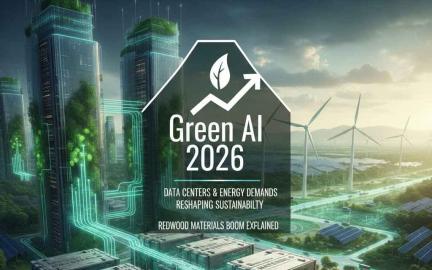
The explosive growth of AI and data centers is straining grids, prompting urgent responses. In the PJM Interconnection region (serving much of the eastern US), data center demand drove significant capacity costs in recent auctions, with forecasts showing supply shortfalls for 2027/2028. The White House and northeastern governors pushed for an emergency power auction to ensure reliability and shift infrastructure costs to tech giants, while PJM proposed measures like requiring large users to self-supply generation or face curtailment, alongside improved forecasting and fast-tracked interconnections.
These challenges highlight the dual edge of technological progress: AI drives innovation but demands massive, reliable power. Solutions increasingly tie back to renewables and storage, as batteries and solar hybrids offer scalable, low-carbon alternatives to meet surging needs without exacerbating emissions. By integrating clean energy with smart grid enhancements, the sector can build resilience against demand spikes while advancing climate goals.
Overall, January 2026’s green tech highlights—from Egypt’s transformative deals to India’s solar surge and policy innovations addressing AI loads—signal a dynamic, resilient energy future. These steps not only curb carbon emissions but also foster economic opportunities, energy independence, and equitable access to clean power worldwide. Stay tuned for more updates as the renewable revolution accelerates.
We cover this space every day because we genuinely love it — and so do the people who read us. If you’re one of them, follow us on X or LinkedIn and let’s keep the conversation going.
If you found this useful, the best thing you can do is share it with someone who’d actually appreciate it. And if you want more like it, we’re here every week.


Leave a Comment