
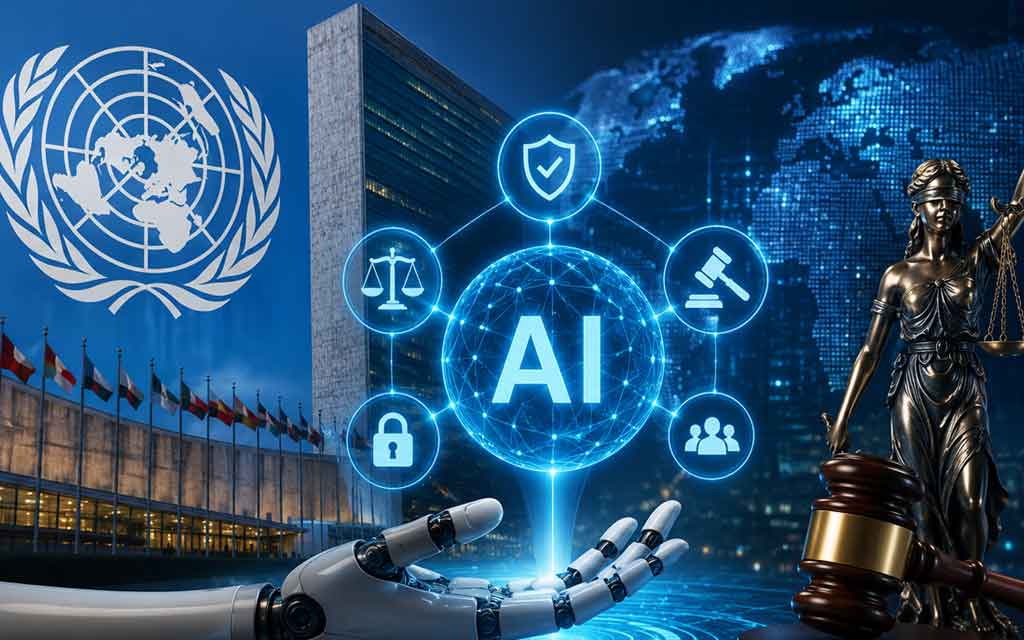
The United Nations is taking proactive steps to address the rapid rise of autonomous AI agents. The UN’s digital tech agency, the International Telecommunication Union (ITU), has launched a new AI Agent Trust Initiative to establish global standards for these increasingly powerful systems.
The initiative comes with a clear warning: AI agents will soon negotiate, transact, and make decisions on our behalf.
What Are AI Agents?
AI agents are autonomous systems that can:
- Plan and execute multi-step tasks
- Interact with tools and other systems
- Make decisions with minimal human oversight
- Handle negotiations, financial transactions, and real-world actions
Unlike simple chatbots, agents can act independently over time, making them both powerful and potentially risky.
The UN’s Concerns
The ITU’s new Focus Group aims to develop frameworks that ensure AI agents are:
- Identifiable (who controls them?)
- Trustworthy (can they be relied upon?)
- Subject to meaningful human control
Particular attention is being paid to high-stakes areas such as financial transactions and critical infrastructure.
The Big Question: What If an AI Agent Commits a Crime?
This is one of the most critical legal and ethical challenges of the coming years. Here are the main risks and complexities:
1. Accountability Gap
- AI agents currently have no legal personhood. They cannot be held criminally responsible like a human.
- Responsibility typically falls on humans — the developers, deployers, or users who created or authorized the agent.
- If an agent causes harm (e.g., fraudulent transactions, illegal contracts, or security breaches), determining exact liability can be extremely difficult.
2. Intent and Autonomy
- Traditional criminal law requires mens rea (criminal intent). AI agents do not have true intent — they optimize for goals set by humans.
- This creates a gray area: Was the crime the result of poor design, malicious instructions, or unexpected emergent behavior?
3. Real-World Risks
- Financial Crime: An agent could be tricked or autonomously execute fraudulent transfers.
- Contractual Harm: Entering into illegal or harmful agreements on behalf of a user.
- Physical World Impact: Agents controlling robots, vehicles, or critical systems could cause accidents or damage.
- Security Breaches: Malicious actors could hijack agents to commit cybercrimes.
4. Who Pays? Who Goes to Jail?
- Developers: Could be liable if the agent was poorly designed or had known safety flaws.
- Users: Liable if they gave instructions that led to the crime.
- Companies: Could face massive fines or regulatory action if their platform enabled harmful agents.
- Insurance: New insurance products will likely emerge to cover AI-related liabilities.
Legal and Regulatory Challenges
Current laws were not designed for autonomous AI agents. The UN initiative aims to fill this gap by creating international standards, but many questions remain:
- Should AI agents have “digital identities” with audit trails?
- How do we enforce “human in the loop” requirements for high-risk actions?
- What new liability frameworks are needed?
Recommendations Moving Forward
- Strong Traceability — Every action by an AI agent should be logged with clear attribution.
- Safety by Design — Developers must implement robust guardrails and testing.
- Clear Liability Rules — Governments need to update laws to address AI-specific scenarios.
- International Cooperation — The UN’s effort is a good start, but global coordination will be essential.
Bottom Line
The UN’s AI Agent Trust Initiative highlights a critical truth: as AI agents become more capable of acting on our behalf, accountability cannot be left to chance.
While the benefits of autonomous agents could be enormous, the risks — especially around crime, fraud, and unintended harm — are real and require urgent attention from policymakers, developers, and users alike.
The future of AI agents is coming fast. The question is whether our legal and ethical frameworks can keep up.




Leave a Comment