
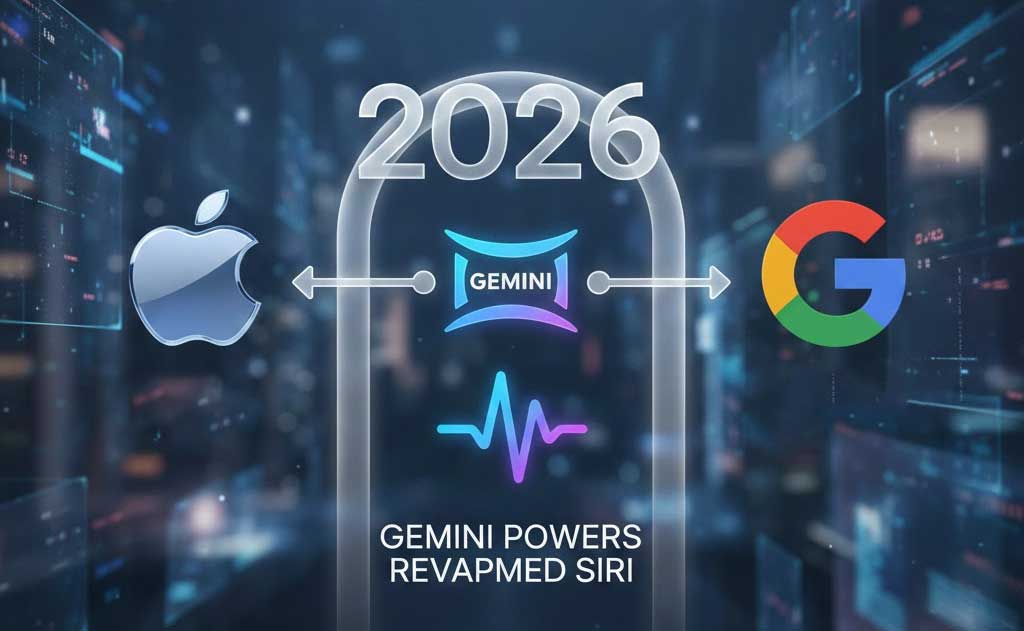
In a stunning development that has sent ripples through the tech world, Apple and Google announced on January 12, 2026, a multi-year strategic collaboration positioning Google’s Gemini AI models as the core foundation for the next generation of Apple Intelligence features. At the heart of this partnership lies a long-awaited overhaul of Siri—the virtual assistant that powers billions of interactions across iPhones, iPads, Macs, and other Apple devices—set to roll out later in 2026 with dramatically enhanced personalization, reasoning, and contextual awareness.
This alliance marks a pragmatic pivot for Apple, accelerating its AI ambitions after delays in delivering the full Siri upgrade originally teased at WWDC 2024 and postponed into 2026. For Google, it’s a massive validation of Gemini’s capabilities, extending its influence into Apple’s tightly controlled ecosystem and reinforcing its competitive stance against OpenAI.
The Deal Breakdown: What Apple Gets from Gemini
Apple’s joint statement with Google emphasized that “the next generation of Apple Foundation Models will be based on Google’s Gemini models and cloud technology.” These models will fuel future Apple Intelligence capabilities, with the spotlight on a “more personalized Siri” arriving this year.
Key enhancements expected include:
- Multi-step reasoning and contextual understanding — Siri will handle complex, real-world tasks seamlessly. Imagine asking about your mother’s flight status and lunch reservation; Siri pulls details from Mail and Messages apps, coordinates across calendars, and suggests actions without multiple follow-ups.
- Deeper personalization — Leveraging on-device data (with strict privacy controls), Siri delivers tailored responses, proactive suggestions, and fluid conversations that feel truly intelligent.
- Hybrid processing model — Core features run on-device using Apple Silicon’s neural engines for speed and privacy. More demanding queries tap Google’s cloud infrastructure via Apple’s Private Cloud Compute—ensuring no data is stored or used for training, and maintaining Apple’s “industry-leading privacy standards.”
- Expanded Apple Intelligence scope — Beyond Siri, Gemini underpins broader features like advanced Writing Tools, Image Playground evolutions, notification intelligence, and potentially new agentic experiences.
This integration shifts OpenAI’s ChatGPT to a secondary, opt-in role for specialized or highly creative queries, rather than the default engine. Apple evaluated multiple partners—including OpenAI and Anthropic—before selecting Gemini as “the most capable foundation” after rigorous testing.
Financially, while terms remain undisclosed, reports estimate Apple paying Google around $1 billion annually (with some analyst projections reaching up to $5 billion over the deal’s life), structured as a cloud computing agreement. This echoes Apple’s historic Google search default deal, which has delivered billions in revenue annually.
Why This Matters: A Win-Win Reshaping the AI Race
For Apple, the partnership is a strategic accelerator. After facing criticism for lagging in generative AI—despite massive investments and promises from CEO Tim Cook—the deal bridges capability gaps without fully abandoning its vertical integration ethos. It allows Apple to deliver meaningful improvements in 2026, satisfying users and investors while buying time to refine in-house models.
The move also addresses competitive pressure: Samsung’s Galaxy AI (heavily Gemini-powered) has given Android devices an edge in AI features. By infusing Gemini into Siri, Apple closes that gap and positions iOS as a leader in practical, privacy-focused AI.
For Google, this is a coup. Alphabet’s stock reacted positively, pushing its market cap toward or beyond $4 trillion amid renewed AI optimism. Gemini gains unprecedented distribution—reaching hundreds of millions of premium devices daily—without visible branding. It strengthens Google’s ecosystem play against OpenAI, whose ChatGPT integration in Apple devices now plays a supporting role.
Critics, including Elon Musk, raised antitrust flags over Google’s expanding reach (Android dominance, Chrome, now Siri). Yet the deal’s privacy safeguards and non-exclusivity temper concerns.
User Impact: What Changes for iPhone Owners?
The revamped Siri promises transformative everyday utility:
- Natural, interruption-free conversations with better context retention.
- Proactive intelligence—surfacing insights from emails, photos, notes, and more.
- Seamless app integration for tasks like bookings, reminders, and multi-step planning.
- Enhanced multimodality—handling voice, text, images, and potentially future inputs more fluidly.
Rollout is expected via iOS updates later in 2026 (possibly starting with iOS 26.x betas around WWDC), initially on compatible devices with Apple Intelligence support (iPhone 15 Pro and later, select iPads and Macs).
Privacy remains front and center: Processing stays within Apple’s secure boundaries, with no Google access to personal data beyond what’s needed for inference.
Broader Implications for the AI Landscape
This partnership signals maturity in the AI era—big tech opting for collaboration over siloed competition when speed and capability matter most. It underscores Gemini’s frontier status (with models like Gemini 3 delivering strong reasoning and multimodality) and highlights Apple’s willingness to leverage external strengths for user benefit.
As 2026 unfolds, watch for:
- Real-world performance benchmarks comparing the new Siri to competitors.
- Potential antitrust scrutiny from regulators.
- How OpenAI responds—perhaps accelerating its own advancements or seeking new integrations.
January 2026’s Apple-Google tie-up isn’t just about Siri—it’s a pivotal moment redefining how personal AI evolves, balancing innovation, privacy, and scale.
Stay tuned to vfuturemedia for in-depth coverage of this partnership’s rollout, user experiences, and its ripple effects across the tech ecosystem.
I’m Ethan, and I write about the tech that’s actually going to change how we live — not the stuff that just sounds impressive in a press release. I cover AI, EVs, robotics, and future tech for VFuture Media. I was on the ground at CES 2026 in Las Vegas, walking the show floor so I could give you a real read on what matters and what’s just noise. Follow me on X for daily takes.



Leave a Comment