
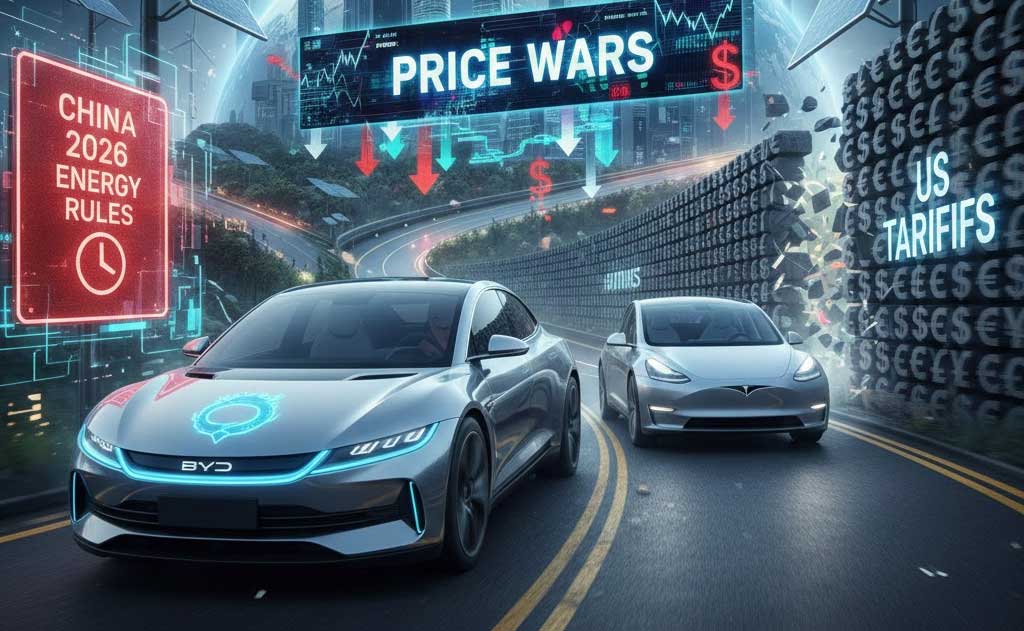
Meta Description: BYD overtakes Tesla as world’s top EV seller in 2025 with 2.26M BEVs, strong exports to emerging markets, but faces 2026 domestic stagnation from new energy regulations, price wars, and EU/US tariffs. Insights on China’s EV regulations impact and BYD’s aggressive global expansion. (Keywords: BYD EV dominance 2026, China EV regulations 2026, BYD exports emerging markets, Tesla BYD overtake 2025, EU US tariffs Chinese EVs)
As January 2026 unfolds, China’s electric vehicle sector stands at a crossroads. BYD, the Shenzhen-based giant, has cemented its position as the world’s leading seller of battery-electric vehicles (BEVs), surpassing Tesla in 2025 and reshaping global competition. Yet, while exports surge and BYD expands aggressively into emerging markets, domestic challenges—including stringent new energy consumption standards, intensifying price wars, and fading subsidies—threaten stagnation in China’s home market. Meanwhile, protectionist tariffs in Europe and the US continue to complicate overseas growth, pushing BYD toward localization and diversification.
This dynamic highlights the maturation of China’s EV industry: from rapid domestic boom to a more balanced, export-driven model amid regulatory tightening and geopolitical pressures.
BYD’s Milestone: Overtaking Tesla as Global EV Leader in 2025
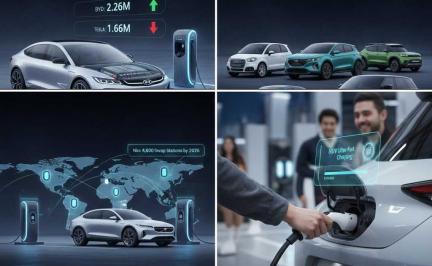
BYD’s ascent reached a historic peak with full-year 2025 data confirming it as the top global BEV seller. The company delivered approximately 2.26 million pure battery-electric vehicles worldwide, marking a robust 27.9% year-over-year increase and outpacing Tesla’s 1.64 million deliveries (down about 8.6% from 2024). This gap of over 600,000 units underscores China’s dominance in electrification.
Including plug-in hybrids (PHEVs), BYD’s total new energy vehicle (NEV) sales hit around 4.6 million units in 2025, up 7.7% from the prior year—its slowest growth in five years but still impressive amid market headwinds. Tesla’s decline stemmed from subsidy cuts in key markets, aging lineup reliance, and competitive pressures, while BYD benefited from diversified offerings across price segments.
The milestone validates BYD’s vertical integration strategy—from batteries (via BYD Blade) to semiconductors and software—enabling aggressive pricing and rapid innovation. Chairman Wang Chuanfu has emphasized that domestic technological leadership has waned slightly due to rivals catching up, but major 2026 innovations are promised to regain edge.
Keywords: BYD overtakes Tesla 2025, BYD global EV sales 2025, China EV leader BYD.
Strong Export Momentum Amid Domestic Slowdown
Exports emerged as BYD’s brightest spot in 2025, surging 140-150% to over 1 million units (some reports cite 1.05 million passenger cars and pickups). This represented a massive shift, with overseas sales contributing significantly to offsetting domestic weakness. Key drivers included competitive pricing, advanced features (e.g., ultra-fast charging, ADAS), and targeted expansion.
Top destinations through late 2025 included:
- Mexico (leading with over 116,000 units Jan-Nov),
- Brazil (strong in both BEVs and PHEVs, boosted by subsidies and fleet upgrades),
- Belgium (European hub),
- Southeast Asia (Indonesia leading with 65,000+ BEVs, driven by shared mobility and policies),
- Turkey, UAE, Philippines (standout growth).
BYD’s strategy includes local production to bypass tariffs: factories in Thailand, Indonesia, Brazil, Hungary (trial production early 2026), and others. The company aims for up to 1.6 million overseas sales in 2026, targeting half its revenue from abroad by 2030.
However, domestic sales faced pressure. Late-2025 declines (e.g., December total deliveries down 18.3% YoY) reflected subsidy reductions, inventory buildup, and fierce competition from Geely, Leapmotor, Xiaomi, and Huawei-backed models. BYD’s November domestic figures dropped sharply, with overall 2025 growth tempered.
New Regulations Set to Impact Domestic Market in 2026
Effective January 1, 2026, China enforced the world’s first mandatory EV energy consumption standard: “Energy Consumption Limits for Electric Vehicles Part 1: Passenger Cars.” This replaces voluntary guidelines with binding caps, differentiated by curb weight.
For ~2-tonne models, consumption is capped at 15.1 kWh/100 km under CLTC testing (equivalent to roughly 18-19 kWh/100 km WLTP). Lighter vehicles face stricter limits. Non-compliant models risk losing production eligibility and purchase tax exemptions (phased back in 2026-2027).
Many BYD and Geely models already comply, requiring minimal upgrades—potentially boosting range by ~7% for the same battery. Heavier or less efficient vehicles may need redesigns, accelerating efficiency focus.
Combined with subsidy cuts (e.g., trade-in incentives scaled back, purchase tax exemptions limited), analysts forecast flat or declining domestic passenger vehicle sales in 2026—the weakest since 2020 pandemic disruption. EV growth may halve from 2025 levels, with price wars intensifying to clear inventories.
This regulatory push promotes sustainability but risks short-term stagnation, pushing firms like BYD further abroad.
Keywords: China EV energy consumption standard 2026, mandatory EV regulations China, impact on BYD domestic market.
Tariffs in Europe and US Challenge Expansion
Protectionism remains a hurdle. In the EU, 2024 tariffs (up to 35.3%, 17% for BYD) prompted adaptation: PHEV exports surged (exempt or lower impact), and minimum price undertakings replaced duties in early 2026 for some models. This “managed competition” encourages localization (e.g., BYD Hungary expansion) while curbing subsidy effects.
The US maintains 100% tariffs on Chinese EVs, prioritizing national security and blocking low-cost imports like the $10k Seagull. Minimal direct impact (Chinese EVs <2% US imports), but it isolates the market.
BYD counters via local assembly and hybrids, sustaining momentum in emerging regions less tariff-constrained.
Keywords: EU tariffs Chinese EVs 2026, US tariffs BYD, China EV trade barriers.
Outlook for 2026: Resilience Through Globalization
BYD’s 2025 triumph masks emerging challenges: domestic saturation, regulatory tightening, and trade friction signal a tougher year ahead. Profit pressures from price wars and expansion costs persist, but aggressive overseas push—via factories, partnerships, and innovation—positions BYD for sustained leadership.
China’s EV sector evolves toward maturity: efficiency mandates drive greener tech, exports fuel growth, and global competition intensifies. For BYD, 2026 tests adaptability—balancing home-market defense with international conquest.
Track these shifts with vfuturemedia as China’s EV story continues to redefine the global automotive future.
I’m Ethan, and I write about the tech that’s actually going to change how we live — not the stuff that just sounds impressive in a press release. I cover AI, EVs, robotics, and future tech for VFuture Media. I was on the ground at CES 2026 in Las Vegas, walking the show floor so I could give you a real read on what matters and what’s just noise. Follow me on X for daily takes.

Leave a Comment