
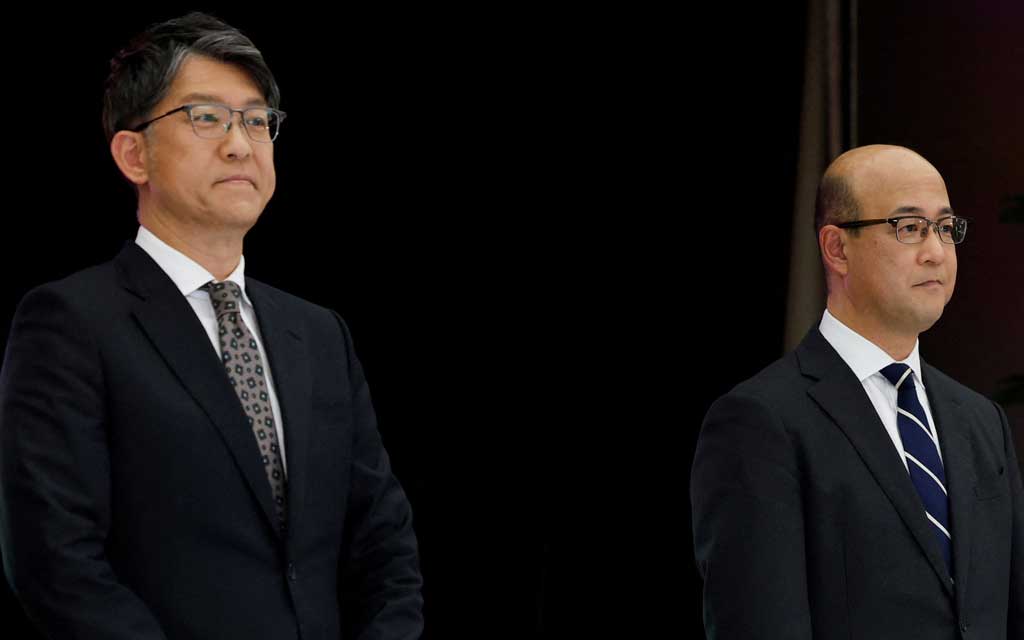
Washington, D.C., February 21, 2026 — In a surprise leadership change announced on February 6, 2026, Toyota Motor Corporation is ushering in its second CEO transition in just three years. Current President and CEO Koji Sato will step down effective April 1, 2026, transitioning to the roles of Vice Chairman and the newly created position of Chief Industry Officer (CIO). Replacing him as President and Chief Executive Officer is Kenta Kon, Toyota’s long-time Chief Financial Officer.
This executive reshuffle, detailed in Toyota’s official announcement, reflects a strategic pivot to separate internal management focus from broader industry engagement amid intensifying global challenges like rising competition from Chinese EV makers, U.S. tariff pressures, material cost inflation, and the ongoing shift toward electrification and sustainable mobility.
Background on the Leadership Change
Koji Sato, an engineer by background who succeeded Akio Toyoda (Toyota’s Chairman and grandson of the founder) in April 2023, oversaw a period of strong performance. Under his leadership, Toyota achieved record global sales and profits, driven by robust hybrid demand, supply chain recovery, and market leadership in key regions. Sato was seen as a “car guy” with a push toward accelerating Toyota’s EV strategy, including internal advocacy for battery-electric models.
However, his tenure—lasting just under three years—marks one of the shortest for a Toyota CEO in recent history. The move comes as the company navigates a rapidly changing auto landscape, where cost control, profitability, and faster decision-making have become priorities.
Kenta Kon, 57, a Toyota veteran since 1991, brings deep financial expertise. He served as CFO since 2020 and previously as secretary to Akio Toyoda for eight years, making him a trusted insider. Kon has been instrumental in strengthening Toyota’s earnings structure, cost management, and financial resilience—key factors in the company’s ability to weather industry disruptions.
Toyota emphasized the new structure’s rationale: Sato will concentrate on external industry collaborations, partnerships, and strategic oversight as CIO and Vice Chairman, while Kon handles day-to-day internal operations, profitability enhancement, and agile execution as President and CEO.
Further board adjustments are planned for the company’s June 2026 shareholders’ meeting, where Kon will join the board and Sato will resign from his directorship.
Key Implications for Toyota’s Future
- Profitability and Cost Focus — Kon’s finance background signals a stronger emphasis on lowering the break-even point, optimizing margins, and building financial buffers for “courageous challenges” in a volatile market. This is particularly relevant amid U.S. tariffs (including recent trade policy shifts), competition in China and North America, and supply chain pressures.
- EV and Electrification Strategy — While Sato was viewed as more EV-oriented internally, Toyota’s multi-pathway approach (hybrids, plug-ins, hydrogen, and batteries) is expected to continue. Kon has described himself as a “numbers guy” who loves money and efficiency, suggesting sustained investment in electrification but with a pragmatic, profit-driven lens rather than aggressive pivots.
- Response to Global Challenges — The change positions Toyota to defend its market share against fast-rising Chinese brands (e.g., BYD) while adapting to tariff headwinds and slowing EV adoption in some markets. Analysts note it doesn’t drastically alter near-term factors but enhances internal execution.
- Stability Amid Change — Toyota’s reputation for steady leadership persists, even with this shift. The company remains the world’s top-selling automaker, with hybrids continuing to drive volume.
What This Means for Investors and the Industry
The CFO-to-CEO transition is seen as a move to sharpen financial discipline without abandoning Toyota’s core strengths in quality, reliability, and diversified powertrains. Shareholders may view it positively for margin protection, though near-term headwinds like tariffs remain unchanged.
As Toyota accelerates its transformation into a broader mobility company, this leadership realignment underscores adaptability in an era of unprecedented disruption.
Stay tuned for more updates on Toyota’s executive changes, EV lineup expansions (including recent reveals like the electric Highlander), and how this shift influences global auto trends.
Compiled from official Toyota announcements.
Ethan Brooks is the kind of tech journalist who writes for the person who’s genuinely curious but doesn’t have time to read five different sources. He covers AI, EVs, future tech, and gadgets for VFuture Media — and his goal with every piece is simple: give readers something they couldn’t get from a press release. He was on the ground at CES 2026 in Las Vegas and has been following the AI and EV beats closely since VFuture Media launched. Say hello on X.
The future doesn’t wait — and neither should your feed. If this got you thinking, there’s plenty more where that came from. Browse our latest at VFutureMedia and stick around.


Leave a Comment