
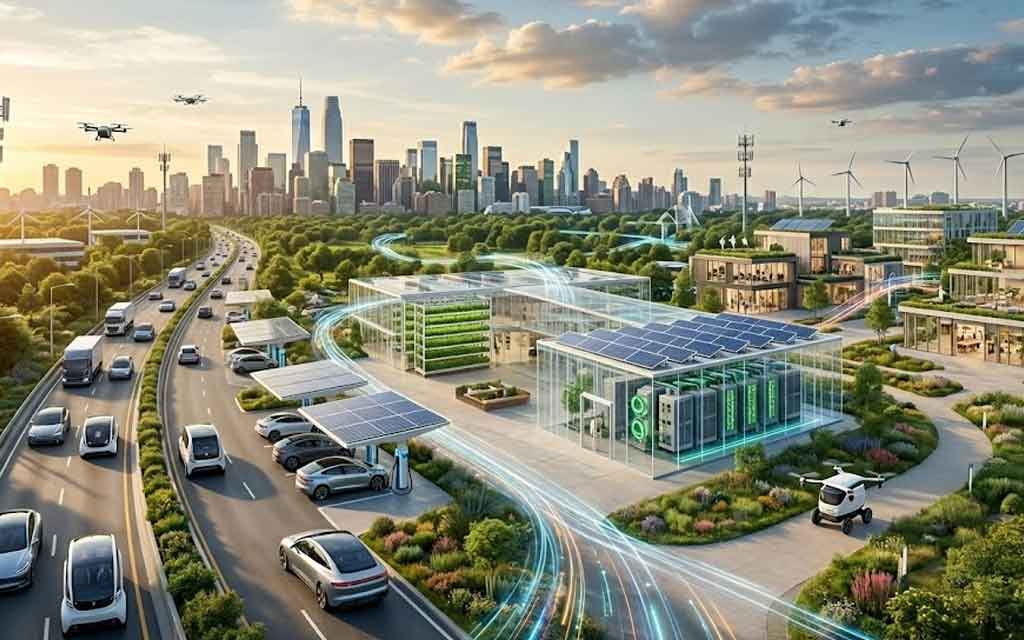
As we wrap up February 2026, the tech landscape in the United States continues to evolve at a breakneck pace, driven by innovation, economic shifts, and policy changes. From the electric vehicle (EV) sector grappling with post-tax credit realities to artificial intelligence (AI) investments reaching astronomical heights, this month’s developments offer a glimpse into the future of mobility, intelligence, consumer electronics, sustainability, and entrepreneurship. For American consumers, businesses, and investors, these trends aren’t just headlines—they’re signals of where opportunities and challenges lie ahead.
In this comprehensive roundup, we’ll dive deep into the key stories from each category, analyzing their implications for the US market. Whether you’re an EV enthusiast eyeing your next purchase, a tech professional navigating AI’s job impacts, a gadget lover hunting for the latest deals, a green tech advocate pushing for sustainability, or a startup founder seeking funding inspiration, this article has you covered. Drawing from reliable sources across the industry, we’ll explore sales data, funding rounds, product launches, and market forecasts to provide actionable insights.
As a US-focused analysis, we’ll emphasize how these global trends intersect with American policies like the Inflation Reduction Act (IRA), consumer behaviors in states like California and Texas, and economic factors such as inflation and job market dynamics. With over 2,500 words of in-depth coverage, this piece aims to equip you with the knowledge to stay ahead in 2026’s tech ecosystem.
Electric Vehicles: Navigating a Post-Tax Credit Slump in the US Market
The EV sector in February 2026 painted a mixed picture for American drivers and manufacturers. While innovation and satisfaction remain high, sales figures revealed challenges stemming from the expiration of federal tax credits at the end of Q3 2025. Projections indicated a 4.6% decline in retail EV sales compared to February 2025, with EVs accounting for just 6.6% of new-vehicle retail sales—down from 8.4% the previous year. This dip is largely attributed to lingering economic concerns, including high interest rates and elevated vehicle prices, which have made EVs less accessible to middle-class buyers in regions like the Midwest.
Despite the slowdown, there’s optimism in consumer sentiment. A recent survey showed that satisfaction among battery EV owners hit its highest level since 2021, with an impressive 96% of owners stating they’d purchase another EV. This loyalty is particularly strong in coastal states, where charging infrastructure is more robust. Tesla, the undisputed leader in the US EV space, continued to excel in fuel economy rankings, boasting an average of 118 miles per gallon equivalent (MPGe) across its fleet. Models like the Cybertruck and refreshed Model Y have kept Tesla’s market share dominant, especially in California, where EVs now represent over 25% of new car registrations.
Looking ahead, the pipeline of upcoming models promises to reinvigorate the market. The Acura RSX, set for release in the second half of 2026, targets performance enthusiasts with its sporty design and advanced battery tech. Similarly, the Afeela 1 sedan from Sony-Honda Mobility arrives with a premium $102,900 Signature trim, emphasizing AI-driven infotainment tailored for American highways. Toyota’s C-HR EV, offering up to 287 miles of range, appeals to urban dwellers in cities like New York and Chicago, where compact crossovers are popular.
One of the most exciting developments for budget-conscious Americans is the impending flood of used EVs. As leases from the 2023 federal incentives expire, experts predict a surge in affordable pre-owned models, potentially making them the best car deals in two decades. Platforms like Carvana and local dealerships in Texas are already gearing up for this influx, with prices expected to drop 20-30% below new MSRP.
Major automakers reported varied results. General Motors (GM) saw a staggering 192% increase in EV sales during Q3 2025 but announced $6 billion in write-downs as it scales back aggressive investments amid softening demand. Stellantis, the parent of Chrysler and Jeep, posted its first annual loss, driven by €25.4 billion in EV-related impairments. These financial hits underscore the high stakes of transitioning to EVs in a post-subsidy era.
Globally, the US lagged behind, with flat EV sales in 2025 compared to a 20% worldwide growth. For American policymakers, this highlights the need for renewed incentives, perhaps through state-level programs in EV hotspots like Michigan. Consumers should watch for rebates in states like Colorado and Oregon, where local governments are stepping in to fill the federal void.
In summary, while February brought headwinds, the EV market’s fundamentals—rising satisfaction, innovative models, and used vehicle opportunities—position it for a rebound. American buyers can leverage tools like the EPA’s fuel economy calculator to compare options and maximize savings.
| Upcoming US EV Models in 2026 | Key Features | Estimated Price | Target Market |
|---|---|---|---|
| Acura RSX | Sporty handling, 300+ mile range | $45,000+ | Performance enthusiasts in urban areas |
| Afeela 1 Sedan | AI infotainment, luxury trim | $102,900 | Tech-savvy professionals in California |
| Toyota C-HR EV | Compact crossover, 287-mile range | $35,000 | City dwellers in East Coast metros |
AI Innovations: Funding Frenzy, Job Shifts, and Bubble Warnings in America
February 2026 marked a pivotal moment for AI in the US, with investments soaring to unprecedented levels amid growing concerns over sustainability and societal impacts. Big Tech companies are projected to pour $650 billion into AI infrastructure this year, a sharp rise from $410 billion in 2025, fueling data centers across states like Virginia and Oregon. OpenAI led the charge, closing a monumental $110 billion funding round that valued the company at $840 billion, backed by giants like SoftBank, Nvidia, and Amazon. This influx reflects America’s dominance in AI, with Silicon Valley hubs like San Francisco attracting global talent.
However, whispers of an AI bubble grew louder. Bond investors ranked it as the top risk, with 23% expressing concerns, especially as hyperscaler bond issuance could hit $285 billion. Sam Altman, OpenAI’s CEO, acknowledged slower-than-expected adoption, noting that enterprises are cautious about integrating AI due to high costs and regulatory hurdles.
Job market disruptions intensified, with Goldman Sachs estimating 5,000-10,000 monthly losses in AI-exposed industries like software and finance. January alone saw AI linked to 7% of layoffs, affecting workers in tech-heavy states like Washington and Massachusetts. On the flip side, new opportunities emerged, with universities like the University of North Texas (UNT) and Grand Valley State University (GVSU) launching AI majors to prepare the next generation.
Product updates highlighted practical applications. Meta integrated Manus AI into its Ads Manager, helping US marketers optimize campaigns with real-time insights. Anthropic rolled out enterprise plugins, while OpenAI forged partnerships with consultancies like Accenture to accelerate adoption in Fortune 500 companies.
Geopolitical tensions added complexity. The Trump administration blacklisted Anthropic for restricting AI use in surveillance and weapons, sparking debates on national security in Washington, D.C. This move underscores America’s push for AI in defense, with implications for companies balancing ethics and government contracts.
Market analysts predict a shakeout by year-end, with AI capex wars creating winners like Nvidia and losers among overhyped startups. For American workers, upskilling via platforms like Coursera is crucial, while investors should diversify beyond hype.
In essence, AI’s February surge signals both promise and peril for the US economy, demanding balanced policies to harness its potential without exacerbating inequalities.
Gadgets Galore: AI-Infused Devices and Deals Dominating the US Scene
Gadgets in February 2026 built on CES 2026’s momentum, emphasizing AI integration, affordability, and sustainability for American consumers. Standout launches included Sony’s flagship wireless earbuds with adaptive noise cancellation, ideal for commuters in bustling cities like Los Angeles. JBL’s audiophile loudspeakers delivered immersive sound for home theaters, while Samsung’s Galaxy S26 series introduced advanced AI tools for photo editing and productivity.
Deals were plentiful, with discounts on premium audio gear: AirPods Max at 18% off, Sony WH-1000XM5 for noise-canceling pros, and Bose QuietComfort for budget buyers. Top picks like the Keychron Nape Pro keyboard catered to remote workers, TWS earbuds with built-in cameras for vloggers, and the CMF Phone Mini for affordable 5G access.
Trends leaned toward AI wearables and smart homes, with creaseless foldables like Samsung’s Galaxy Z TriFold revolutionizing portability. CES highlights included LG’s Wallpaper W6 OLED TV for minimalist living rooms, Nimble Champ Stack charger for on-the-go power, Dell’s XPS 14 laptop with AI-accelerated performance, and NuraLogix’s Longevity health scanner for personalized wellness.
Monitors advanced with OLED panels and neuromorphic chips, enhancing robotics and gaming setups. Overall, 2026 gadgets prioritize on-device AI, health tracking, and eco-friendly materials, aligning with US consumer demands for privacy and sustainability.
For Americans shopping on Amazon or Best Buy, focus on certified refurbished options to save amid inflation. This month’s gadgets not only entertain but empower daily life.
Green Tech: Sustainability Surges Amid US Policy and Innovation
The US green tech sector is on a trajectory to hit $73.9 billion by 2030, growing at a 23.7% CAGR from $25.47 billion in 2025, propelled by advancements in clean energy and sustainable practices. Leaders like Tesla, Vestas Wind Systems, and First Solar are at the forefront, with Tesla’s solar integrations gaining traction in sunny states like Arizona.
Milestones included Envision’s shipment of the world’s first commercial green ammonia cargo to South Korea, signaling potential for US exports. LanzaJet secured $135 million for sustainable aviation fuels, with investments from IAG and Shell, boosting US aviation decarbonization.
Big Tech faced scrutiny for “greenwashing,” with only 26% of AI climate claims substantiated. Trends encompass green AI for energy efficiency, hydrogen tech, and supply chain shifts via the IRA, which has funneled billions into domestic manufacturing.
Amazon leads corporate green energy procurement, targeting 100% renewables by 2025, inspiring firms in tech corridors like Seattle. Reports highlight incentive-driven home energy upgrades and neuromorphic chips for efficient robotics.
For US homeowners, federal tax credits under the IRA make solar installations viable, reducing bills by 30%. Green tech’s growth promises jobs in renewable hubs like Texas wind farms.
Startups: Funding Flood and Trends Shaping US Entrepreneurship
US startups raised eye-watering sums in February 2026, with AI and fintech in the spotlight. OpenAI’s $110 billion round at an $840 billion valuation set the tone. Fintech secured $1.02 billion across 29 deals, led by Varo Bank’s $123.9 million. Forbes’ Fintech 50 showcased resilient B2B players.
AI ventures like World Labs topped lists, while Cursor enhanced AI coding agents. Trends include a 2025 IPO boom (23 companies over $1B), mega deals like Waymo’s $16 billion and xAI’s $20 billion, and biotech advances.
Events featured 34 tech gatherings; startups like Skild AI ($1.4B) and Living Forever AI shone at Startup Grind. Talent moves, such as Ruoming Pang from Meta to OpenAI, highlight competition.
For aspiring US founders, hubs like Austin offer resources. This funding wave signals robust opportunities despite economic headwinds.
Conclusion: A Dynamic Tech Horizon for America in 2026
February 2026’s tech news underscores a US landscape ripe with innovation yet fraught with transitions. From EV affordability to AI ethics, gadgets’ AI edge, green tech’s sustainability push, and startup vitality, these sectors interconnect to shape tomorrow. Americans stand to benefit by staying informed and adaptive.
The future doesn’t wait — and neither should your feed. If this got you thinking, there’s plenty more where that came from. Browse our latest at VFutureMedia and stick around.
I’m Ethan, and I write about the tech that’s actually going to change how we live — not the stuff that just sounds impressive in a press release. I cover AI, EVs, robotics, and future tech for VFuture Media. I was on the ground at CES 2026 in Las Vegas, walking the show floor so I could give you a real read on what matters and what’s just noise. Follow me on X for daily takes.




Leave a Comment