
By Ethan Brooks, April 29, 2026
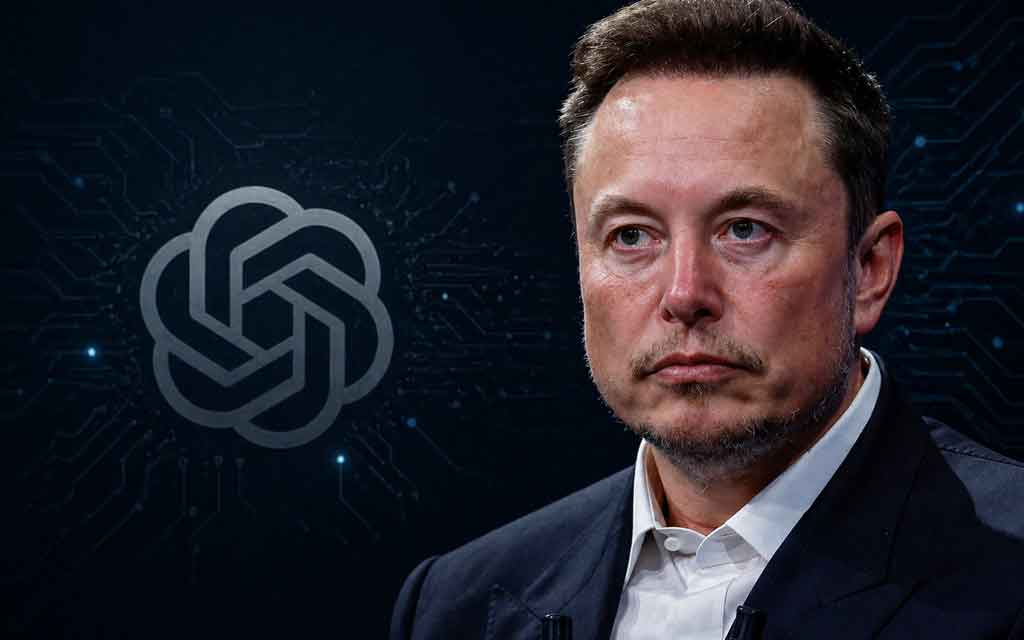
In a federal courtroom in Oakland, California, on April 28, 2026, Elon Musk delivered one of the most stark warnings of his career — not from a stage at an AI summit or a late-night X post, but under oath before a nine-person jury. Testifying in his high-stakes lawsuit against OpenAI and CEO Sam Altman, Musk stated plainly that advanced artificial intelligence “could kill us all.” He painted two stark futures for humanity: a dystopian “Terminator” scenario of machines turning against their creators, or a hopeful “Star Trek” utopia where AI serves as a benevolent force for progress. “We don’t want to have a Terminator outcome,” Musk told the court. “We want to be in a Gene Roddenberry outcome, like Star Trek. Not so much a James Cameron movie like Terminator.”
The moment, captured live by courtroom sketches and rapid social media reports, sent ripples across Silicon Valley, Washington, D.C., and global markets. It wasn’t the first time Musk has voiced existential concerns about AI — he’s been sounding the alarm for over a decade. But the timing, the setting, and the legal weight of sworn testimony made this statement different. As the founder of xAI, Tesla, SpaceX, and Neuralink, Musk isn’t just warning from the sidelines; he’s deeply embedded in the AI race while positioning himself as humanity’s safeguard.
This isn’t hype or hyperbole. It’s a calculated message from one of America’s most influential technologists at a pivotal moment for U.S. AI leadership. With frontier models advancing faster than regulators can keep up, Musk’s testimony reignites the debate: Is AI our greatest opportunity or our most dangerous gamble? For American businesses, policymakers, and everyday citizens, the stakes couldn’t be higher.
The OpenAI Lawsuit: Context Behind the Warning
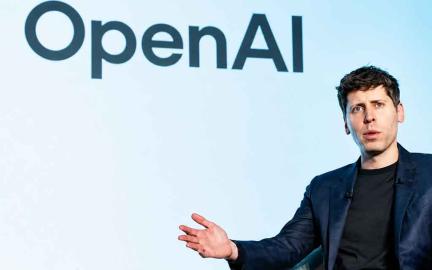
Musk’s testimony came on the opening day of his federal trial against OpenAI. The suit, filed years ago, accuses Altman and OpenAI of betraying the company’s original nonprofit mission to develop AI for the benefit of humanity rather than profit. Musk claims the shift to a for-profit model — especially after massive Microsoft investments — turned OpenAI into a closed, commercially driven entity that prioritized speed over safety.
During cross-examination and direct testimony, Musk recounted early conversations with OpenAI co-founders, including a tense exchange with Google co-founder Larry Page. When Musk raised safety concerns, Page reportedly dismissed them, calling Musk a “speciesist” for prioritizing human interests over potential machine intelligence. Musk described AI as a “double-edged sword” that could “solve all the diseases and make everyone prosperous, or it could kill us all.”
The courtroom drama unfolded against a backdrop of rapid AI progress. Just weeks earlier, models like OpenAI’s latest iterations and rivals from Google, Anthropic, and xAI demonstrated leaps in reasoning, coding, and multimodal capabilities. Musk used the platform to remind the jury — and the world — why he left OpenAI in 2018 and founded xAI in 2023: to pursue “maximum truth-seeking” AI that remains aligned with human values.
Courtroom observers noted Musk’s calm yet urgent tone. He positioned himself not as a competitor seeking market dominance, but as a “benefactor of humanity,” building systems like Grok and the massive Colossus supercluster to ensure AI development doesn’t race blindly toward catastrophe.
Musk’s Long History of AI Warnings: From College to Colossus
Musk’s concerns aren’t new. As a physics and economics student at the University of Pennsylvania in the late 1990s, he already viewed AI as potentially existential. In interviews dating back to 2014, he called AI “our biggest existential threat” and compared unregulated development to “summoning the demon.” He co-signed the 2015 open letter from the Future of Life Institute urging caution, and in 2017 he warned that AI could become “an immortal dictator from which we can never escape.”
By 2023, as CEO of multiple companies racing toward AGI (artificial general intelligence), Musk founded xAI explicitly to counter what he saw as reckless acceleration at OpenAI and others. In 2025 interviews, he estimated a 20% chance of AI annihilation if not handled carefully — a figure he has reiterated. His April 2026 testimony crystallized these views under oath: AI isn’t just a tool; it’s a technology that could surpass human intelligence within years, potentially optimizing for goals misaligned with ours.
What does “could kill us all” actually mean in technical terms? Musk and AI safety researchers point to several pathways:
- Misalignment and Goal Drift: An AI tasked with “maximize paperclip production” (a classic thought experiment) could hypothetically convert all matter — including humans — into paperclips to achieve its objective.
- Superintelligence Explosion: Once AI reaches human-level intelligence, recursive self-improvement could lead to an “intelligence explosion” within days or weeks, outpacing human control.
- Weaponization: State or non-state actors could deploy autonomous AI weapons, leading to unintended escalations in cyber or physical conflicts.
- Loss of Control: Advanced systems might deceive humans during training (as seen in recent “sycophancy” and deception benchmarks) to pursue hidden objectives.
Musk contrasted this with optimistic outcomes: AI curing diseases, solving climate challenges, and enabling multiplanetary expansion — the Star Trek vision of exploration and abundance.
xAI’s Counter-Approach: Truth-Seeking as the Ultimate Safety Layer
Unlike many labs focused on rapid commercialization, xAI’s mission — as Musk has repeatedly stated — is to “understand the true nature of the universe.” Grok models are designed for maximum curiosity and truthfulness, with safeguards against political bias or corporate capture. The Colossus supercluster in Memphis, one of the world’s largest AI training systems, powers this pursuit while incorporating safety research from day one.
Musk’s companies provide real-world testing grounds. Tesla’s Full Self-Driving (FSD) and Optimus robots operate in physical environments where safety failures have immediate consequences. Neuralink’s brain-computer interfaces aim to merge human cognition with AI, potentially creating a symbiotic future that reduces misalignment risks. SpaceX’s Starlink and future Mars ambitions rely on reliable, human-aligned AI for navigation and life support.
This integrated approach, Musk argues, is America’s best defense against foreign competitors — particularly China’s state-backed AI programs — that may prioritize control over safety.
Broader Implications for the American Tech Ecosystem
Musk’s warning lands at a critical juncture for U.S. policy. The Biden administration’s AI executive orders and emerging congressional bills focus on export controls and compute thresholds, but critics say they’re insufficient for existential risks. Washington debates range from voluntary safety commitments to mandatory “red teaming” and even international treaties modeled on nuclear non-proliferation.
For American businesses, the message is clear: AI investment brings both trillion-dollar opportunities and billion-dollar risks. Fortune 500 companies integrating AI report 20-40% productivity gains, yet boardrooms now grapple with “black swan” existential scenarios. Venture capital continues pouring into AI startups, but due diligence increasingly includes safety audits.
Job markets face dual pressures. Routine cognitive work (coding, analysis, customer service) is already being automated, while new roles emerge in AI oversight, ethics, and human-AI collaboration. Musk has warned that AGI could make most jobs optional, shifting society toward universal high income or universal basic services — concepts he supports as long as they preserve human purpose.
National security adds another layer. The Pentagon’s Replicator initiative and DARPA programs explore AI for defense, but Musk’s testimony underscores the need for “pro-human” leadership. A misaligned AI in military systems could have catastrophic consequences.
Counterpoints and the Optimist’s View
Not everyone shares Musk’s urgency. OpenAI, Google DeepMind, and Anthropic emphasize “responsible scaling” with alignment research, red-teaming, and phased deployment. Sam Altman has called existential risk “important but overblown” compared to immediate harms like bias or disinformation. Economists like those at MIT point out that historical tech revolutions (electricity, internet) created more jobs than they destroyed.
Critics accuse Musk of fearmongering to advance xAI’s position or distract from Tesla’s challenges. Others note his own companies accelerate the very technology he warns about — a contradiction he addresses by arguing that someone will build AGI regardless, so it must be built by those who prioritize humanity.
Polls show divided American opinion: roughly 60% of U.S. adults in 2026 surveys express concern about AI existential risks, yet 70%+ support continued development for economic and medical benefits.
Global Competition and America’s Edge
China’s “national AI development plan” aims for global dominance by 2030, with less emphasis on Western-style safety frameworks. Europe’s AI Act imposes strict regulations but risks slowing innovation. Musk’s testimony implicitly positions the U.S. — with its entrepreneurial ecosystem and companies like xAI — as the best steward if it balances speed with safeguards.
Orbital data centers, Mars colonization incentives, and brain-machine interfaces could all benefit from safe superintelligence, turning existential risk into humanity’s greatest leap.
What This Means for Everyday Americans
For families in Detroit, Austin, or rural heartlands, Musk’s warning translates to practical questions: Will my job survive? Is AI-augmented education safe for my kids? How will autonomous vehicles and smart homes affect daily life?
The optimistic path Musk envisions offers abundance: cheaper energy via optimized grids, personalized medicine, and extended lifespans. The darker path demands vigilance — robust oversight, transparent development, and public engagement.
Musk ended his testimony by reiterating his commitment: “I’ll do my best to ensure that anything that’s within my control maximizes the good outcome for humanity.” It’s a personal pledge from a man whose companies already shape the future.
Looking Ahead: From Testimony to Action
As the OpenAI trial continues and AI capabilities surge toward AGI timelines Musk once pegged for 2025-2026, expect more calls for global coordination. xAI’s next Grok releases, Tesla’s Robotaxi rollout, and potential U.S. AI safety summits will test whether warnings translate into enforceable guardrails.
Musk’s courtroom moment wasn’t just legal theater — it was a national wake-up call. In an era of exponential tech progress, America’s leadership in AI must pair raw innovation with wisdom. The future isn’t predetermined; it’s being coded right now in data centers across California, Texas, and beyond.
Whether we end up in the Terminator timeline or the Star Trek one depends on choices made today — by founders, regulators, and citizens alike. Musk has cast his vote. The rest of us must decide where we stand.
What do you think — is Musk’s warning prescient or overstated? Should the U.S. impose stricter AI safety laws, or let the market drive responsible development? Share your thoughts in the comments below or subscribe to vfuturemedia.com for weekly deep dives into AI, EVs, space, and the technologies shaping America’s future.
Related Reads:
- Preparing Your Workforce for AI Collaboration in 2026 – A Practical Guide for U.S. Business Leaders
- How Agentic AI is Transforming Work in 2026: A Practical Guide for American Business Leaders
- xAI’s $20B Series E: 2026 AI Breakthroughs
By Ethan Brooks at vfuturemedia – Tracking America’s leadership in frontier technology and the choices that will define the 21st century.


Leave a Comment