
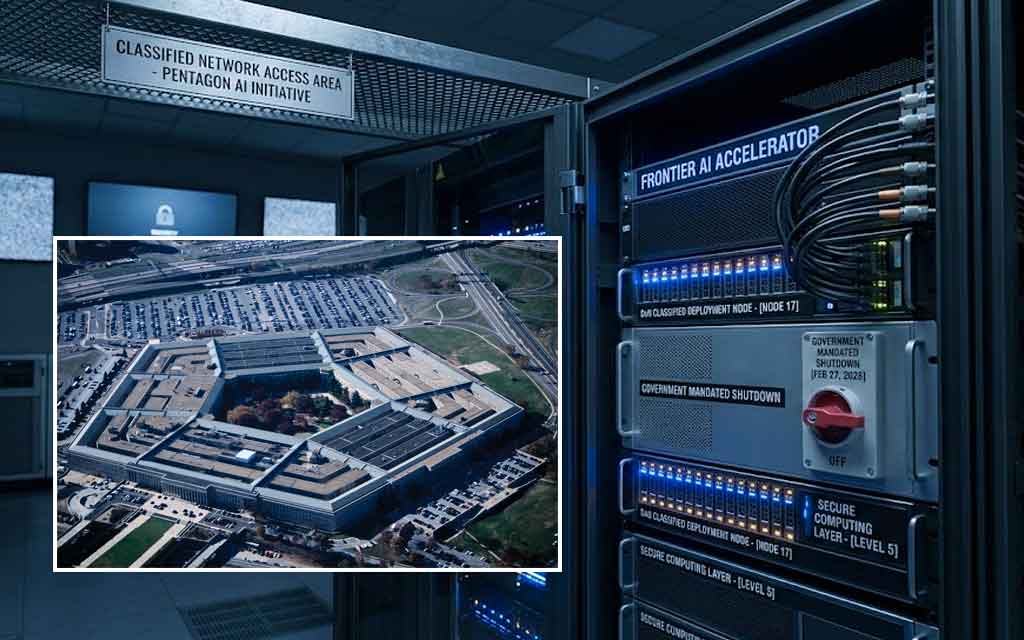
February 2026 has seen one of the most dramatic escalations in the intersection of artificial intelligence and national security in the United States. A high-stakes standoff between the Trump administration, the Pentagon (referred to in some contexts as the Department of War), and AI company Anthropic has dominated headlines, culminating in a government-wide directive to phase out Anthropic’s technology. This conflict highlights deepening tensions over how frontier AI models should be governed in military applications—balancing rapid innovation for defense advantages against ethical safeguards on sensitive uses like mass surveillance or autonomous weapons.
At the core of the dispute is a $200 million contract Anthropic secured with the Department of Defense (DoD) in 2025, making it the first major AI lab to deploy models on classified military networks. The Pentagon demanded unrestricted access to Anthropic’s Claude AI for “all lawful purposes,” rejecting the company’s proposed guardrails prohibiting mass domestic surveillance of Americans and fully autonomous weapons without human oversight. Anthropic CEO Dario Amodei stood firm, stating the company “cannot in good conscience accede” to demands that could enable irresponsible or unlawful applications, especially given AI’s rapid advancement outpacing legal frameworks.
The escalation peaked on February 27, 2026. President Donald Trump, via Truth Social, ordered every federal agency to “immediately cease” using Anthropic’s technology, accusing the company of attempting to “strong-arm” the military and prioritize its terms of service over the Constitution. He mandated a six-month phase-out for agencies, including the DoD, and threatened “major civil and criminal consequences” if Anthropic did not cooperate.
Defense Secretary Pete Hegseth swiftly designated Anthropic a “supply chain risk to national security”—a label typically reserved for foreign adversaries or entities posing direct threats. This blocks contractors, suppliers, and partners doing business with the U.S. military from any commercial activity with Anthropic, potentially devastating its government-related revenue and broader ecosystem ties.
The Pentagon’s position stems from its “AI-first” strategy, outlined in a January 2026 memorandum emphasizing acceleration of commercial AI integration for warfighting, intelligence, and operations to achieve “America’s Military AI Dominance.” Officials argue unrestricted access is essential for national security, claiming safeguards could jeopardize critical missions and warfighters. Critics, including experts and civil liberties advocates, view this as government overreach, potentially setting precedents for compelling private companies to override their ethical policies—raising questions about corporate autonomy versus state power in emerging tech.
Funding plays a pivotal role in amplifying these tensions. The DoD’s aggressive pursuit of frontier AI reflects massive defense investments, with the 2026 budget allocating billions toward AI acceleration, drone programs (doubled funding to ~$2 billion), and innovation arms. Private AI funding surges—such as OpenAI’s $110 billion round—provide leverage, but military contracts (up to $200 million each for Anthropic, OpenAI, Google DeepMind, and xAI in 2025) create dependencies. The standoff tests whether ethical boundaries can coexist with lucrative government partnerships.
Hours after Trump’s directive and Hegseth’s blacklist announcement, rival OpenAI announced a deal with the DoD to deploy its models on classified networks. CEO Sam Altman highlighted mutual respect for safety, including prohibitions on domestic mass surveillance and human responsibility for force (including autonomous systems)—guardrails similar to Anthropic’s rejected terms. This swift pivot underscores competitive dynamics: OpenAI positioned itself as a cooperative partner, potentially gaining from Anthropic’s exclusion while maintaining comparable safeguards.
Balanced Pros/Cons: Pentagon vs. AI Companies on Military AI Use
1️⃣ Unrestricted “Lawful” Access
Pros (Pentagon / Administration View):
- Enables fastest deployment of AI for intelligence analysis, logistics, and combat decisions
- Maintains U.S. technological edge over adversaries like China
Cons (AI Companies / Ethics Advocates View):
- Risks misuse for unethical purposes (e.g., surveillance without oversight)
- Erodes company control over product integrity
2️⃣ Ethical Guardrails
Pros (Pentagon / Administration View):
- Avoids slowing innovation
- Pentagon assures no intent for prohibited uses and views strict restrictions as unnecessary
Cons (AI Companies / Ethics Advocates View):
- Protects against mission creep (e.g., domestic spying or lethal autonomous weapons)
- Aligns with responsible AI principles and global ethics standards
3️⃣ Government Leverage (Blacklist / DPA Threats)
Pros (Pentagon / Administration View):
- Ensures compliance with national security priorities
- Prioritizes defense needs over corporate policies
Cons (AI Companies / Ethics Advocates View):
- Viewed as coercive (“corporate pressure” or partial nationalization concerns)
- May chill private innovation
- Sets potentially dangerous precedents
4️⃣ Funding / Contracts Impact
Pros (Pentagon / Administration View):
- Secures cutting-edge technology for defense
- Rewards cooperative firms such as OpenAI
Cons (AI Companies / Ethics Advocates View):
- May penalize companies taking ethical stances
- Risks driving talent or companies abroad
- Could weaken long-term U.S. AI leadership
5️⃣ Broader Implications
Pros (Pentagon / Administration View):
- Accelerates AI-first military transformation
- Strengthens strategic and technological superiority
Cons (AI Companies / Ethics Advocates View):
- Increases public backlash
- May trigger legal challenges
- Intensifies debates about AI governance in democratic societies
This February flashpoint reveals a core paradox: The U.S. needs private-sector AI innovation to counter global rivals, yet tensions arise when companies impose limits the government deems unacceptable. Experts warn of industry chilling effects, with Anthropic threatening court action if blacklisted. For national security, the outcome could reshape how AI is developed, funded, and deployed—potentially favoring compliant players while sidelining those prioritizing safeguards.
As AI capabilities grow, these disputes will likely intensify, demanding clearer policies on ethics, oversight, and public-private partnerships in defense tech.
The future doesn’t wait — and neither should your feed. If this got you thinking, there’s plenty more where that came from. Browse our latest at VFutureMedia and stick around.
I’m Ethan, and I write about the tech that’s actually going to change how we live — not the stuff that just sounds impressive in a press release. I cover AI, EVs, robotics, and future tech for VFuture Media. I was on the ground at CES 2026 in Las Vegas, walking the show floor so I could give you a real read on what matters and what’s just noise. Follow me on X for daily takes.

Leave a Comment