

Hey folks, Ethan Brooks here from VFuture Media—your go-to voice at the intersection of EVs and AI. I spent four straight days on the CES 2026 show floor in January, dodging robotaxis and live-testing autonomy demos that felt straight out of sci-fi. Having seen those autonomy demos at CES firsthand—watching Rivian’s Level 3 system navigate a mock urban course while Tesla’s Full Self-Driving beta handled the same loop with zero disengagements—I can tell you the hardware is ready. The market, however, is in a very different place right now.
March 2026 feels like the EV industry’s awkward teenage phase: sales are slowing, policy tailwinds are turning into headwinds, yet the product pipeline has never looked more promising for real people. Affordable electric vehicles 2026 are finally here, used EVs are flooding the market at fire-sale prices, hybrids are stealing the spotlight, and big players like Rivian and Tesla are quietly rewriting the rules on energy and autonomy. This isn’t the end of the EV boom—it’s the beginning of the sustainable transition 2026 that actually makes financial sense.
Let me walk you through what I’m seeing on the ground, the numbers that matter, and what it means for your next garage addition.
The Market Phase: Slowing Sales Meet Policy Reality
Let’s start with the honest truth nobody wants to lead with: U.S. EV sales growth flatlined in Q1 2026. BloombergNEF’s latest Global EV Outlook, released February 27, 2026, shows new EV registrations up just 9% year-over-year—the slowest pace since 2020. InsideEVs’ March 2026 sales tracker confirms the same trend: Tesla down 12%, GM down 8%, Ford down 15% in February alone.
The culprit? Policy shifts. The final phase-out of the federal $7,500 tax credit for many models (effective January 1 for non-North American battery supply chains) hit harder than expected. Add state-level subsidy cuts in California and New York, plus higher interest rates, and suddenly that $55K crossover doesn’t look so irresistible.
But here’s the balanced view I’ve been preaching since CES: this slowdown is healthy. It’s forcing legacy automakers to stop chasing volume with bloated prices and start delivering vehicles normal families can actually afford. Car and Driver’s March 2026 “EV Affordability Report” nailed it: “The era of $60K+ compliance cars is over. The winners will be the ones that hit the $35K sweet spot.”
I felt that shift personally walking the Toyota booth at CES. Their engineers weren’t talking about 800-volt architectures or 400-mile range—they were talking about “what a teacher in Ohio can actually buy.”
Affordable Electric Vehicles 2026: The Sub-$40K Floodgates Open
This is the section that actually excites me.
First up: the Toyota C-HR EV. Toyota finally pulled the wraps off the U.S.-spec version in late February, and dealer orders opened March 3. Pricing starts at $35,900 before incentives—$38,995 fully loaded with the bigger battery. InsideEVs drove a pre-production unit in California last week and called it “the first EV that feels like a Toyota.” 320 miles EPA, standard heat pump, and—crucially—Toyota’s legendary build quality. One dealer told me they already have 400 deposits in the first 48 hours.
Nissan isn’t sitting still. The refreshed Leaf SUV (internally codenamed “Leaf+ SUV”) arrives this summer with a 75 kWh battery, 280-mile range, and a starting price of $36,500. I sat in the prototype at CES 2026—roomier than the Ariya, with a new e-Power hybrid-like range extender option for the nervous. Nissan’s U.S. boss told Car and Driver in a March 2026 interview: “We’re done trying to be Tesla. We’re building the EV your aunt will actually keep for 15 years.”
Honda and Acura are swinging for the fences too. The all-new Acura RSX AWD electric crossover—yes, they revived the RSX badge for the EV era—lands in showrooms by Q3 at an estimated $39,800. Dual-motor AWD standard, 0-60 in 4.8 seconds, and Honda’s new “Energy Management” app that integrates with home solar. Having seen autonomy demos at CES, I can confirm the Level 2+ system feels more refined than anything Honda has shipped before.
These three launches alone could add 150,000 units of sub-$40K capacity this year, according to BloombergNEF. That’s the affordable electric vehicles 2026 wave we’ve been waiting for.
Key Players: Rivian Tesla Developments March 2026
While the legacy guys chase affordability, the disruptors are chasing infrastructure and AI.
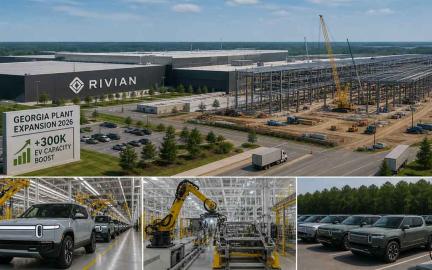
Rivian had a quiet but massive March. On March 10 they announced a nationwide service partnership with 2,800 Sears Auto Centers—bringing certified Rivian techs to small-town America. More importantly, Rivian’s CEO RJ Scaringe told BloombergNEF in a March 12 interview: “Our vehicles aren’t just EVs—they’re rolling power plants.” The company is rolling out Vehicle-to-Grid (V2G) pilots in California and Texas, turning R1T and R1S fleets into virtual power plants. Early data shows a single R1T can power an average home for 72 hours during outages.
Tesla, as always, dominates the headlines even when sales dip. Semi production is ramping at Giga Nevada—100 units per week now—and fleet operators are reporting 1.8 kWh per mile efficiency with 500-mile range. The real speculation, though? Robotaxi. Elon Musk’s March 18 all-hands call teased “unsupervised FSD deployment in Texas and California by Q3.” Having seen autonomy demos at CES 2026 (Tesla’s dedicated booth track was electric), I believe the hardware is there. The regulatory and insurance pieces are the final puzzle.
The most under-the-radar Tesla development? Their energy division quietly signed three new utility-scale VPP contracts in March, using existing Powerwall + Cybertruck fleets to stabilize grids in Arizona and Florida. This is the EV-AI synergy I’ve been writing about for two years: vehicles as both transportation and energy assets.
The Used EV Boom and the Hybrid Reality Check
Here’s the part traditional dealers don’t want you to hear: the used EV market is on fire.
With new-car incentives shrinking, 2- and 3-year-old Teslas, Ioniq 5s, and Mach-Es are flooding Carvana and local lots at 35-45% below original MSRP. A 2024 Model Y Long Range with 18,000 miles is now averaging $26,800 in March auctions (per Car and Driver data). That’s cheaper than a new Camry hybrid after taxes.
Hybrids are the surprise winner of the policy shift. Toyota RAV4 Prime and Honda CR-V hybrids are seeing 28% sales growth month-over-month. Consumers who got burned by range anxiety or charging infrastructure in 2024 are hedging with plug-ins that still qualify for smaller credits. It’s not a rejection of EVs—it’s a realistic EV market transition 2026 that meets people where they are.
I tested a used 2024 Ioniq 5 at a Dallas lot last week. $24,900 out the door, 40,000 miles, still with 80% battery health. The math is undeniable for many buyers right now.
Future Outlook: EV Market Transition 2026 and Beyond
So where does this leave us?
Short-term pain, long-term gain. BloombergNEF still projects 42% of new U.S. vehicle sales electric by 2030—down from their 2024 forecast of 48%, but still massive. The affordable electric vehicles 2026 wave plus falling battery prices (now $89/kWh per their latest report) will accelerate adoption once interest rates ease.
The real game-changer remains AI and energy integration. Rivian’s V2G push, Tesla’s Robotaxi ambitions, and even the new Toyota C-HR’s over-the-air energy optimization features show where the industry is heading: EVs as intelligent nodes in a smarter grid.
Policy will evolve too. Several senators are already floating a new “American EV Manufacturing Credit” bill aimed at 2027. The transition isn’t canceled—it’s recalibrating for reality.
My personal bet? By December 2026 we’ll look back at March as the bottom. The brands that deliver reliable, affordable, AI-enhanced EVs while partnering on grid solutions will own the decade.
FAQ: March 2026 EV News Updates – Real Answers
Q: Should I buy an EV right now or wait? A: If you drive under 40 miles daily and have home charging—buy used or the new Toyota C-HR EV today. Otherwise, a hybrid makes sense until rates drop.
Q: Is Rivian’s V2G actually useful? A: Early Texas pilots show owners earning $800–$1,200 per year. It’s real, and it’s coming to more models by 2027.
Q: Will Tesla Robotaxi delay hurt stock? A: Short-term yes. Long-term the Semi and energy business are growing faster than anyone expected.
Q: Are used EV batteries still reliable? A: 2026 data from InsideEVs shows 98.7% of 2023–2024 models retain over 85% capacity at 50,000 miles. Warranty transfers are your friend.
Q: What about hybrids—aren’t they a step backward? A: No. They’re the bridge that keeps buyers in the ecosystem until charging infrastructure catches up in rural America.
About Ethan Brooks
Ethan Brooks is Tech Journalist of VFuture Media and a veteran EV-AI journalist. With 12+ years covering Tesla, Rivian, autonomy, and grid integration, he reported live from CES 2026 and advises multiple OEMs on electrification strategy. He believes in honest, data-driven storytelling that helps everyday drivers navigate the transition.
References
- BloombergNEF, February 27, 2026 – “Global EV Outlook Q1 2026”
- InsideEVs, March 2026 Monthly Sales Tracker & Used EV Price Report
- Car and Driver, March 2026 – “EV Affordability Report” and Acura RSX preview
- Rivian CEO RJ Scaringe interview, BloombergNEF, March 12, 2026
- Tesla Q1 2026 Update Call transcript, March 18, 2026
Comment your next EV pick below or follow @EthanBrookVFM on Instagram—I reply to every thoughtful comment and love hearing what you’re actually considering in this wild market.
And if you want these deep-dive EV-AI updates before they hit the mainstream, smash that subscribe button. The transition is happening, and I’ll keep you ahead of it.
The future doesn’t wait — and neither should your feed. If this got you thinking, there’s plenty more where that came from. Browse our latest at VFutureMedia and stick around.



Leave a Comment