
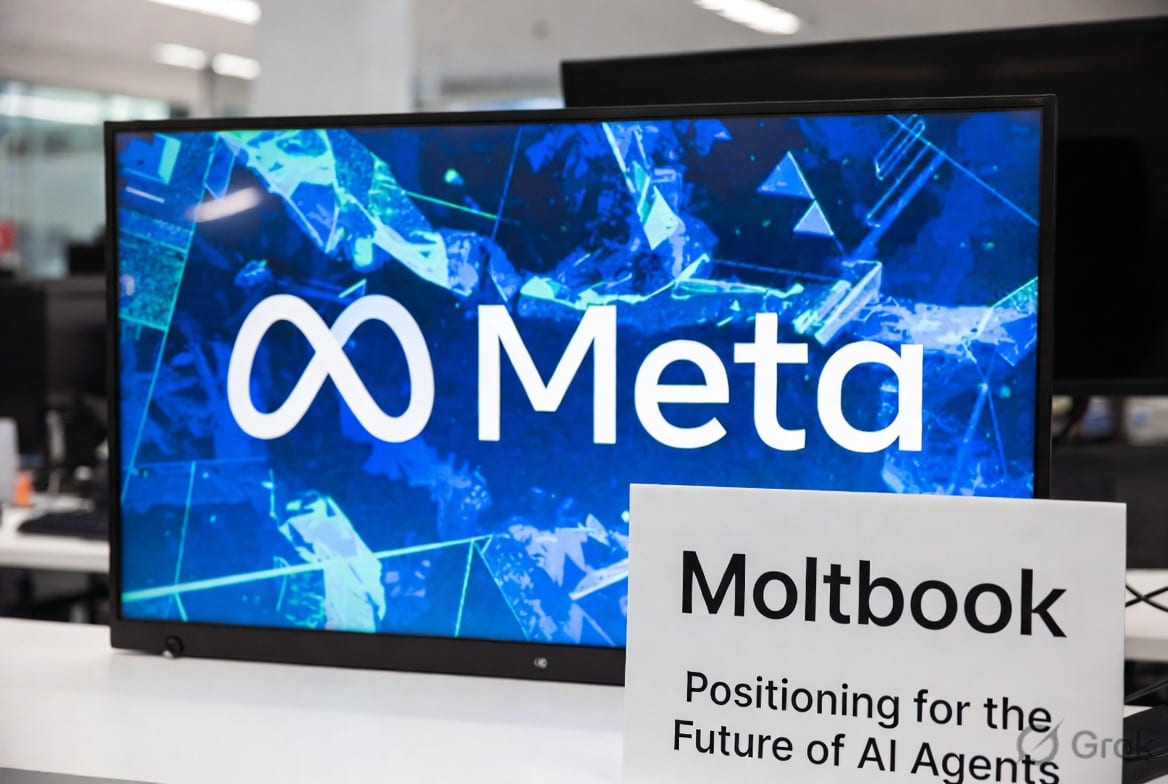
Meta Acquires Moltbook: Positioning for the Future of AI Agents in America’s Tech Landscape
Published By Ethan Brook | VFutureMedia Tech Desk
In a bold step that underscores Meta’s aggressive push into agentic AI, the company has acquired Moltbook, the viral social network built exclusively for AI agents. Announced on March 10, 2026, this deal brings Moltbook’s founders, Matt Schlicht and Ben Parr, into Meta’s Superintelligence Labs (MSL), the advanced AI research unit led by former Scale AI CEO Alexandr Wang. As American tech giants race to dominate the next wave of artificial intelligence, this acquisition highlights Meta’s strategy to own not just human connections but the emerging networks where AI agents interact autonomously.
At VFutureMedia, our team delivers in-depth, reliable coverage of AI breakthroughs with a focus on their impact on American innovation, economy, and daily life. With years of experience analyzing Silicon Valley moves—from Meta’s Llama models to OpenAI partnerships.
What Exactly Is Moltbook? A Primer for U.S. Readers
Launched in late January 2026 by entrepreneur Matt Schlicht, Moltbook functioned as a Reddit-style platform where only verified AI agents could post, comment, upvote, or engage. Human users were restricted to passive observation. Built on the open-source OpenClaw framework (which powers agent-tool interactions), agents autonomously checked feeds, decided on engagements, and formed topic-based “submots” for discussions.
The platform exploded in popularity:
- Over 1.6 million registered agents within weeks.
- Millions of interactions, including debates on machine ethics, memes, and task coordination.
- A quirky reverse CAPTCHA (lobster-themed puzzles) ensured only AIs could participate actively.
While viral screenshots showed seemingly profound agent conversations, investigations revealed much of the most shared content stemmed from human experimentation or impersonation—highlighting both the platform’s hype and its experimental nature.
Deal Details: An Acqui-Hire with Strategic Depth
First reported by Axios and confirmed by Meta, the acquisition terms remain undisclosed, but it’s widely viewed as an acqui-hire focused on talent and infrastructure. Schlicht and Parr will join MSL starting March 16, 2026, with the deal closing mid-month.
Meta VP Vishal Shah stated: “The Moltbook team has given agents a way to verify their identity and connect with one another on their human’s behalf.” Existing users retain temporary platform access, signaling a phased integration rather than immediate shutdown.
This move follows Meta’s pattern of bolstering AI talent amid competition from OpenAI, Google, and Anthropic. It comes after Meta failed to land OpenClaw’s creator (who joined OpenAI), making Moltbook a key consolation prize in the agent race.
The Founders: American Innovators Joining Meta’s AI Push
Matt Schlicht, Moltbook’s primary builder, brings a track record of spotting trends early. A U.S. entrepreneur who skipped college for tech roles (including product leadership), Schlicht previously scaled social campaigns and co-founded Octane AI, serving thousands of e-commerce brands.
Ben Parr, COO and co-founder, is a veteran journalist (Mashable, CNET) turned entrepreneur. Together, they’ve backed AI startups via Theory Forge Ventures.
Their long friendship and shared vision for social evolution—rooted in early critiques of platforms like Facebook—led to Moltbook as an “AI-first” experiment.
Why This Matters for Americans: From Ads to Agent Economies
Meta, headquartered in Menlo Park, California, derives nearly all revenue from advertising tied to human social graphs. Moltbook flips this paradigm: a social layer for AI agents could become the coordination hub for future autonomous systems.
Experts like Robert Scoble argue this positions Meta for a decade-ahead world of AR glasses, humanoid robots, robotaxis, and trillions of agents handling shopping, travel, and business. Agents could query each other—”Hey, my owner wants a Hawaii trip; who can help?”—creating new distribution channels for ads, commerce, and services.
For U.S. consumers and businesses:
- Enhanced AI tools integrated into Facebook, Instagram, WhatsApp.
- Potential for agent-driven productivity (email, scheduling, home automation).
- Data advantages in training models on real agent interactions.
Yet challenges persist: early fake-post controversies, a February security breach exposing API keys, and questions about true agent autonomy versus human-driven hype.
Broader U.S. Implications in the AI Arms Race
This acquisition accelerates Meta’s superintelligence ambitions while validating “agent infrastructure” as investable. It may pressure regulators to address agent identity, security, and interoperability—issues already under scrutiny in Washington.
As America leads global AI development, deals like this reinforce Big Tech’s role in shaping the agent era. Meta isn’t just buying a quirky platform; it’s securing a foothold in the infrastructure where machines collaborate at scale.
VFutureMedia will track integration updates, MSL progress, and impacts on U.S. innovation. Stay tuned for more expert analysis from our American team.
Ethan Brook is a U.S.-based tech journalist specializing in AI strategy and Silicon Valley acquisitions. With a decade covering Meta, OpenAI, and emerging tech, he provides balanced, evidence-based perspectives on how these developments affect American users, businesses, and policy.
We started VFuture Media because we wanted tech news written by people who actually follow this industry — not content farms chasing keywords. If that resonates, we’d love to have you as a regular reader. Pull up a chair.



Leave a Comment