
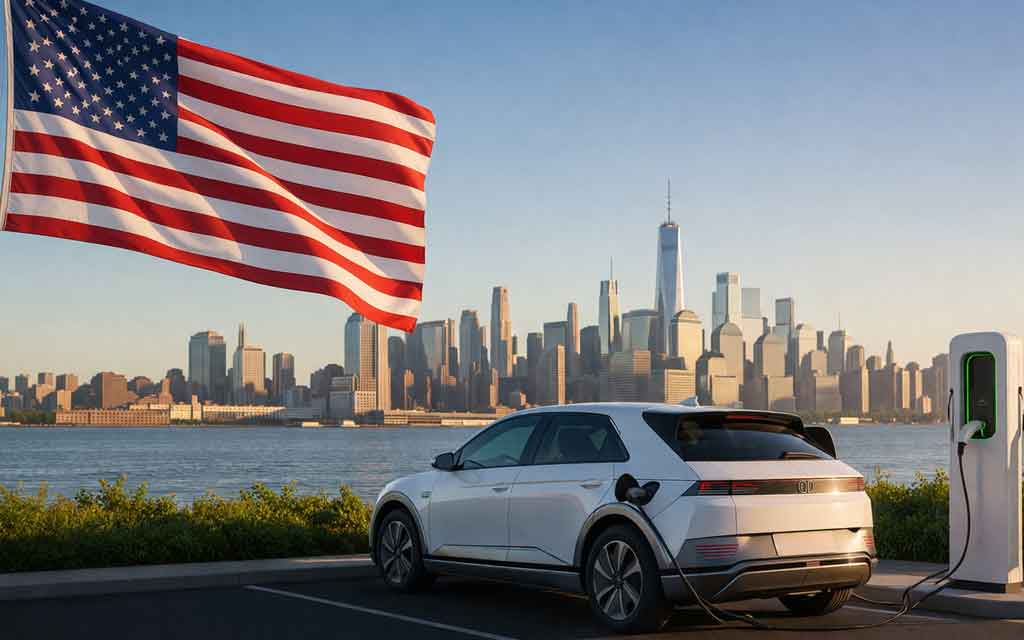
USA Edition – April 2, 2026 — The U.S. electric vehicle market continued to feel the impact of the expired federal $7,500 EV tax credit in March 2026, with new BEV registrations remaining soft compared to 2025 peaks. While exact March-only company figures are still rolling in from sources like Cox Automotive, S&P Global Mobility, and automaker reports, Q1 2026 data provides a clear picture of how major players performed amid the post-incentive slump.
Key Highlights – Q1 2026 US EV Sales (Battery Electric Vehicles)
- Total new BEV registrations: Approximately 212,600 units — a 28% decline year-over-year.
- EV market share: Stabilized around 5–5.8% of total U.S. light-vehicle sales (down from peaks near 10–12% in mid-2025).
- Overall new vehicle sales: Down ~6.5% in Q1, with a seasonally adjusted annual rate (SAAR) hovering near 15.5–16 million units.
Tesla remained the undisputed leader, delivering an estimated 122,196 EVs in Q1 2026. This represents a relatively mild 4.6% drop compared to Q1 2025, helping the company capture a commanding 57.5% share of the U.S. BEV market. Tesla’s resilience stems from strong Model Y and Model 3 demand, competitive pricing adjustments, and its established Supercharger network (now open to more brands).
Company-Wise EV Performance Snapshot (Q1 2026 Estimates)
Here’s how major automakers stacked up based on available Cox Automotive, Kelley Blue Book, and industry tracking data:
- Tesla — ~122,196 units | 57.5% BEV market share Dominant performance with only modest decline. Focused on volume models and software updates.
- General Motors (Chevrolet, Cadillac, GMC, etc.) — Strong second-place contender Chevrolet (Equinox EV, Blazer EV) showed notable month-over-month gains in February (up ~70% in some reports), helping GM maintain momentum in affordable and utility EVs. Cadillac Lyriq and other luxury entries also contributed.
- Hyundai / Kia Group — Mixed results Hyundai posted gains in models like Ioniq 5 and the new Ioniq 9 in February, but overall group EV sales faced pressure. Competitive pricing and feature-rich offerings helped limit losses.
- Ford — Facing headwinds Mustang Mach-E and F-150 Lightning saw softer demand. Ford has scaled back some EV ambitions while focusing on hybrids and core truck lines.
- Rivian — Emerging player with growth potential R1T and R1S deliveries held steady or grew modestly in early 2026, appealing to adventure-oriented buyers despite higher price points.
- Toyota — Gaining traction in electrified segment While pure BEV volumes remain smaller, Toyota’s bZ4X and hybrid push showed positive momentum. The company continues balancing EVs with strong hybrid sales.
- Other notable mentions:
- Lucid and Polestar — Niche luxury/ premium growth in some months.
- BMW, Mercedes, Volkswagen — Premium brands experienced steeper declines in several reports.
- Nissan — Struggled with Leaf and newer entries amid broader slowdown.
February 2026 specifics (closest monthly proxy): New EV sales ~68,951 units (down 26.8% YoY but up 5.8% MoM). Tesla led with ~38,500, followed by Hyundai, Chevrolet, Toyota, and Cadillac.
Why Did EV Sales Drop in Early 2026?
The primary driver was the expiration of the federal EV tax credit in late 2025, which removed a key affordability boost for many buyers. Additional factors include:
- Higher interest rates and economic caution.
- Rising fuel prices paradoxically pushing some toward hybrids instead of full EVs.
- Increased incentives from automakers (EV discounts averaged higher than gas models in recent months).
- Shift toward used EVs, which surged 12% in Q1 2026 as prices approached parity with comparable gas vehicles.
Despite the new-sales dip, hybrids continued gaining popularity as a practical bridge for American drivers concerned about range, charging infrastructure, and upfront costs.
What This Means for American Car Buyers in 2026
- Better deals on new EVs: Many brands are offering aggressive incentives, lower transaction prices, and financing specials.
- Used EV opportunity: Prices have dropped significantly — now often just $1,300 more than similar gas models on average.
- Charging & infrastructure: Tesla’s network expansion and NACS adoption by other brands are improving accessibility.
- Model variety: More affordable options (e.g., refreshed Chevrolet Bolt, upcoming entries) are entering the market.
For families in states like California, Texas, Florida, or the Midwest, total cost of ownership (fuel savings + maintenance) still favors EVs over time, especially with home charging.
Outlook for the Rest of 2026
Analysts expect EV share to stabilize or modestly recover as new models launch and manufacturers adjust pricing. Hybrids are projected to lead electrified growth, while full BEVs may hold in the 6–8% range for the full year. Legacy automakers are balancing EV commitments with strong truck/SUV demand.
vFutureMedia.com Tip for U.S. Readers: If you’re shopping for an EV in 2026, compare total incentives (manufacturer + state rebates), real-world range, and charging access. Tools from Kelley Blue Book, Edmunds, or Cox Automotive can help calculate your break-even point. Consider test-driving both full EVs and plug-in hybrids.
Data compiled from Cox Automotive, Kelley Blue Book, S&P Global Mobility, and automaker reports as of early April 2026. Monthly March breakdowns will be updated as final figures release.
Have questions about specific models or how this affects your next vehicle purchase? Drop a comment below or follow www.vfuturemedia.com for ongoing U.S. auto industry coverage, EV buyer guides, and tech trends.
About vFutureMedia: Delivering clear, unbiased insights on electric vehicles, automotive innovation, and mobility shifts for American drivers and global readers alike.

Leave a Comment