
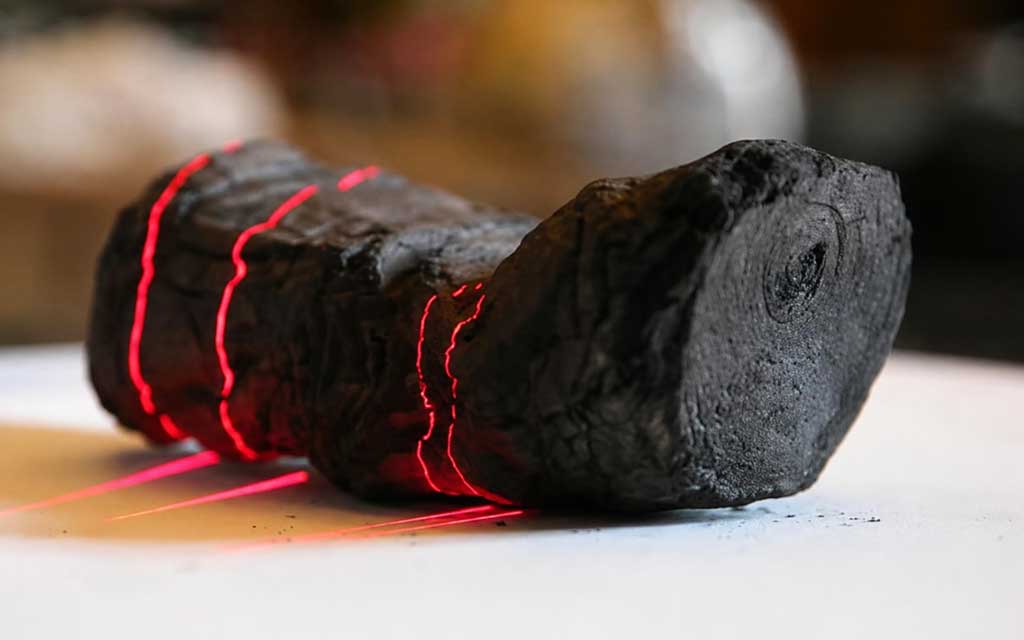
AI technology successfully unwraps a carbonized Herculaneum scroll from Mount Vesuvius, revealing 20 columns of hidden text. Details on the Vesuvius Challenge, implications for ancient history, and future discoveries.
Groundbreaking Discovery: AI Unlocks Secrets of a Vesuvius-Charred Scroll
In a stunning fusion of artificial intelligence and classical archaeology, scientists have achieved a major milestone: the virtual unwrapping of a 2,000-year-old scroll buried by the eruption of Mount Vesuvius in 79 AD. The effort has revealed approximately 20 columns of previously unreadable text, offering new insights into ancient philosophy, literature, or history.
This success builds on the ongoing Vesuvius Challenge and marks one of the most significant non-invasive readings of a carbonized Herculaneum papyrus to date.
How AI Made the Virtual Unwrapping Possible
The scrolls from the Villa of the Papyri in Herculaneum were preserved but fused into solid carbonized blocks by the intense heat of the volcanic eruption. Traditional physical unrolling risks destruction.
Key Technologies Used:
- High-Resolution CT Scanning: Captures microscopic internal structures without damage.
- Machine Learning Algorithms: AI models trained to detect ink traces, distinguish layers, and segment the scroll’s 3D structure.
- Advanced Image Processing: Reconstructs flattened text from the warped, compressed papyrus.
- Collaborative Efforts: International teams of computer scientists, papyrologists, and historians.
The AI essentially “reads” the scroll in its rolled state, virtually separating layers and enhancing faint ink signals to produce readable columns.
What Was Revealed? Initial Insights from the 20 Columns
While full translation and analysis are ongoing, the revealed text represents a significant addition to the known Herculaneum library:
- Potential philosophical works, possibly Epicurean or Stoic texts.
- New historical or literary content lost for nearly two millennia.
- Clues about daily life, science, or politics in the Roman world.
Each new column brings scholars closer to understanding the intellectual world just before the Vesuvius catastrophe.
The Vesuvius Challenge: Crowdsourcing AI for Archaeology
Launched to accelerate progress, the Vesuvius Challenge has incentivized global AI talent to tackle the scrolls. Previous prizes unlocked partial readings; this latest breakthrough demonstrates accelerating capabilities as models improve.
Success here validates AI’s role in cultural heritage preservation, opening doors for thousands more artifacts worldwide.
Broader Implications for History, Technology, and Conservation
- Archaeological Revolution: Non-destructive access to fragile artifacts changes the field forever.
- AI Applications: Demonstrates practical use of computer vision and generative models beyond consumer tools.
- Cultural Heritage: Encourages scanning and digital preservation of other sites (e.g., Pompeii, Egyptian papyri).
- Interdisciplinary Collaboration: Bridges humanities and cutting-edge tech.
- Ethical Considerations: Ensures responsible sharing of ancient knowledge.
This achievement comes amid rapid AI advancements seen in other domains, from Kimi models to infrastructure scaling.
Future Prospects: What’s Next for the Herculaneum Scrolls?
- Full digitization and open-access publication of the new text.
- Continued scanning of remaining scrolls (hundreds still exist).
- Improved AI techniques for even faster, higher-accuracy readings.
- Potential discoveries that rewrite chapters of classical history.
The Villa of the Papyri may yet yield an entire lost library.
Why This Matters in 2026
In an era of powerful AI, this project reminds us of technology’s potential to recover the past rather than only building the future. It inspires hope for uncovering more hidden knowledge from antiquity.
Congratulations to the scientific teams involved — this is a triumph for human curiosity and machine intelligence working together.
Conclusion: AI Rewrites Ancient History
The virtual unwrapping of the Vesuvius scroll, revealing 20 columns of text, stands as a landmark achievement. It showcases how AI can solve problems once thought impossible and enriches our understanding of the ancient world.
Follow vfuturemedia.com for more stories on AI breakthroughs, archaeological discoveries, historical tech, and science news roundups. What ancient secrets do you hope AI uncovers next? Share in the comments!


Leave a Comment