
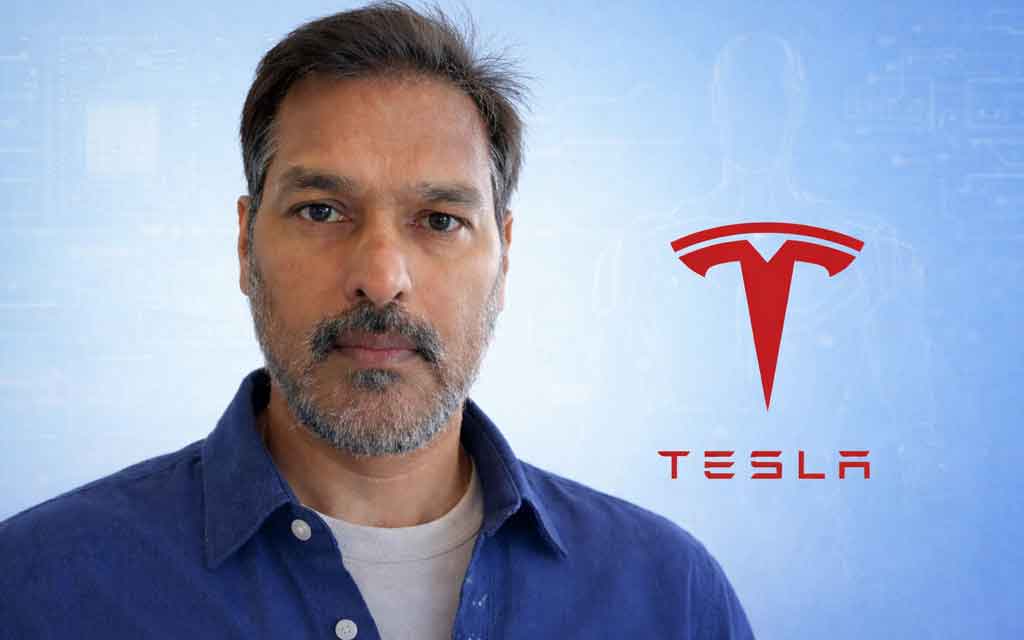
April 6, 2026 – In a significant move for Tesla’s ambitious in-house AI hardware strategy, Anant Nivarti (also known as Anantha Kumar N.) is returning to the company as Silicon Engineering Lead at Tesla AI.
Nivarti, who previously served as Director of Dojo AI/ML Hardware from 2017 to December 2025, played a pivotal role in designing Tesla’s custom AI training chips, including the groundbreaking Dojo supercomputer architecture. He is also a co-author of the influential IEEE Micro paper detailing Dojo’s innovative microarchitecture.
From Tesla to Startup and Back
Nivarti left Tesla in December 2025 to join an early-stage AI silicon startup. His return comes just a few months later, signaling strong confidence in Tesla’s long-term AI hardware vision under Elon Musk.
In a post on X (formerly Twitter), Nivarti expressed his excitement:
“Thrilled to be rejoining @Tesla_AI as silicon engineering lead next week! Back to building the chips that push the boundaries of AI and autonomy.”
His homecoming is viewed as a major boost for Tesla’s custom silicon efforts, especially as the company accelerates development of next-generation chips.
What Nivarti Will Lead
According to reports, Nivarti will spearhead the development of:
- AI6 — Tesla’s next-generation AI inference and training chip, targeted for Optimus humanoid robots, vehicle autonomy (Full Self-Driving), and data center applications. Tesla has a major partnership with Samsung for AI6 production, with tape-out targeted around December 2026.
- Dojo 3 — The revived third-generation Dojo supercomputer chip. Elon Musk has indicated that Dojo 3 (sometimes referred to alongside AI7) will focus on advanced AI compute, including potential space-based applications.
This return comes after Tesla paused aspects of the original Dojo 2 project, making Nivarti’s expertise in scalable ML accelerators even more critical.
Why This Matters for Tesla’s AI Future
Tesla has been aggressively building its own AI silicon capabilities to reduce reliance on external suppliers like NVIDIA while optimizing performance, power efficiency, and cost for its unique workloads in autonomy and robotics.
- Dojo was designed specifically for training massive neural networks at scale.
- The AI chip series (AI5, AI6, and beyond) powers everything from in-car inference to Optimus training.
- Nivarti’s deep experience in CPU/GPU/accelerator design (prior roles at Apple, AMD, and Analog Devices) makes him a strategic asset for Tesla’s goal of achieving industry-leading AI hardware performance.
His return strengthens Tesla’s in-house talent pool at a time when the company is pushing hard on Full Self-Driving (FSD), robotaxi, and Optimus humanoid robot timelines.
VFutureMedia.com will continue tracking Tesla’s AI hardware developments, Dojo progress, and the evolving landscape of custom AI silicon.
Last updated: April 6, 2026. Based on public statements from Anant Nivarti, reports from Muskonomy, and industry updates.
Call to Action: What do you think of Anant Nivarti’s return to Tesla? Will this accelerate Dojo 3 and AI6 development? Share your thoughts in the comments below.
Subscribe to VFutureMedia.com for the latest in AI hardware, semiconductor innovation, Tesla updates, and futuristic tech breakthroughs. Follow us for daily insights into the future of computing and autonomy!

Leave a Comment