
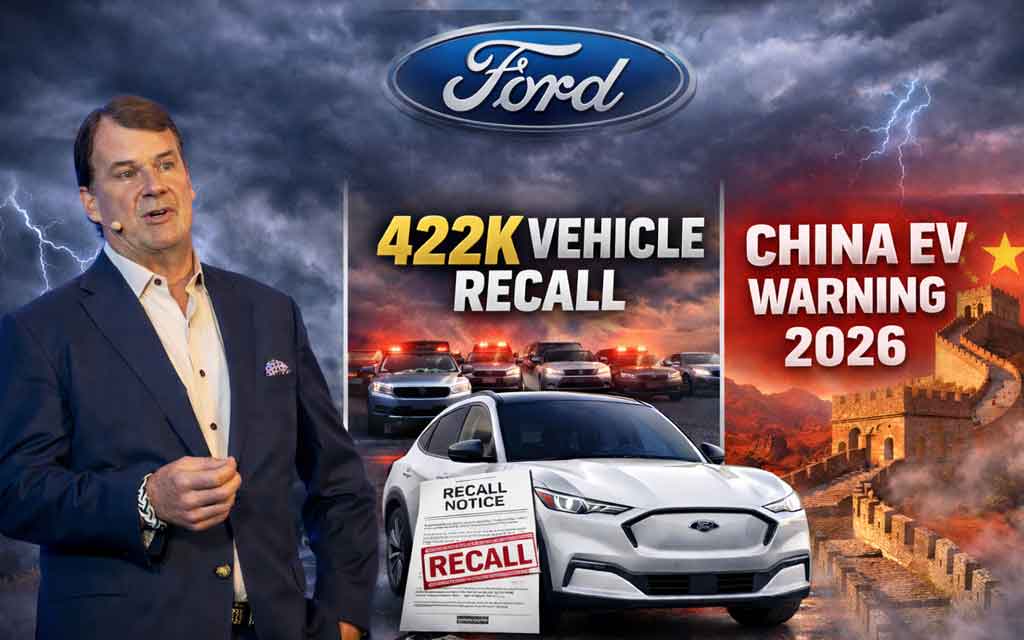
Ford Motor Company is navigating a turbulent week in mid-April 2026, marked by a major leadership and organizational change in its electric vehicle strategy, a large-scale safety recall affecting hundreds of thousands of trucks and SUVs, and a blunt warning from CEO Jim Farley about the threat of Chinese EV imports to American manufacturing.
These developments come as Ford continues to balance its ambitious electrification goals with the realities of slowing EV demand, high development costs, and intense global competition. For American drivers — especially truck and SUV owners who form the backbone of Ford’s U.S. sales — the moves signal a more pragmatic, manufacturing-focused approach while underscoring ongoing quality and safety challenges.
As a mobility analyst with over a decade covering the U.S. auto industry, I see this week’s news as part of Ford’s broader effort to improve profitability and protect domestic jobs amid an unpredictable EV transition.
Doug Field’s Departure and the Dissolution of Ford’s Standalone EV Unit
On April 15, 2026, Ford announced that Doug Field, its chief EV, digital, and design officer, is stepping down effective next month. Field, who joined Ford in 2021 after stints at Apple and Tesla, had been a high-profile hire tasked with accelerating the company’s shift to software-defined electric vehicles.
Instead of replacing Field with another Silicon Valley executive, Ford is dissolving its standalone Model e EV division and folding EV, digital, and design responsibilities into a new unit called Product Creation and Industrialization under Chief Operating Officer Kumar Galhotra. This reorganization aims to streamline decision-making, reduce costs, and better integrate EV development with Ford’s core manufacturing strengths.
Field cited a desire to pursue new opportunities and share lessons from his career. His exit follows years of heavy investment in EVs — Ford has reportedly spent around $21 billion on the transition — while the company has faced losses in its EV segment and slower-than-expected adoption in key U.S. truck and SUV markets.
The move reflects a wider industry trend: legacy automakers are recalibrating aggressive pure-EV timelines in favor of hybrids and more flexible platforms as American buyers prioritize affordability, range, and proven reliability over rapid full electrification.
Major Recall: 422,613 Trucks and SUVs Affected by Wiper Arm Defect
Compounding the week’s challenges, Ford issued a significant safety recall for 422,613 vehicles due to defective windshield wiper arms that may break, operate erratically, or detach completely. The recall, announced in early April with owner notifications beginning around April 13, covers:
- 2021–2023 Ford Expedition and Lincoln Navigator SUVs
- 2022–2023 Ford Super Duty trucks (F-250, F-350, F-450, F-550, and F-600 models)
According to the National Highway Traffic Safety Administration (NHTSA), the issue stems from wiper arm assemblies sourced from supplier Trico. An estimated 3% of the affected vehicles may experience the defect, which could reduce driver visibility and increase crash risk, particularly in bad weather.
Ford has stated that dealers will inspect and replace the wiper arms free of charge once a final remedy is fully developed. In the meantime, owners are advised to check their vehicle’s VIN on NHTSA.gov and monitor for any unusual wiper behavior.
This recall follows other recent wiper-related actions by Ford and highlights ongoing quality control challenges in high-volume truck and SUV production — segments that are critical to Ford’s profitability in the American market.
Jim Farley’s Strong Warning on Chinese EV Imports
In a candid interview this week, Ford CEO Jim Farley issued a direct warning about allowing Chinese-made electric vehicles into the U.S. market. Speaking on Fox News, Farley stated that Chinese automakers should “not be allowed into our country” because it would be “devastating” to American manufacturing.
Farley emphasized that manufacturing remains “the heart and soul of our country,” and cheap, heavily subsidized Chinese EVs could undercut U.S. automakers, threatening jobs across the supply chain. He specifically referenced concerns about data security (many Chinese EVs feature numerous cameras and connected systems) and the uneven playing field created by China’s scale, vertical integration, and government support.
The comments come as Canada has reportedly opened the door to limited Chinese vehicle imports, raising fears that some could eventually cross into the U.S. Farley’s stance aligns with broader calls in Washington for tariffs and restrictions to protect domestic auto jobs while the industry invests billions in American EV and battery plants.
What This All Means for American Drivers and Ford’s Strategy
Ford’s actions this week paint a picture of a company in transition:
- Pragmatic EV Pivot: By integrating EV development more closely with manufacturing, Ford aims to cut bureaucracy, speed up product launches, and improve margins (targeting 8% or higher). This could lead to more competitive hybrid and electrified trucks in the coming years — good news for U.S. buyers who want electrification without sacrificing capability.
- Focus on Core Strengths: Ford continues to dominate in full-size trucks and SUVs. The recall, while serious, affects older models, and the company is addressing it proactively.
- Geopolitical Realism: Farley’s comments highlight the tension between global competition and protecting American jobs and technology. Many U.S. consumers support “Buy American” policies when it comes to vehicles that power their livelihoods and families.
For Current Ford Owners (Especially Truck and SUV Drivers):
- Check your VIN immediately on NHTSA.gov or Ford’s recall portal to see if your Expedition, Navigator, or Super Duty is affected by the wiper recall.
- Schedule a free dealer inspection and repair as soon as notified.
- Continue regular maintenance — wiper issues can worsen in rain, snow, or highway driving common across America.
For Prospective Buyers in 2026:
- Ford’s current lineup of gas, hybrid, and available EVs (like the F-150 Lightning and Mustang Mach-E) still offers strong value, especially with potential dealer incentives as inventory adjusts.
- Watch for upcoming refreshed models and new midsize electrified options that could benefit from the streamlined development process.
- Factor in total cost of ownership: hybrids may currently offer the best balance for many American households given fuel prices and charging infrastructure.
Stock and Investor Perspective: Ford shares have shown resilience amid these announcements, with investors seemingly rewarding the company’s focus on profitability and manufacturing efficiency over unchecked EV spending. However, ongoing recalls and EV transition costs remain watchpoints.
Pros and Cons: Ford’s 2026 Strategic Shifts
Positive Developments:
- Faster, more integrated product development could bring better vehicles to market sooner.
- Strong emphasis on protecting U.S. manufacturing jobs resonates with American workers and buyers.
- Continued leadership in profitable truck segments provides a solid financial foundation.
Challenges:
- Leadership turnover and reorganization can create short-term uncertainty.
- Quality issues like the wiper recall damage trust and require resources to fix.
- Heavy competition from both legacy rivals and potential low-cost imports pressures pricing and margins.
Looking Ahead for Ford and U.S. Auto Buyers
Ford’s shakeup in April 2026 suggests a company doubling down on what has made it successful in America: building tough, capable trucks and SUVs while gradually electrifying where it makes sense for customers — not just for mandates.
The departure of a high-profile EV leader and the integration of operations indicate a more grounded approach to the energy transition. At the same time, Farley’s vocal stance on Chinese competition underscores the importance of fair trade policies that safeguard American innovation and blue-collar jobs.
For everyday U.S. drivers, the key takeaway is caution mixed with opportunity: address any open recalls promptly, evaluate current Ford models (especially hybrids and trucks) for real-world needs, and stay informed as new electrified products roll out later in 2026 and 2027.
The American auto industry is evolving, and Ford appears determined to evolve with it — prioritizing profitability, quality, and domestic strength along the way.
Are you a Ford truck or SUV owner affected by the recall? What do you think about Farley’s comments on Chinese EVs? Share your experiences or opinions in the comments below.
Subscribe to VFuture Media for weekly updates on Ford news, EV shifts, green tech, and the future of American mobility. New articles every Thursday.


Leave a Comment