

Hybrid vs EV vs Gas: May 2026 US Sales Analysis Shows Clear Winner
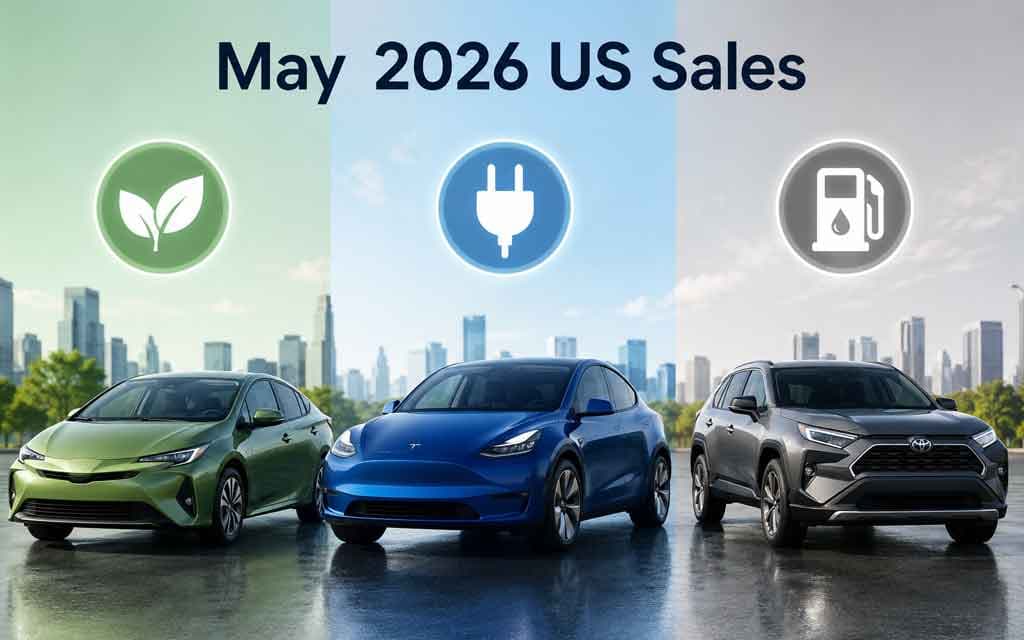
NEXT_PUBLIC_GOOGLE_ADSENSE_ID to enableIn May 2026, American car buyers sent a clear message: hybrids are winning the transition away from pure gasoline vehicles, while full electric vehicles (EVs) continue to face headwinds.
While Tesla maintained its dominance in the EV segment, overall EV sales growth remained soft. Traditional gasoline vehicles still hold the largest share of the market, but hybrid sales posted the strongest relative growth among the three powertrains.
Here’s a detailed, company-wise comparison of hybrid, EV, and gas vehicle sales trends in the United States for May 2026.
May 2026 US Auto Market Overview
New vehicle sales in May 2026 were mixed, with total industry volume hovering around 1.48 million units. High vehicle prices, elevated interest rates, and shifting consumer preferences continued to shape buying behavior.
Powertrain Performance Snapshot (May 2026):
Hybrid Vehicles
- Strong sales growth in May 2026.
- Market share continues to increase.
- Buyers are attracted by fuel efficiency without needing charging infrastructure.
- Status: Clear Winner.
Battery Electric Vehicles (EVs)
- Sales growth remains soft or relatively flat.
- Market share has seen a slight decline.
- Higher vehicle prices and charging concerns continue to affect demand.
- Status: Struggling.
Gasoline Vehicles
- Sales trend continues to decline.
- Market share is gradually decreasing.
- Rising fuel costs and the availability of hybrid and EV alternatives are influencing buyers.
- Status: Losing Ground.
Hybrids emerged as the clear beneficiary as buyers sought better fuel economy without the infrastructure or price concerns associated with full EVs.
Company-wise Performance: Hybrid vs EV vs Gas
1. Toyota
- Hybrids made up nearly half of Toyota’s total May sales.
- Strong performance from RAV4 Hybrid, Camry Hybrid, and Corolla Hybrid.
- Pure EV (bZ4X/bZ) sales remained very low.
- Gasoline models continued to decline as buyers shifted to hybrids.
2. Honda
- Hybrid sales hit a record for the month.
- CR-V Hybrid and Accord Hybrid drove significant growth.
- Overall sales rose thanks to hybrid demand.
- Pure EV volume remained minimal.
3. Hyundai & Kia
- Both brands reported strong hybrid growth, with Kia’s hybrid sales nearly doubling year-over-year in recent months.
- Hybrids helped offset softer performance in some gasoline models.
- EV sales (IONIQ 5/6, EV6, EV9) showed modest results.
4. Ford
- Overall sales declined significantly (~14%).
- Hybrid versions of Escape and Maverick performed better than pure gas models.
- F-150 Lightning (EV) sales remained soft.
- Gasoline trucks (F-Series) still dominate volume but are losing share to electrified options.
5. General Motors (Chevrolet, GMC, Cadillac)
- Overall sales down.
- Chevrolet Equinox EV saw some growth, but most volume still came from gasoline trucks and SUVs.
- Hybrid offerings remain limited compared to Toyota and Honda.
6. Tesla
- Continued to dominate the pure EV segment with strong Model Y and Model 3 sales.
- No hybrid offerings.
- Market share in the overall EV space remained very high (estimated 50%+).
Why Hybrids Are Outperforming Both EV and Gas Right Now
Several factors explain the strong hybrid momentum in May 2026:
- No Range Anxiety or Charging Hassle — Buyers get significantly better fuel economy (often 40–50+ mpg) without needing to plug in.
- Lower Upfront Cost — Hybrids are generally cheaper than comparable EVs and don’t require home charger installation.
- Strong Model Availability — Toyota, Honda, Hyundai, and Kia have excellent hybrid lineups across popular segments (crossovers and sedans).
- High Gas Prices — Persistent fuel costs make hybrids more attractive than traditional gasoline vehicles.
- EV Market Cooling — Many buyers are delaying full EV purchases due to higher prices and concerns about charging infrastructure and resale value.
Key Takeaways from May 2026 Data
Sales Momentum
- Hybrid: Strongest
- EV: Weakest
- Gasoline: Declining
Consumer Preference
- Hybrid: Rising rapidly
- EV: Stagnant
- Gasoline: Losing ground
Best Performing Brands
- Hybrid: Toyota, Honda, Hyundai, Kia
- EV: Tesla
- Gasoline: Ford, GM (especially trucks)
Biggest Challenge
- Hybrid: Limited model range
- EV: High prices and charging infrastructure concerns
- Gasoline: Fuel economy regulations and emissions pressures
Future Outlook (2026–2027)
- Hybrid: Very positive growth outlook
- EV: Depends on new models, pricing, and charging improvements
- Gasoline: Expected to continue declining as electrified vehicles gain share.
What This Means for Buyers and the Industry
For Consumers:
- Hybrids currently offer the best balance of cost, convenience, and efficiency for most American drivers.
- Full EVs make the most sense for those with home charging and predictable daily driving patterns.
- Gasoline vehicles are becoming less attractive as hybrid options expand.
For Automakers:
- Toyota and Honda’s long-term bet on hybrids is paying off handsomely.
- Legacy automakers (Ford, GM, Stellantis) that bet heavily on EVs are facing pressure to accelerate hybrid offerings.
- Tesla remains in a strong position but faces growing competition in the broader electrified vehicle space.
Outlook for the Rest of 2026
Hybrids are expected to continue gaining market share through the remainder of 2026. Many analysts believe hybrids will serve as the bridge technology for the next 5–7 years while charging infrastructure improves and EV prices come down.
Pure EV sales will likely remain concentrated with Tesla and a few strong models from Hyundai/Kia and GM, while gasoline vehicle sales continue their long-term decline.
Final Verdict: In May 2026, hybrids clearly outperformed both pure EVs and traditional gasoline vehicles in terms of growth momentum and consumer appeal. The data shows that American buyers want better fuel economy — they just aren’t ready to go all-electric yet.
NEXT_PUBLIC_GOOGLE_ADSENSE_ID to enableArticles you might like
 Electric Vehicles
Rivian R2 Pricing Strategy Analysis 2026: A Calculated Bet on Premium Positioning Before Going Mass-Market
 Electric Vehicles
Latest EV News June 2026: Global Sales Surge, US Faces Headwinds, Rivian R2 & Lucid Gravity Heat Up
 Electric Vehicles