
Published: April 20, 2026 By Ethan Brooks – USA-based Tech Analyst & Futurist
With gas prices climbing toward $4–$5 per gallon in many parts of the country, American consumers are once again eyeing electric vehicles for potential savings at the pump. Yet the EV market remains challenging after the expiration of the $7,500 federal tax credit. Q1 2026 sales dipped, forcing automakers and startups to focus on affordability, practicality, and real-world usability rather than luxury or high performance alone.
This week brought significant developments: a major funding boost for an ultra-affordable American-made EV truck, new compact and family-oriented EV SUVs heading to US roads, leadership changes at premium brands, and strategic adjustments by legacy automakers. Here’s a complete, detailed roundup of the biggest EV stories from April 13–20, 2026.
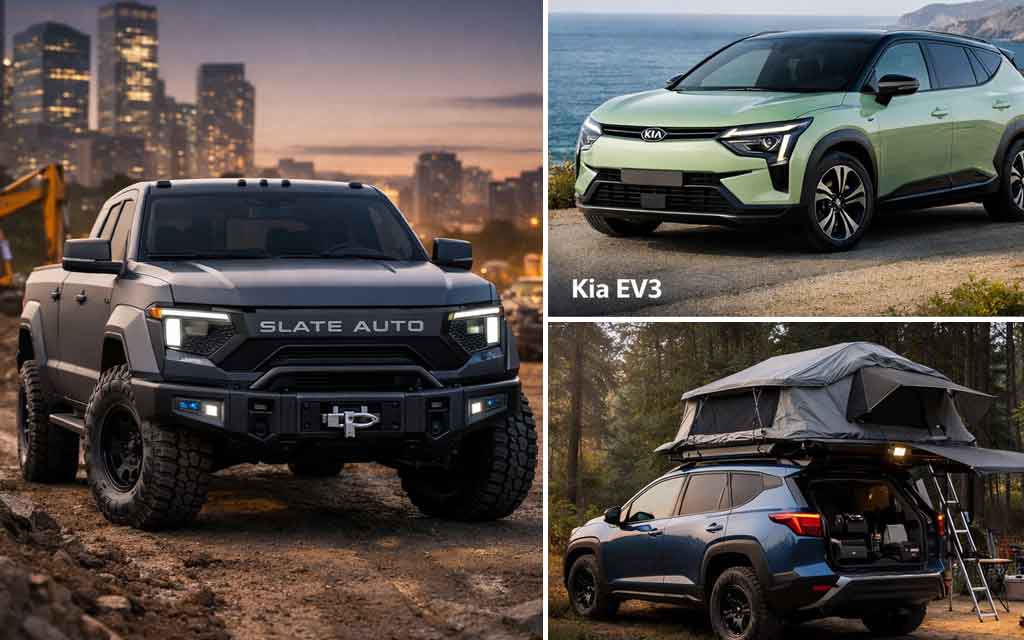
Slate Auto Secures $650 Million to Launch Affordable Modular EV Truck
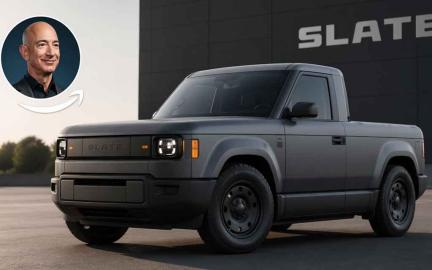
The standout story this week is Slate Auto’s announcement of a $650 million Series C funding round. Led by TWG Global (run by Guggenheim Partners CEO Mark Walter and investor Thomas Tull), the round brings Slate’s total funding to approximately $1.4 billion. Backers include Jeff Bezos’ family office, General Catalyst, and others.
Slate Auto, headquartered in Troy, Michigan, plans to produce its first vehicle — a compact, minimalist electric pickup truck — at a factory in Warsaw, Indiana. Deliveries are targeted for late 2026, with pre-orders expected to open in June 2026.
Key Features and Pricing Strategy
- Base price in the mid-$20,000s (before any state incentives).
- Bare-bones design: crank windows, no infotainment screen in the base model, two doors.
- Modular “SUV kit” allows owners to convert the truck into an SUV-style vehicle themselves.
- Over 160,000 reservations already secured, showing strong demand for an affordable, no-frills work or utility vehicle.
CEO Peter Faricy stated that the new capital will help the company reach the next stages of production on time and on budget. The approach is deliberately different from most EV startups: instead of loading every feature upfront, Slate lets buyers add what they need later, keeping the entry price low.
Why This Matters for Americans In a market where many EVs still start above $40,000, Slate’s truck targets everyday buyers — contractors, small business owners, and families in suburban or rural areas who need truck capability without premium pricing. Domestic production could also support manufacturing jobs in the Midwest. Success will hinge on delivering reliable range, build quality, and a positive ownership experience once vehicles hit roads.
Kia EV3 Compact SUV Heads to the US Market
Kia officially confirmed the 2027 Kia EV3 will arrive in North America later in 2026 (as a 2027 model year vehicle). The subcompact electric crossover, already on sale in South Korea and Europe, slots below the EV6 as Kia’s most affordable dedicated EV.
Expected Specs (US Version)
- Compact dimensions suitable for city driving and tight parking.
- Up to 300+ miles of range depending on battery and configuration.
- 400-volt architecture with fast charging (10–80% in under 30 minutes in optimal conditions).
- Modern styling inspired by the larger EV9, with available all-wheel drive.
Pricing is expected to be competitive, likely starting in the low-to-mid $30,000s range, making it one of the more accessible new EVs for first-time electric buyers. The EV3 emphasizes everyday practicality with good efficiency and tech features.
This launch reflects Kia’s continued commitment to expanding its EV lineup despite softer overall demand. The model could appeal to urban commuters and young families seeking lower operating costs.
Subaru Unveils the Getaway: A Three-Row Family EV SUV
At the New York International Auto Show, Subaru revealed its all-new 2027 Subaru Getaway — an all-electric three-row SUV designed for American families.
Highlights
- Seating for up to seven passengers.
- 420 horsepower from dual motors with standard Symmetrical All-Wheel Drive.
- High-capacity 95.8 kWh battery offering more than 300 miles of range.
- NACS charging port (compatible with Tesla Superchargers) and up to 150 kW DC fast charging.
- Battery preconditioning for better cold-weather performance.
The Getaway serves as the electric counterpart to Subaru’s aging Ascent gasoline SUV. It becomes the brand’s fourth EV offering in the US and emphasizes adventure-ready capability with family-friendly space.
Arrival is scheduled for late 2026. This model targets households that need three rows but want the efficiency and torque of electric power for highway merging and towing light loads.
Lucid Motors Appoints New CEO and Secures Fresh Funding
Lucid Motors made two big moves this week:
- Appointment of Silvio Napoli as the new CEO.
- Raising approximately $750 million in new capital — $550 million from majority owner Saudi Public Investment Fund (PIF) and $200 million from Uber, tied to a deal for up to 35,000 Gravity robotaxis.
The funding and leadership change aim to help Lucid navigate toward volume production of more mainstream models like the upcoming midsize Cosmos and Earth SUVs. Lucid has faced challenges scaling luxury vehicles in a price-sensitive market, and the new CEO is expected to focus on operational efficiency and market expansion.
Other Notable EV Developments This Week
- BMW Discontinues the iX in the US — The luxury electric SUV is being phased out from the American lineup as BMW prepares newer, potentially more competitive electric offerings (including expectations around the iX3 with longer range).
- Ford EV Division Reorganization — Ford continues adjusting its electric vehicle strategy, including the departure of Tesla veteran Doug Field. The company is reportedly exploring extended-range electric vehicle (EREV) options to bridge the gap for buyers concerned about pure EV range.
- Rivian and Redwood Materials Partnership — Rivian teamed up with Redwood for battery energy storage systems (BESS) at its factories, supporting more sustainable and efficient manufacturing.
- Broader Market Context — Several automakers have delayed or canceled certain EV programs due to slower sales and changing conditions. However, rising gasoline prices are creating fresh interest in efficient vehicles. Legacy brands and startups alike are prioritizing affordability, modularity, and family practicality over ultra-luxury in the near term.
What These EV News Stories Mean for American Consumers and the Industry
The week of April 13–20, 2026, highlights a maturing US EV market adapting to reality:
- Affordability is King — Slate Auto’s bare-bones approach and models like the Kia EV3 show a clear push toward sub-$35,000 (and even sub-$30,000) options without relying on federal incentives.
- Family and Utility Focus — Three-row SUVs like the Subaru Getaway and modular trucks address real American needs for space and versatility.
- Strategic Adjustments — Leadership changes, funding rounds, and lineup tweaks (including potential EREVs) indicate companies are prioritizing sustainable scaling over rapid expansion at any cost.
- Domestic Innovation — US-based production plans (Slate in Indiana, ongoing work at Rivian and others) could help create or retain jobs while reducing reliance on imports.
Challenges remain: charging infrastructure gaps in rural areas, cold-weather range loss, and the need for transparent total cost of ownership information. Yet higher fuel prices and improving battery tech are working in EVs’ favor for many households.
For buyers considering an EV in 2026–2027, this week’s news suggests more practical choices are coming. Research state-level incentives, compare real-world range data, and test drive vehicles when possible. Models arriving late 2026 could offer better value than today’s higher-priced options.
What do you think — is Slate’s minimalist truck a smart idea for the American market, or would you prefer more standard features? Are you excited about the Kia EV3 or Subaru Getaway for family use? Share your thoughts in the comments.
Stay informed with weekly tech and EV updates from vfuturemedia.com. Subscribe for more in-depth analysis on how these developments affect drivers, businesses, and the broader US economy.
Related Reading on vfuturemedia.com: EV Buying Guide | Future of Electric Trucks | AI in Automotive | US Auto Industry Trends

Leave a Comment